Dear Chaos Coordinators, Quick Q: When did we collectively decide every minuscule thought deserves a full audience?
If you’ve ever thrown your phone—or straight turned it off—when a side chat hijacks the group thread, then you know. There’s nothing—and I mean nothing—more derailing to a workday, dinner or chill time than watching a perfectly functional group text spiral into a two-person side convo.
You know the one. Twelve people on the thread, and suddenly it’s two texters workshopping logistics or inside jokes that apply to exactly no one else. Meanwhile, the rest are held hostage to buzzing phones and wrist taps we didn’t sign up for. It’s not cute—and frankly, no one cares. It’s a shared space—act accordingly.
Brass tacks: If it involves one person, take it off the thread. No “one more message.” Otherwise, it’s the digital equivalent of whispering across the dinner table while everyone else just sits there. And, yes, it’s just as rude.
And another thing! About the call vs. text crisis: There’s a system—respect it. If your call could’ve been a text, it should’ve been a text. If your text turns into a call without warning, I’ll assume something’s wrong.
If your text turns into a novel—or requires thought or follow-up—that’s what email’s for. And about email: Somehow, we’ve lost the plot. Please don’t reply all “thank you.” Period. That’s a private sentiment—keep it private. In fact, let’s simplify: If you’re unsure whether to email, don’t. … But do use email for what it’s meant for—context, clarity or length. The gray area is not that gray. You’re just avoiding basic text etiquette.
And—this feels foundational but is somehow a full-blown comms crisis—if someone is cc’d, they need to be looped in. So when you reply only to sender, you’re undoing the entire point.
And before I sign off—my name is in the email. Right there. Spelled all nice and correctly. If you can’t spell it, I’m not confident you read anything else—and I will proceed accordingly.
It’s not that complicated. It just requires baseline brain waves and a little awareness that lately feels… optional. It’s not. Respect the thread, respect the inbox. And maybe—just maybe—we can all get our sanity back.
Remote work blurred the line between “flexible” and “feral.” Somewhere between WFH and WTF, professionalism slipped—sometimes literally—into the pool.
Remote meeting culture is in chaos (see: the memes, hot mics and floating heads). In bed one minute, on Zoom the next. Posed at a desk with no pants. The accidental on-air slip or cat hijacking the camera. The aggressively casual background—or worse, your chaotic garage.
But the reality is, it’s just simply not working (pun intended). Read: Work meetings, but make them feral—less Zoom, more Wild West. And it begs the question—why should we compose ourselves any differently in our home office than on-site?
And before you write this off as generational gibberish, the offenders are primarily not Gen Z. As it happens, some of the most egregious perpetrators—the ones that leave us wishing they’d just turned their cameras off—are senior-level leaders.
Whether this is a no-rules pandemic hangover, the collapse of workplace boundaries or a broader erosion of professional norms, one thing is crystal clear: Virtual meetings have gotten sloppy. It’s no small coincidence that companies are starting to ban treadmill meetings, mandating cameras on and tightening virtual conduct rules in an effort to rein in a culture that’s drifted further from “flexible” into free-for-all. And after cataloging a steady stream of truly unhinged behavior, it’s safe to say we’re overdue for an intervention.
illustration by Malchev/shutterstock.com
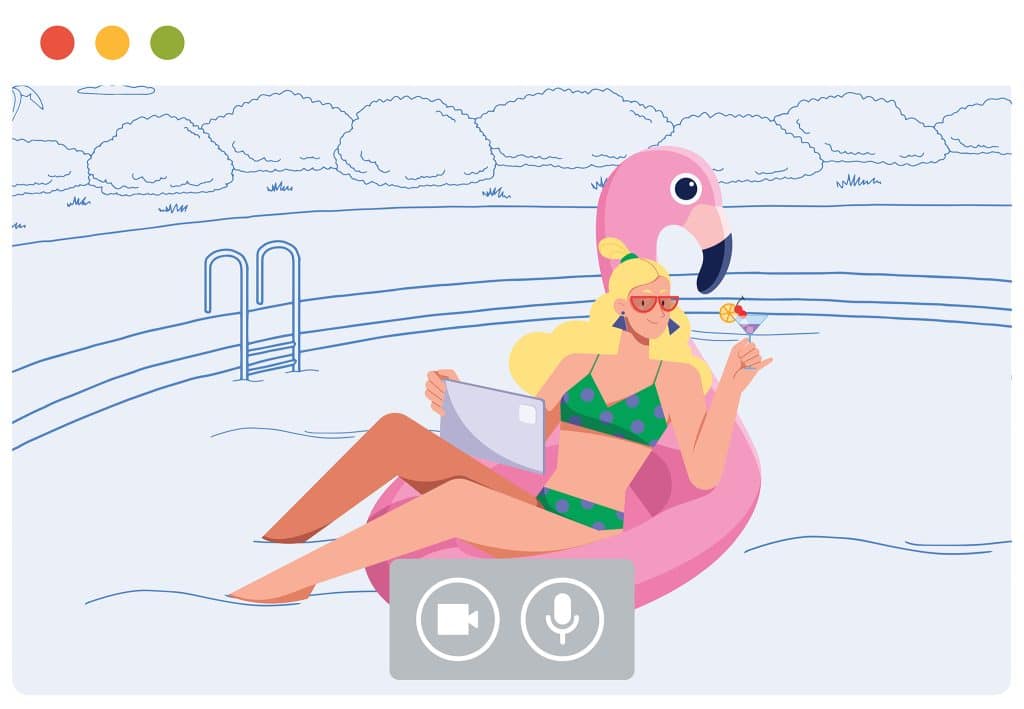
Pool Float Executive “An executive joined a companywide Zoom—over 100 employees, management present—from a pool raft, Champagne glass in hand, phone carefully angled to show only her face. Twenty minutes in, she lost her balance. The phone fell into the water. When she resurfaced on screen, she was very clearly in a bikini, very clearly in the pool, and very clearly no longer muted. HR followed up.”
Memoji Workaround “We have a coworker who hates being on camera so deeply that she created a memoji in Teams to blink, nod and mouth responses for her instead. The uncanny valley has entered the chat.”
Illustration by rina Strelnikova/shutterstock.com
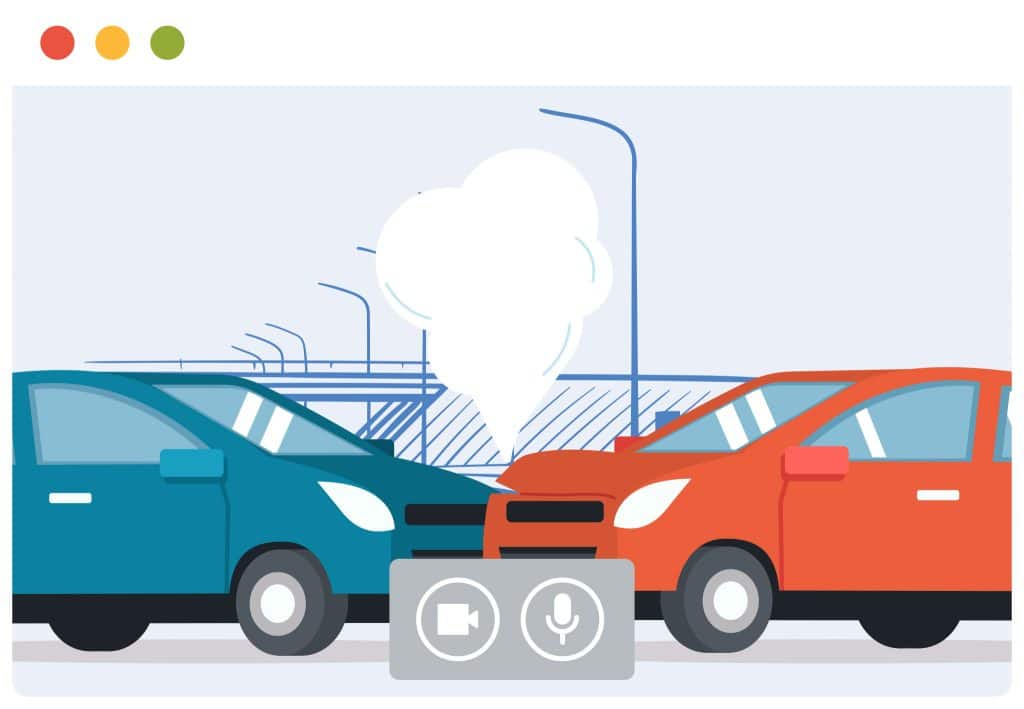
Hit-and-Run Hang-Up “During a routine call, a coworker was running errands and we heard a loud crash. Without missing a beat, she said, ‘Gotta run—just got into a car accident,’ and hung up.”
Vibration Plate Reveal “The director of sales is famously off-camera, always muted and perpetually calling in from… somewhere else: the beach, a Starbucks drive-thru, daily walks. During one meeting, she was asked a direct question and responded in a shaky voice. When someone asked if she was OK, she replied she was on her vibration plate.”
Illustration by The img/shutterstock.com
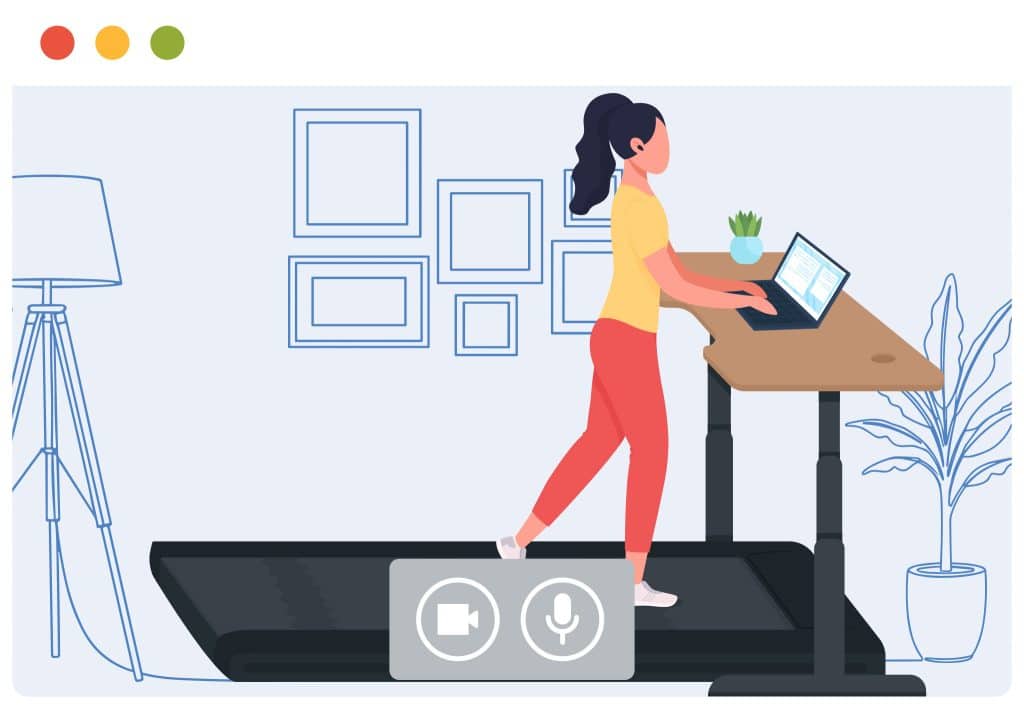
Walking Pad Evangelist “We have this one girl who insists she can’t reach her daily step goal without pacing her walking pad during work hours—so we just see her bobbing up and down during meetings.”
WFH Gone Wild “We once watched—live—a bear walk into someone’s kitchen.”
Illustration by A7880S/shutterstock.com
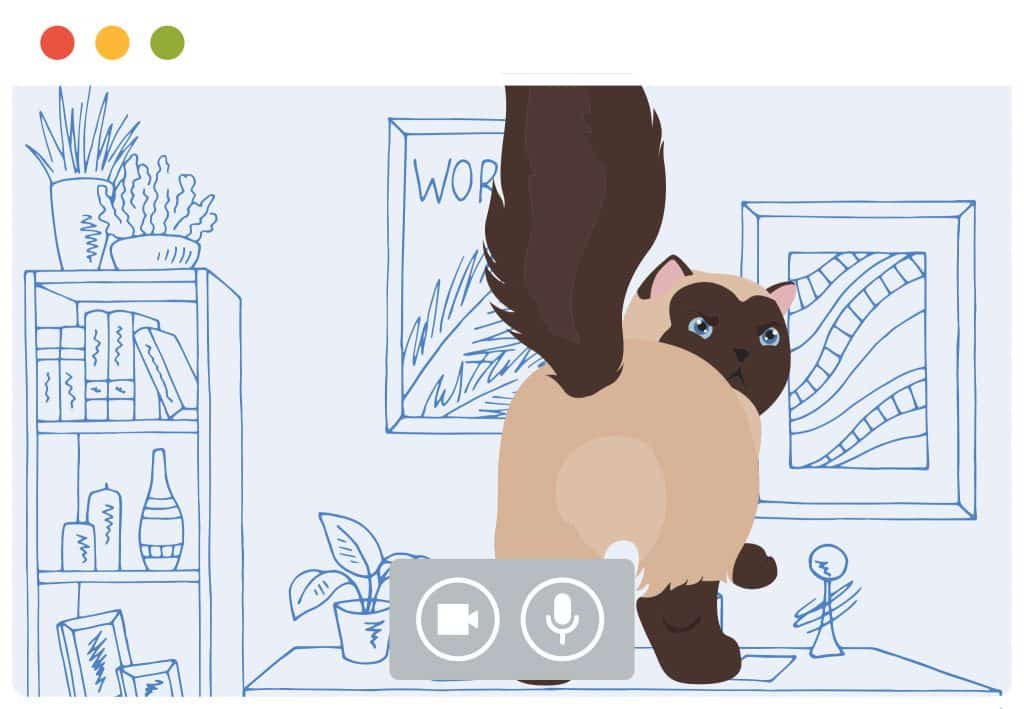
Feline Full Moon “Our colleagues with cats usually greet us with a full-moon view of cat ass. If the hindquarters aren’t directly on camera, the little exhibitionists are pacing the desk, tail flicking around their humans’ heads like a rear-first hostile takeover.”
A pipe dream—or the future of American work culture?
Three-day weekend? Read: fitting five days of work into four. Once a lofty American ambition found more likely on the banks of Italy or in a pipe dream, the four-day workweek is gaining ground. Like—for real. Companies large and small are seriously considering the shift across the nation, including here in Raleigh. And states like Massachusetts have even introduced bills directed toward incentivizing businesses to follow a four-day schedule.
While those bills may have long odds of becoming law, they do constitute the potential for a changing national work narrative. But what exactly does a four-day workweek entail, and what do the proponents and naysayers have to say about it? For a typical workweek, here’s how and why the shift could take shape.
How It Works
Depending on the model, four-day workweeks don’t necessarily mean cramming 40 hours into 32 over four short blissful workdays. The bottom line is, after all, still the bottom line. For some, like one local company looking to implement the truncated workweek, the shift provides a concentrated 40 hours in four days. While for others, like online clothier thredUP, the adopted four-day blueprint is geared toward 32-hour weeks.
While the online thrifter’s transition has focused on honing in on the most essential tasks and scrapping the extras (we see you, unnecessary emails and long meetings), it hasn’t come without its hiccups. “It’s not for everybody,” thredUP Chief People Officer Natalie Breece, who helped lead the transition, told The Wall Street Journal this fall. “It requires a constant evaluation of your own behaviors and your organization’s behaviors to move faster.” And, naturally, the work sometimes overflows to Friday.
Productivity
There’s plenty to be said about productivity, breaks, work/life balance—and it would take an entire TED Talk to break it all down. But, in short, research indicates potential setbacks and perks to both four-day models, not least of which is increased employee productivity—because increased downtime. Even employees billing 40 hours Monday through Thursday are still gaining a three-day weekend. “Ten-hour days are long and keep you from family and friends,” according to a local whose company already subscribes to the schedule. “It also takes a toll on physical health since it’s harder to get to the gym, and many medical offices are closed on Fridays. And when time changes there are many days you don’t see any daylight! But, having a three-day weekend to recharge every week makes it worth it.”
Real-Life Application
Some local companies have already subscribed to a 4.5-day structure with half-days on Fridays that others could look to as a model. “The major appeal of a 40-hour/4.5-day workweek is all about that half-day on Friday,” says a local professional who’s been working this schedule for over a decade now. “Those few quiet hours—where productivity is way up and pressure is way down—allow you to focus on the tasks that got sidelined by meetings and last-minute requests during the busy week.”
In-Person Perk?
As more companies put an end to the remote-work pandemic hangover, some employers see the updated four-day model as a potential perk to entice leary commuters. “As we continue to evaluate how we ‘return to the office,’ we have discussed the four-day workweek,” says a Raleigh executive. “Our office already utilizes half-days on Fridays, so to move to a four-day workweek is not too much of a stretch. … That said, as long as our clients work a five-day week, we will always be available five days a week.” Ultimately, if you’re on deadline, the deadline has to get done. But for now, that decision is still under consideration—and it’s only a matter of time before the future is here.
Mondays, amiright? While we all dread the end of the weekend (hey, Sunday scaries)—there’s a new trend emerging for all the corporate babes attempting to avoid burnout. Enter “Bare Minimum Mondays”—essentially putting personal well-being over work (what a concept!). Think going for a run, reading a book or getting your nails done rather than hopping right to your email inbox bright and early on a Monday morn.
From the mind of self-employed digital creator Marisa Jo Meyes, the concept of #BareMinimumMondays leans into fielding some of the stress away from the start of the workweek and setting boundaries with the powers that be a la office culture—see also quiet quitting and “The Great Resignation.”
So is it slacking or self-care? You be the judge. … While stress is no joke—studies from the American Institute of Stress have revealed 94% of people report feeling stress at work, with two-thirds suffering related sleep-loss and ~1 million Americans missing work each day due to stress—only time’ll tell if the bare minimum beats the grind. Will procrastinating the source of your anxiety amp it up or mellow out what’s got your mind in a muddle from 9–5… and at 3am? #MentalHealthMonday or bust!
If you haven’t heard of it, the Great Resignation (aka the Big Quit) is a thing—and it’s the real deal. A whopping 1 in 4 people quit their jobs in 2021 (in fact, 4.5 million Americans quit their jobs last November alone—yes, you read that right), and the same amount of people are projected to quit their jobs in 2022.
So, where are they going and why the shift? The blame can be placed squarely on the shift in cultural mindset left in the wake of (and the ongoing) pandemic, quite obviously, as health and well-being have been launched to the forefront of our minds, ubiquitously pervading every convo and choice—inspiring many of us to rethink how we want to spend this precious life… and how we want to spend our time and energy.
That naturally translates to rethinking the way we spend our time to make a living—resulting in many leaving corporate jobs to start their own businesses or picking up remote work that allows the flexibility and freedom to work from anywhere, at any time (whether from bed in PJs or from some exotic stay). And, according to experts, this has zero to do with money. It’s just about balance— and gratification.
So, no doubt you’re thinking: life fulfillment, smart move… what’s the big deal? But the ripple effect is creating mass casualties on the business front. And, at least locally, small businesses already have to compete with big companies like Google and Apple coming to the area.
Now, the question for many employers is how to get people to stay in their jobs—or come back to the office as the “Great Return” looms (for many big companies like SAS, return dates are potentially slated for March 1).
The answer, according to Raleigh-based software company Pendo co-founder and CEO Todd Olson, is to create a positive work culture and environment that employees can enjoy day in and day out—compensation (read: money) is indeed the lowest bar, but employers need to do more in terms of differentiating themselves and setting their company apart. This means not only showing appreciation for employees, but looking at where and how we work. Think offering them a workspace that’s exciting—and inspiring—and makes us eager to come into the office. Think reconsidering the long-outdated 9-to-5 model we all still ascribe to (plus the 24/7 plug-in). And the three local companies we tap here have done just that. With their call to action and avant-garde vision, Pendo, Baldwin& and Barringer are setting the bar—and staging the future of the office.
For Raleigh’s Barringer Construction (deemed an essential business)—who never really even left the office—their focus is on evolving the standard work-from-office model while maintaining the necessary parts of the status quo. Like coming to work.
Originally housed in the Industrious coworking space Downtown, Barringer started the pandemic by doing A and B days, where only about six employees would come in at a time… until everyone got tired of working from home, and the A and B days started melding together, and soon everyone was back in the office full time.
Then, in February 2021, Barringer Construction moved into its new space on Dawson Street (after a three-month reno) which—spoiler alert—has a speakeasy-style lounge in the basement (!).
While Barringer was never tasked with the chore of enticing employees to return to the office, staying tuned in to the evolving needs of their people remained important—as did creating a really cool environment that exemplified Barringer’s fun, wild and crazy culture, says Barringer Leed AP Brian DiDiano.
For the construction company, this meant a lounge (which DiDiano calls the heartbeat of the building) with Ping-Pong tables, a basketball hoop, a shuffleboard table and a dart board, which employees are encouraged to play on during the day. “We call it oscillating,” says DiDiano. “In order to stop the burnout, they say that every 15 to 30 minutes, you should take a break and spend five minutes of oscillating—go to the water fountain; go get a drink; play a game of Ping-Pong. … People ask, ‘How do you even get work done?’ … Well, we just do.”
In addition to the lounge, the updated office building gets its spunk from Lego-filled holes in the wall (an idea brought to life by Barringer Assistant Project Manager Carlie Wallin), which translates to the Lego wall, where Legos representing Barringer’s superintendents are placed throughout a map of Raleigh and Durham wherever they’re on the job. Beyond the ever-apt childlike building blocks, the space inspires with movie-themed bathrooms and focus rooms, a mural depicting Barringer’s history and traditions (the brainchild of Barringer Marketing Manager Alexis Raterman), and a conference room lined with caricatures of all of the employees—or what DiDiano calls “our family members.”
“I think space is important, and I think what space works best is when you get the employees to buy in on the space—like Alexis and Carlie,” says DiDiano. “When they buy into what’s in the space and the design, they feel like they own a part of it, and your culture comes out that way.”
Barringer’s pride and joy, however, is perhaps its Knott Easy Lounge, named after Barringer Construction General Superintendent Lenny Knott. The speakeasy-inspired space features leather couches, a massage chair, a TV and a bar stocked with bourbon—so employees can have meetings in the mod den or just go underground (literally) for a change of scenery during the workday.
But DiDiano is adamant that a space—no matter how cool—only does so much; it’s having that right culture and mindset that really brings an office to life.
default
PENDO
“The focus on culture has been a big part of our story from day one,” says Pendo’s Olson. “We always know, in order to attract the best people, we have to have the best culture.”
In anticipation of outgrowing its space in the Wells Fargo building at the end of 2018, Pendo—known for its passion, energy and cutting-edge vision—announced it was moving into five floors of Raleigh Crossing’s 301 Hillsborough tower in early 2022, and with that, the software company put together an HQ branding and listening committee in 2021 to solicit feedback from its employees.
What Pendo heard, and what it acted on, was essentially its employees wanted a space that felt more residential, says Trish LaPaglia, Pendo director of culture and employee experience—something that would give them a variety of choices in terms of how they wanted to work (e.g. a workstation, comfy chair—or even one of Pendo’s new quiet rooms, which provide a space to work privately away from others).
But, to be fair, it could be a chicken or egg situation. For Pendo, these plans were in place before the pandemic, as LaPaglia acknowledges. “I don’t think that the pandemic changed [the plans] as much as we thought it would. I think these are things that people wanted,” she asserts. “The pandemic just accelerated the requests.”
Adds Olson, “You can’t think of your office as someplace you need to mandate people to come in to work. That obviously isn’t working. You need to shift your thinking to attract people.”
In addition to comfortable working spaces, Pendo’s new office will attract both current and future employees with rich amenities, including a coffee bar managed by 321 Coffee, a speakeasy, a kitchen and pizza oven (fun fact: Ashley Christensen consulted on the layout of the kitchen and helped spec the pizza oven), and a terrace with a fire pit that overlooks Downtown Raleigh. Clearly a pretty inviting setup.
“You need to rethink your office,” maintains Olson. “If your office is boring—like you have a bunch of cubes—rip ’em down. No one wants to sit in a cube farm; it’s much more comfortable to sit in your home. So think differently about how to create an office that’s actually inspiring and makes people want to go there.”
A beacon of the future, Pendo’s new office provides the majority of comforts that you would get while working from home while also offering the satisfaction of socializing, interacting and collaborating with fellow employees in-person that you would otherwise be missing—so, in essence, the best of both worlds, and ultimately what everyone wants out of their workplace. And while Pendo is making it optional for employees to return to its new office (“We’ve been open, and we’ve always been optional—flexibility is key,” says LaPaglia), why wouldn’t you want to go back to work when you have access to both a pizza oven and a private coffee shop?
In the case of Raleigh-based branding agency Baldwin&, while the offices are employee-driven (more on this below), the emphasis is on how we work—the time aspect of work/life balance we all crave. To wit, employees also get to choose whether or not they want to come back to the office as a result of its anonymous “How Should Work, Work?” survey.
“We’ve talked about mandating [coming into the office], but we decided not to,” says Baldwin& co-founder David Baldwin. “I have been disabused of the notion of an all-day workday, but I don’t see a need for it right now. We’re just going to be flexible about it.”
And while some may think this hybrid model doesn’t really work for a creative company that requires a lot of collaboration between its employees, “so far it’s been great,” says Baldwin. Employees are free to come and go as they please—each of them has a station with a desk in the open office environment—and there are also three phone booths (privacy rooms) for employees to take Zoom calls or sit by themselves and think in quiet, as well as meeting rooms with TVs, community spaces, a photography and video studio, and even a lactation room with a fridge.
It all stems from Baldwin&’s motto of “Give a Damn,” which is reflected not only on a colorful mural within the office itself, but within Baldwin&’s culture.
“A company’s not a building,” says Baldwin. “It’s a group of people. And we’re saying, ‘What do we want’? and ‘How do we work best?’” Essentially, he adds, “we’re asking, ‘What works for the organism?’ … And this is what’s working for the organism right now.”
… And it’s setting the stage for the future of how we work. “So, in five years, maybe the organism goes: ‘You know what, I miss seeing you every day. Let’s do it.’ But for now, we’re just listening to the people.”
Final Thoughts…
Ultimately, Barringer’s DiDiano said it best: “Your employees need to feel like they are open to come and go as they please, that they’re valued being in there, and that they’re treated fairly,” he explains. “So, for us, we’re best when we work together as a team. And the most effective teams are able to collaborate together easily. And this space offers that.”
Then, summarizing the office of the now and the future in one breath, DiDiano adds: “And if you’re having fun all day at work, why would you ever want to leave? You want to get up the next day and come to work because it’s fun.”