The Canes’ championship run will have ripple effects far beyond hockey.
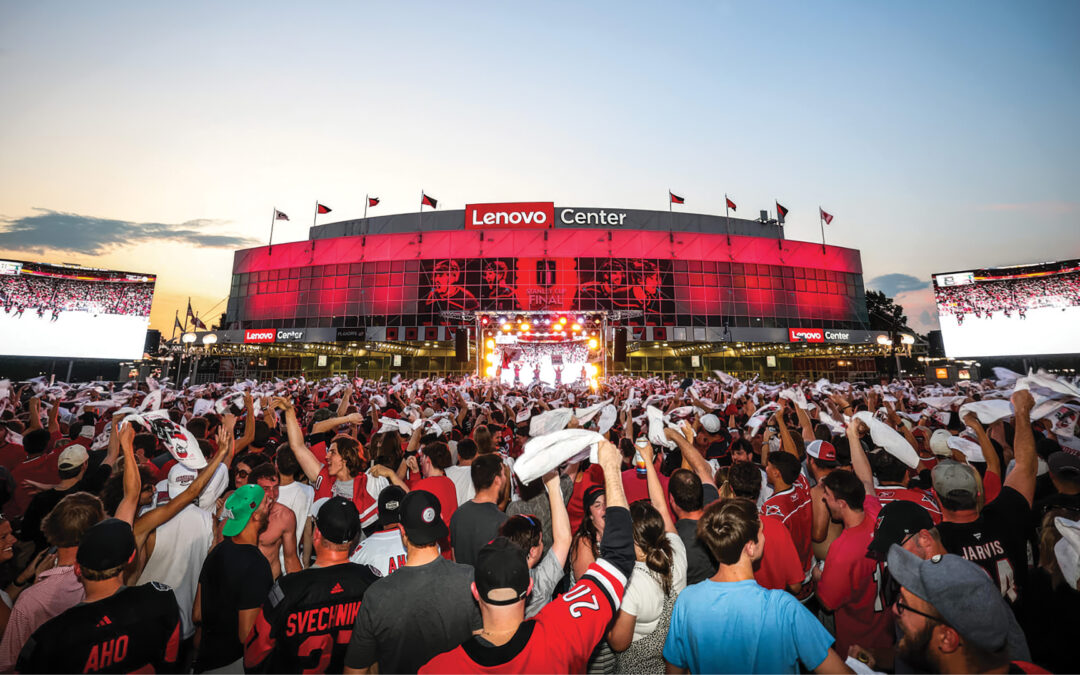
All eyes are on Raleigh. The Stanley Cup playoffs—and the Carolina Hurricanes’ first championship in two decades—weren’t just a big milestone for the Canes. They were a major moment for Raleigh itself, significantly furthering the city’s case as a premier sports destination.
Wherever there was playoff coverage, there was Raleigh. While those tapped into the sports industry already saw the potential, the national press and prestige the playoffs brought made it clear to everyone: Canes Country shows up.
“It’s the sellout attendance streak, the truly unmatched passion and fervor of the fanbase, and the way the city went absolutely bonkers,” says Greater Raleigh Sports Alliance Executive Director Scott Dupree, noting the caliber of events and opportunities—think the Stadium Series—that kind of attention can attract.
Photo courtesy of Carolina Hurricanes
Raleigh’s enthusiasm is nothing new. “It’s just an exclamation point on what we already knew,” maintains Shane Willis, manager of Youth and Amateur Hockey for the Canes and FanDuel Sports Network South color analyst. “We are solidifying that we’re a hockey city, and the NHL is thriving in NC.”
Beyond the fanfare, Raleigh’s sports market is unique—it’s not just major league sports on the scene, but also a close-knit college market with deeply rooted rivalries. As such, it’s rare to have everybody on the same page, notes Dupree, and that’s where the Canes come in.
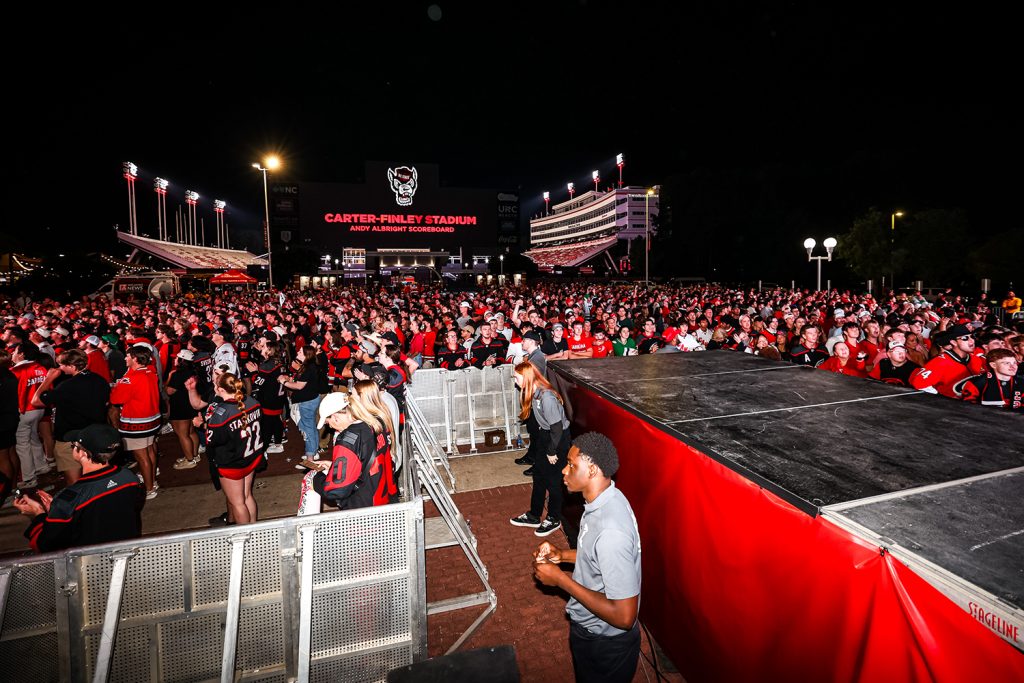
“It’s a completely different dynamic when the whole Triangle rallies around one team,” he says. That unity, paired with fan fervor, could help attract future teams and marquee events to the region. And if you ask MLB Raleigh supporters, the Canes just handed their case a pretty compelling exhibit A.
Any remaining attitudes that Raleigh can’t sustain MLB have been dashed by the Canes, MLB Raleigh co-founder Lou Pascucci tells RM.
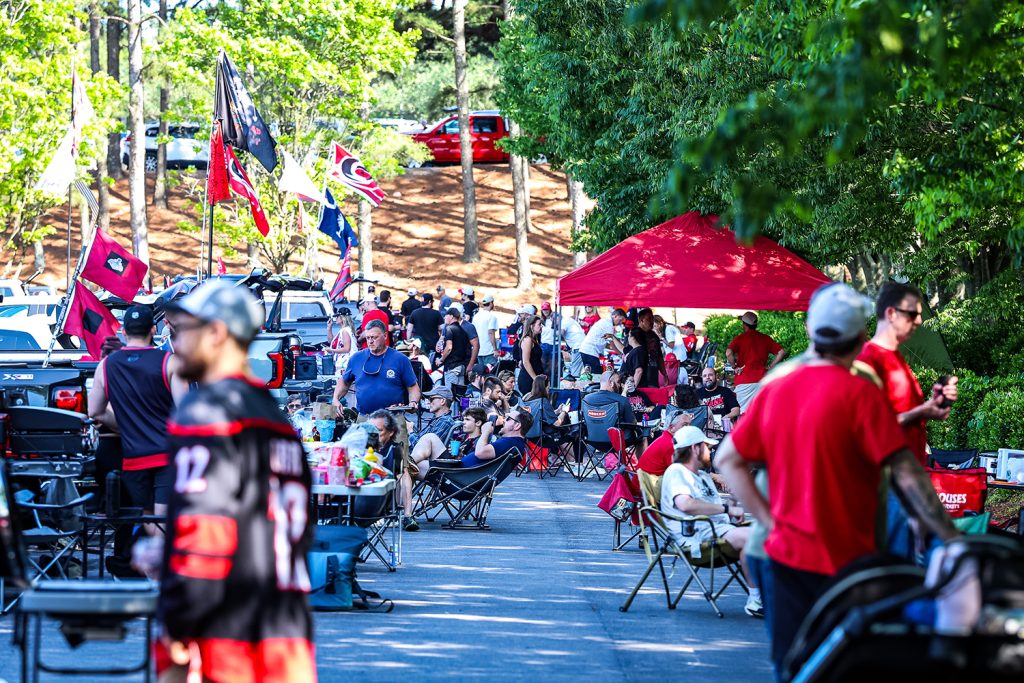
“We’re a sleeping giant,” he maintains. “They can’t wrap their heads around the idea that at 8am on game day the parking lot is filled with people drinking beer and hanging out for hockey, and that’s not new here.” If there are two things Raleighites love, it’s a team to root for and a beer in hand—and they’ll show up again and again for it.
Photo courtesy of Carolina Hurricanes
Canes owner Tom Dundon shares the sentiment: “We are going to put ourselves in a really good place, and if [MLB] decides to expand, we’ll have a compelling offer,” he said after clinching Game 6.
The impact extends far beyond the sports scene. Billion-dollar developments are accelerating the city’s growth, and the playoffs continue to shine a light on Oak City as not only an athletic hot spot, but an ideal place to work and live. “What’s most important here is the community—and what this does for the residents and the quality of life here,” adds Dupree.
Raleigh is already one of the fastest-growing cities in the nation. “That’s going to accelerate thanks to the amazing standard of living we have here that’s anchored by sports and access to outdoor activities,” echoes Raleigh Economic Development Director Kyle Touchstone.
It’s cyclical: Growth attracts sports, sports attract growth and both reinforce Raleigh’s appeal. “We were front and center—every game night they mentioned Raleigh is the Canes’ home, or the game was in Raleigh,” remarks Touchstone. “It’s the kind of brand elevation you can’t pay for.”
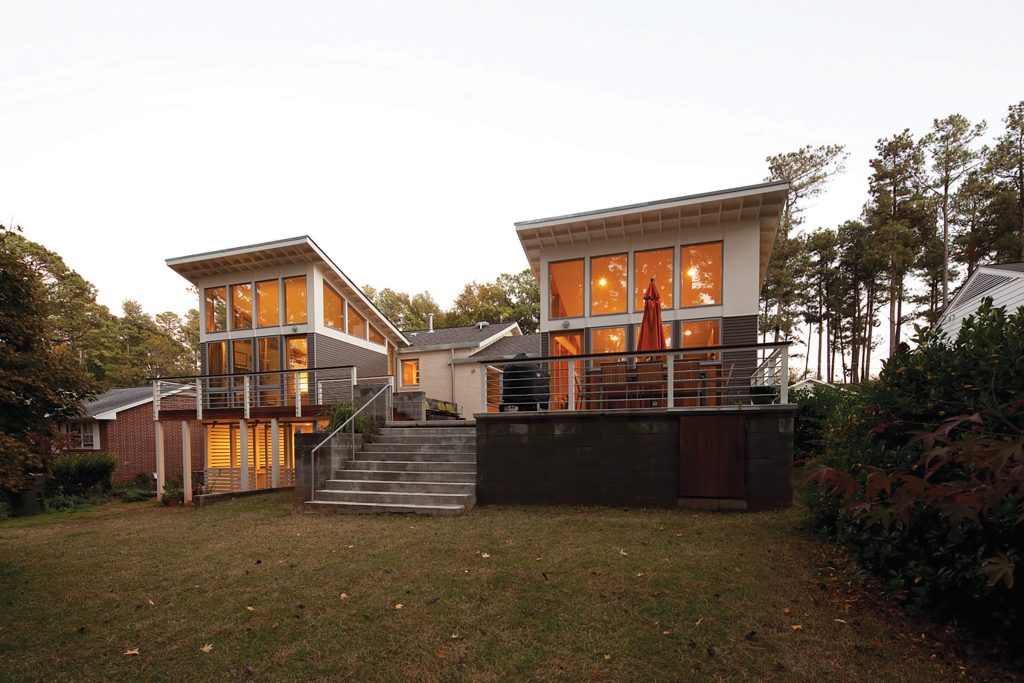
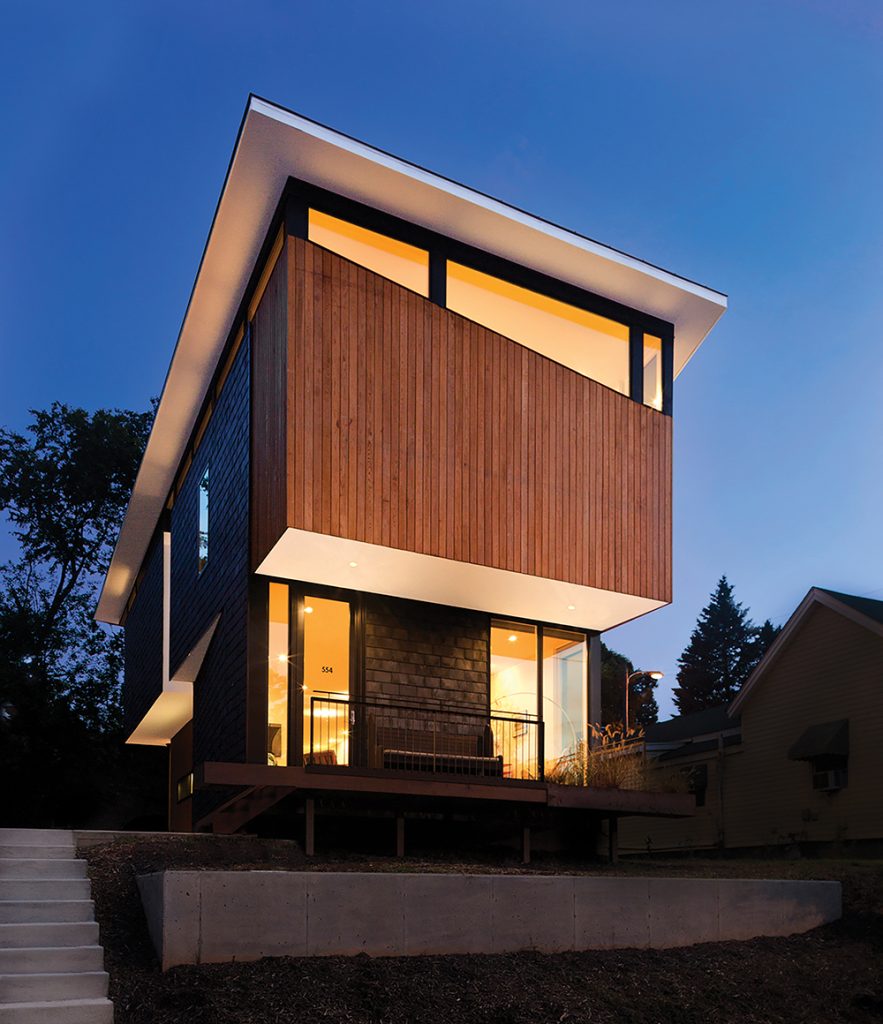
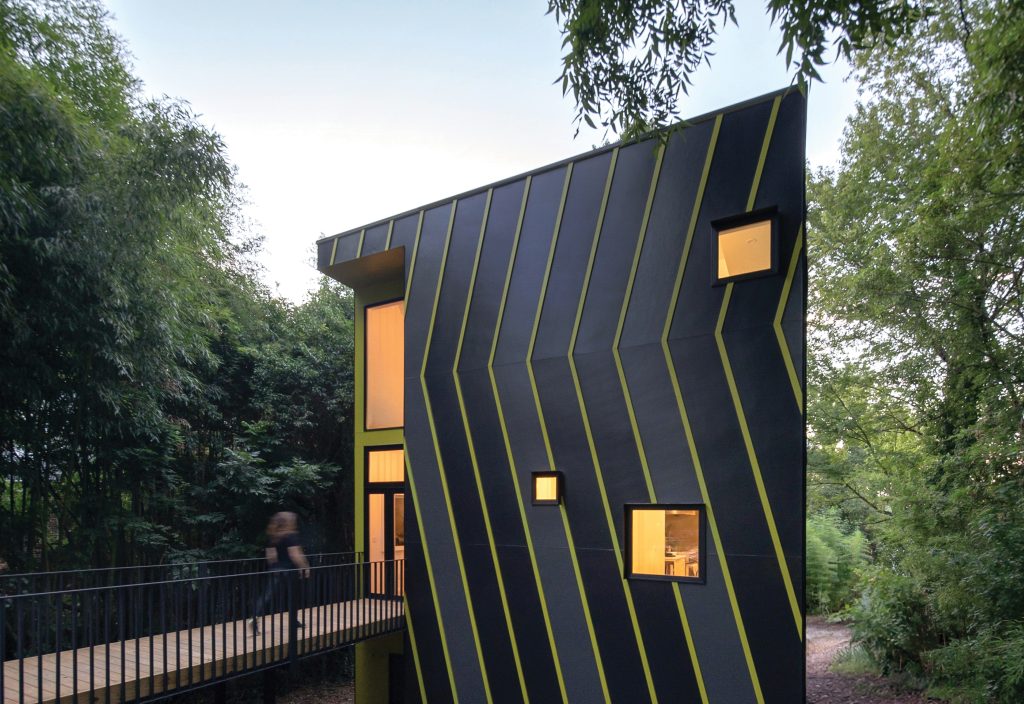
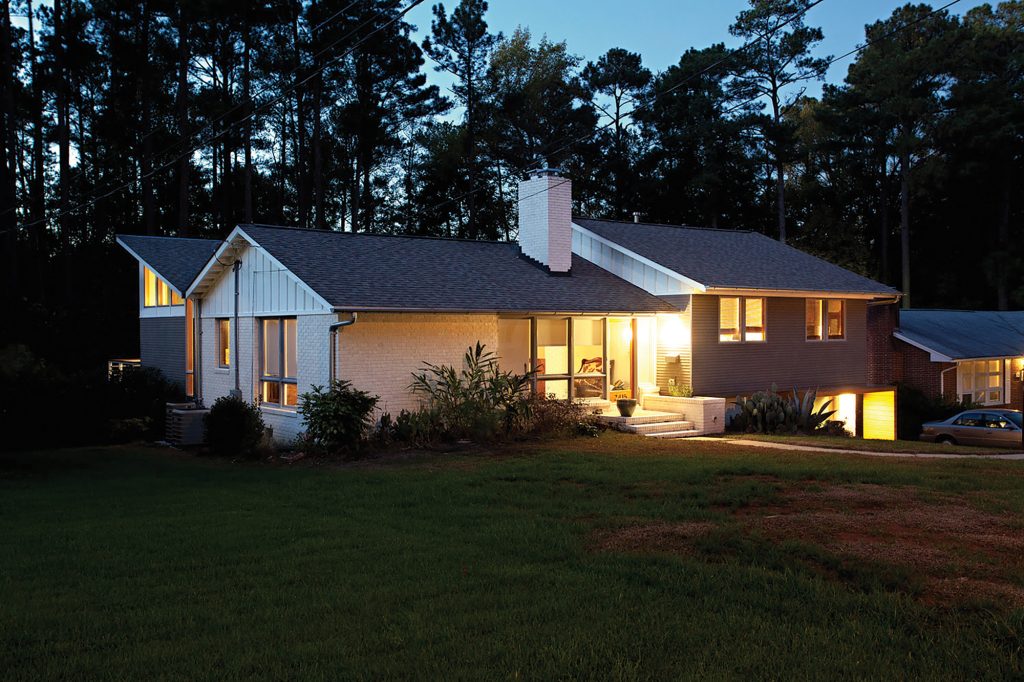
How Raleigh quietly became one of the country’s biggest hubs for modernist residential architecture—and why the movement still shapes how the city wants to live.
But Raleigh didn’t just stumble into modernism. The city helped define it. Call it a quiet flex: NC ranks among the country’s largest hubs for modernist residential architecture—No. 3 outside of California and Florida—with Raleigh at the center of it all.
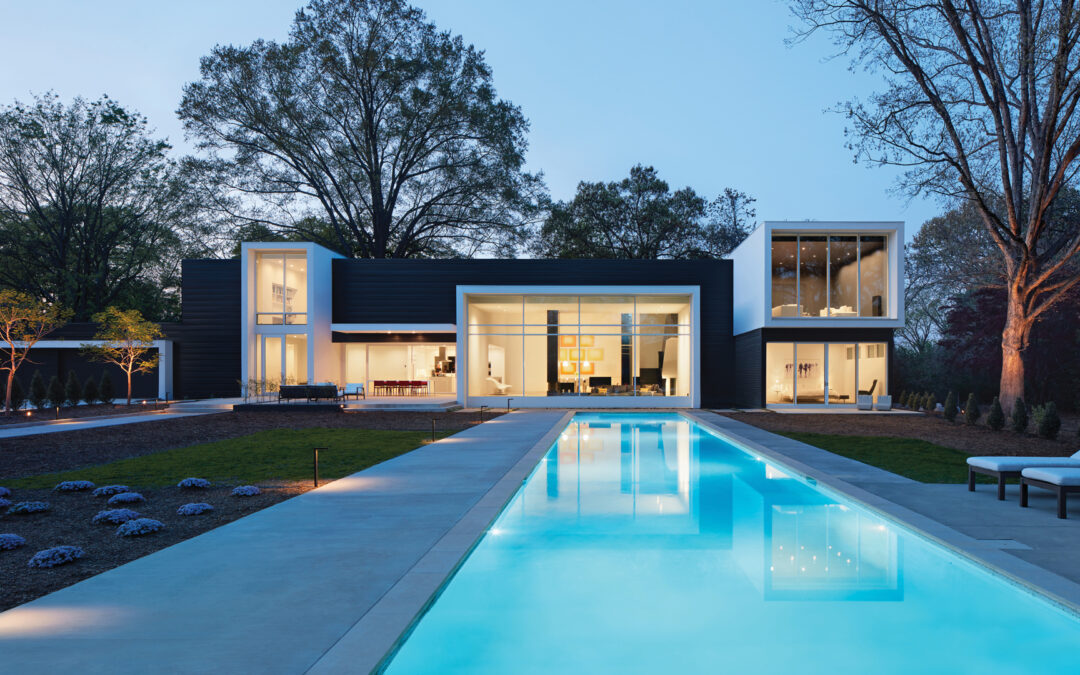
And while the aesthetic is instantly recognizable—clean lines, low-pitched roofs, walls of glass—the style was never just about looks. “Modern homes allow owners to prioritize and shape their environment around what matters most to them personally,” says Katherine Hogan, local architect and owner of eponymous Katherine Hogan Architects. Translation: It’s a philosophy of living: prioritizing space used well over space used endlessly—favoring openness, light and connection to the outdoors over excess.
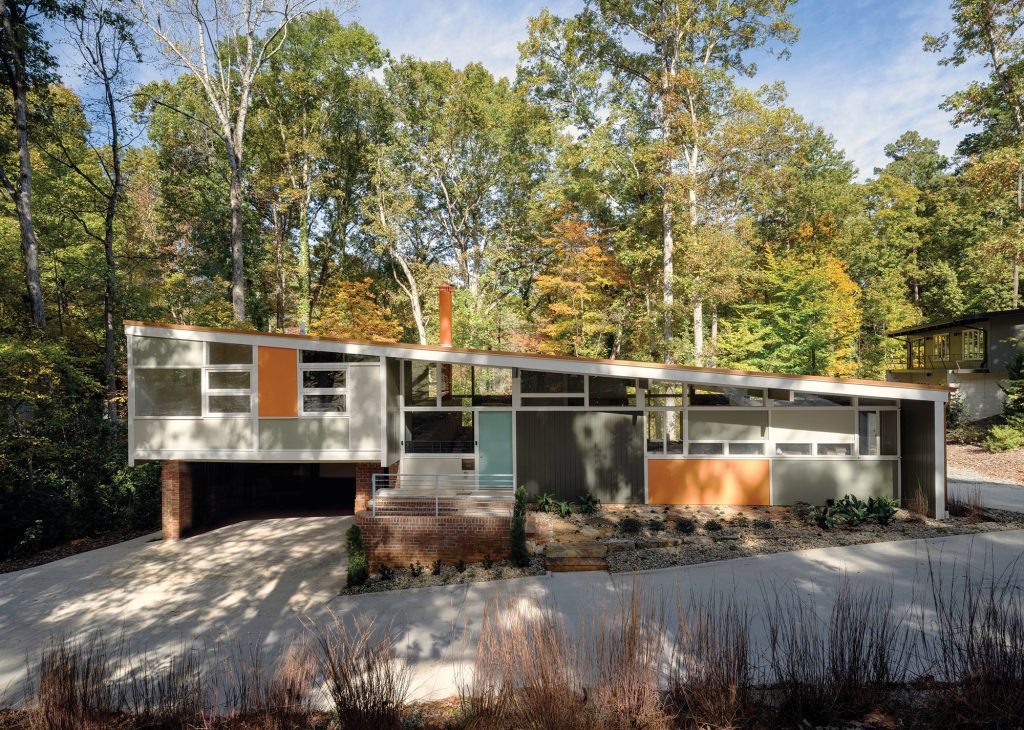
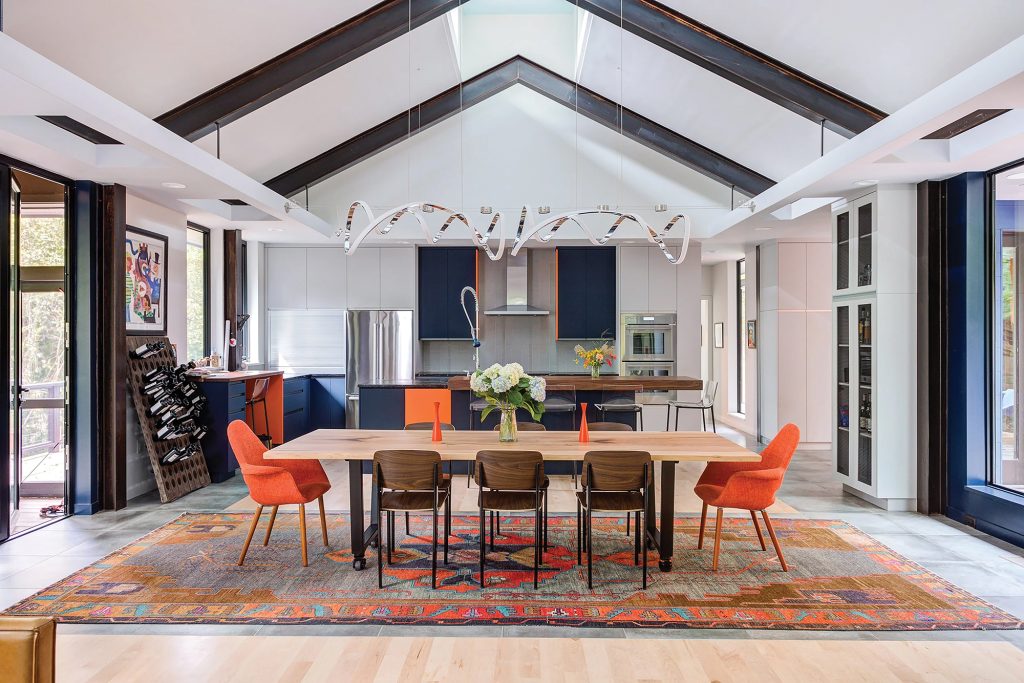
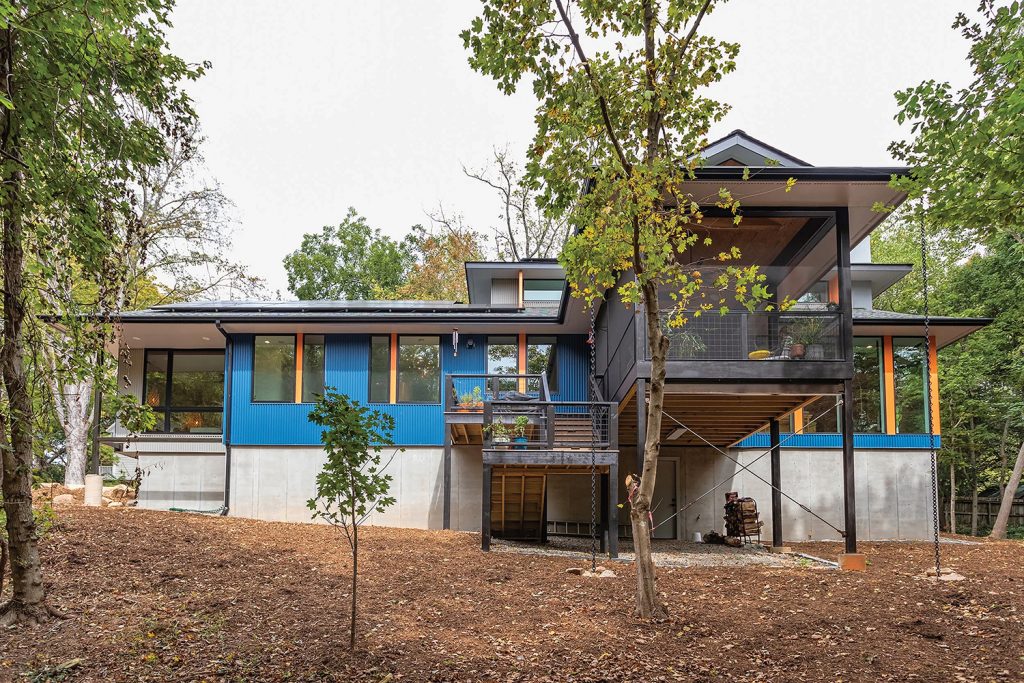
Medway Renovation by architect Brett Hautop | Photo by Brett Hautop
Becoming a Modernist Hotbed
Raleigh embraced modernism unusually early. “Modernism arrived in Raleigh through academia—but it spread through neighborhoods,” says George Smart, founder of NCModernist. The city became fertile ground not through developers, but through professors.
The blueprint? Rewind to the late 1940s, when NC State hired architect Henry Kamphoefner as dean to radically overhaul the university’s then-sleepy architecture school, making a pointed effort to recruit faculty actively practicing modernist design. On his watch, Kamphoefner replaced much of the existing faculty with young modernist architects recruited from across the country.
“Within a year or two, he put the school on the map,” says Smart. The program quickly gained national attention—despite not yet having a dedicated architecture building.
Then came Frank Lloyd Wright. “Thank you so much. I’m glad to be here in Charleston, South Carolina.” So goes Wright’s alleged opening words during his now-infamous (albeit historic) 1950 lecture in Raleigh at Reynolds Coliseum—delivered before ~5K people in a city of then just ~75K residents. According to Smart, it was reportedly the largest architecture lecture audience in the world at the time.
From there, modernism moved into the mainstream, from classrooms into residential streets, as many of the architects tied to NC State laid down roots in Raleigh—and across NC—designing homes that helped establish one of the country’s largest concentrations of modernist residential architecture.
Still, for all its influence, modernism occupies surprisingly little real estate. “It’s only one-fourth of 1% of the housing stock,” says Smart—“but it’s one people are super excited about.” Read: Small footprint, massive cultural influence.
The Modernist Blueprint
Raleigh’s peak modernist home era quietly predicted how people want to live now.
And for all the architectural theory behind modernism, most people would recognize its influence instantly. Think open floor plans and kitchens, walls of glass, indoor-outdoor living, floods of natural light, intentional use of space, flexibility, and simplicity. In other words: The lifestyle caught up to the architecture.
Modernist homes still feel contemporary because many of the ideas they introduced decades ago eventually became mainstream. The core characteristics, says Smart, are fourfold: flat or low-pitched roofs, unusual geometry, abundance of natural light, and open floor plans.
Ryan Johnston House by Raleigh Construction | Photo by Raymond Goodman
But modernism was never just about the aesthetic. “One of the principles of modernism is to get the outside in,” explains Smart, nodding to the clean lines and open-air living that helped define the movement. At its core, modernism prioritizes purposeful space over space for the sake of space.
It’s a philosophy visible in sprawling courtyards, bright skylights, window walls, and landscapes seamlessly woven into the experience of the home itself.
Early on, those open layouts were radical. “Homes were compartmentalized into tiny rooms,” Smart reflects of the time. But modernism challenged that outright, prioritizing flow over formality and experience over decoration.
Where these plans were once revolutionary, they now feel intuitive. People increasingly crave flexible gathering spaces, smarter square footage and homes that feel connected rather than closed off. It’s why modernist architects are often dubbed “masters of space,” says Smart—designing spaces that live larger, brighter and more deliberately without necessarily becoming bigger. Read: smaller but smarter.
Modern design endures, says Hogan, because the best versions were never rooted in trend cycles to begin with. “Today, ‘modern’ is often treated as a style, but we see it as something much deeper—a value system,” she explains. Thoughtful modern homes prioritize how people actually live: natural light, flexibility, durability, connection to the outdoors and spaces shaped intentionally around daily life.
That intentionality is also what allows good modern design to age gracefully. “When every decision supports the larger idea of the house, the result becomes difficult to place in a specific era,” says Hogan. Rather than chasing a momentary aesthetic, she adds, the strongest modern homes tend to reflect “clarity of purpose, honest materials, and a strong relationship between the building and the way it’s lived in.”
Owners who embrace those sensibilities often “create homes they genuinely care for and maintain—almost like a member of the family,” notes Hogan. “That emotional connection is part of why well-crafted modern homes continue to feel relevant decades later.” So, the appeal never really disappeared—Raleigh just kept finding new ways to build it.
Villa K+S by Katherine Hogan Architects | Photo by Tzu Chen Photography
Modern Again: Why Now?
Modernism’s grip on Raleigh wasn’t always guaranteed.
Between its peak in the ’40s through ’60s and its resurgence decades later, modernism largely fell out of favor. By the late ’80s, many of Raleigh’s modernist residences had gone from overlooked and falling out of fashion to quietly vanishing. Open layouts that once felt futuristic started feeling dated. Developers eyed large wooded lots, teardowns accelerated, and preservation conversations took a backseat.
“We can’t save what we don’t know about… I spent the next three weeks driving around 80-year-old architects hanging out the window of my Mini Cooper.”
—George Smart
But like most design movements, modernism proved cyclical. As tastes shifted—and a craving for connection, openness and airiness took hold—people rediscovered the very principles the movement had championed all along. By the ’90s, modernist real estate was having another moment.
Much of that resurgence traces back to Smart, whose life’s work has become documenting, preserving and championing these modern marvels across the state. The catalyst came when Smart discovered one of Raleigh’s most iconic modernist homes—the “Potato Chip House”—had already been demolished.
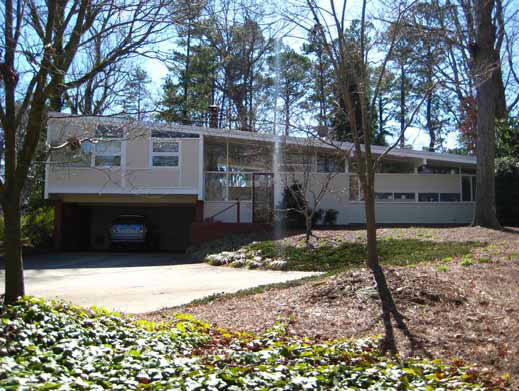
Before the Medway renovation
“We can’t save what we don’t know about,” he says. What followed was part rescue mission, part architectural scavenger hunt. “I spent the next three weeks driving around 80-year-old architects hanging out the window of my Mini Cooper,” he recalls.
That preservation effort eventually evolved into NCModernist, now one of the country’s largest archives dedicated to modernist residential architecture. Through endangered-home alerts, preservation advocacy, sold-out tours, lectures and events like Modapalooza, Smart helped transform the movement from niche architectural interest into part of Raleigh’s broader cultural identity.
That momentum reflects a broader shift toward buyers “placing value on how a home functions and feels day to day—rather than simply maximizing square footage,” says Hogan. Instead, “people are increasingly interested in quality of space over quantity—natural light, flexibility, connection to the outdoors, energy performance and spaces that genuinely support their lifestyle.”
Today, that influence shows up everywhere from modernist-inspired infill builds blending midcentury DNA with contemporary livability to rooftop decks, walls of glass, open gathering spaces and smaller, smarter footprints designed around how people actually live. Younger buyers increasingly prioritize flexibility, natural light and integrated indoor-outdoor flow over sprawling compartmentalized floor plans—less interested in formal dining rooms than spaces that feel adaptable, connected and intentional.
“Owners who embrace these sensibilities tend to create homes they genuinely care for and maintain over time—almost like a member of the family.”
—Katherine Hogan, FAIA
But the resurgence isn’t nostalgia. It’s alignment between modernist principles and how people want to live now. Modernism returned because the philosophy aged well—and dovetailed almost perfectly with today’s cravings for openness, flexibility, intentional living and integration with nature.
The Weber House designed in consultation with George Matsumoto—post-move | Photo by Art Howard
Preservation Pressure
Most people assume a famous modernist home is protected by default. It isn’t.
Preservation is active—not automatic. These homes survive because people intervene, not because history magically protects them.
“Some people will say, well, if the house won awards, it’s preserved,” says Smart. “That’s not true. If the house had a famous architect, it’s preserved—that’s not true. If the house had historic designation by Raleigh, the state, even the National Register of Historic Places protects it—that’s not true. There are only two things that can do it”—deed restrictions and preservation easements.
That reality makes Raleigh especially vulnerable. As teardown culture intensifies and wooded lots shrink amid the city’s rapid growth cycle, many iconic modernist properties remain under constant redevelopment.
The Weber House designed in consultation with George Matsumoto—before the move
For Smart, that cautionary tale is personal. The demolition of Raleigh’s iconic “Potato Chip House” ultimately sparked his realization of how little documentation and preservation existed around these homes.
Today, preservation efforts often begin with endangered-home alerts—early warnings meant to rally awareness before demo plans proceed. From there, deed restrictions that temporarily limit demolition and full preservation easements tied to the property itself remain the two strongest legal tools available to help keep those residences off Raleigh’s teardown trail.
Some survive only through extraordinary intervention. Last year, The Weber House, designed in consultation with George Matsumoto, was physically relocated and restored in lieu of being destroyed—eventually reopening as an Airbnb in West Raleigh.
Others haven’t been so fortunate. Which is precisely why preservation conversations matter now more than ever.
These homes helped shape Raleigh’s architectural identity long before open-concept living became mainstream. Whether they survive the city’s next wave of growth remains to be seen.
But it’s no longer a question of taste—it’s a question of intention.
The One That Scared Raleigh: Why commerical modernism stalled
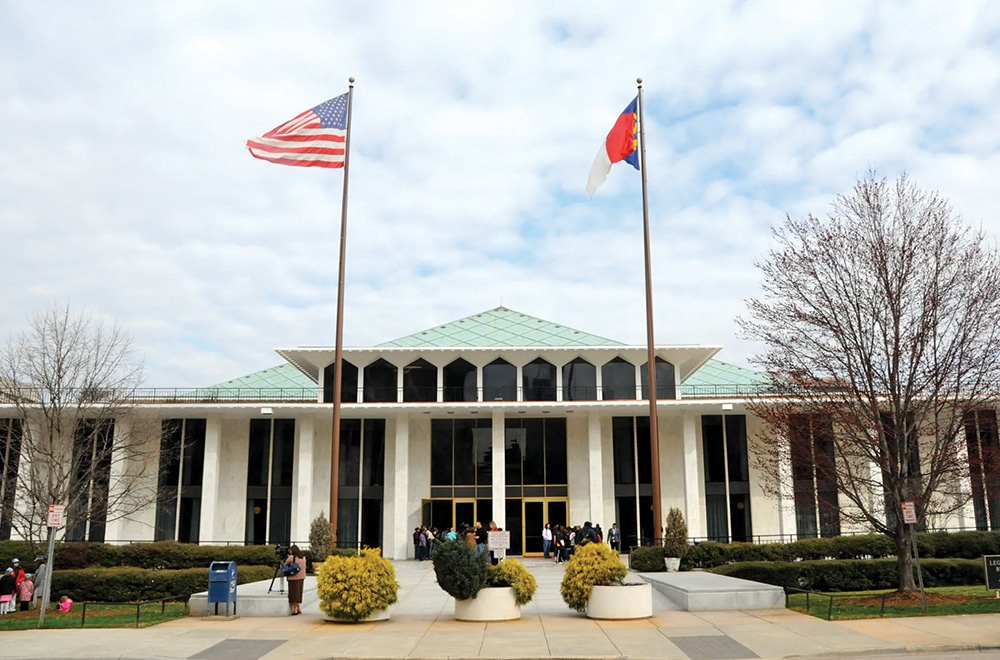
If Raleigh loved modernism so much, why doesn’t Downtown look like Palm Springs? For a city with progressive design DNA, Raleigh’s commercial architecture ended up surprisingly conservative. The culprit? Many architectural historians point to the North Carolina State Legislative Building.
Completed in 1963, the striking modernist structure—with its cantilevered floors, minimalist geometry and sunlit central courtyard—was considered radically modern for its time. It was also expensive—really expensive.
According to Smart, backlash over the building’s cost prompted lawmakers to sour on ambitious modernist civic design for decades, ushering in an era of value engineering and safer, boxier government buildings instead. Translation: Raleigh embraced modernism at home far more than it did in DTR.
Newphire Building/Sophie Piesse
Modernism, Rebuilt
How Raleigh builders are reinterpreting modernism now.
Today’s modern-inspired builders aren’t about recreating the 1950s—they’re about adapting modernism’s DNA for contemporary life.
Across the Triangle’s custom-home boom, many of the movement’s core principles—intentional space, flexibility, indoor-outdoor connection and purposeful design—have quietly evolved alongside changing lifestyles and priorities. Increasingly, builders say clients care less about sheer square footage and more about how a home actually functions day to day.
Newphire Building/Sophie Piesse
For local modernist builder Kevin Murphy of Newphire Building, that often translates into homes designed for long-term livability. “Most of our clients are looking for a manageable-size house,” he says, noting many fall in the 2,200- to 2,800-square-foot range rather than sprawling footprints.
These priorities align surprisingly closely with the movement’s original emphasis on thoughtful, intentional living. In nearly every home his company builds, Murphy says clients are drawn to a combo of energy efficiency, aging-in-place features and strong architectural design elements. “Two things come up repeatedly: one entrance with zero-step entry, and often net-zero energy—a house that produces as much energy as it uses.”
In many ways, today’s modernism isn’t really about nostalgia at all. It’s about building homes that feel adaptable, efficient and deeply connected to the way people actually want to live now.
Modernism in Plain Sight
A quartet of Raleigh landmarks instantly recognizable as icons of the city’s modern design movement.
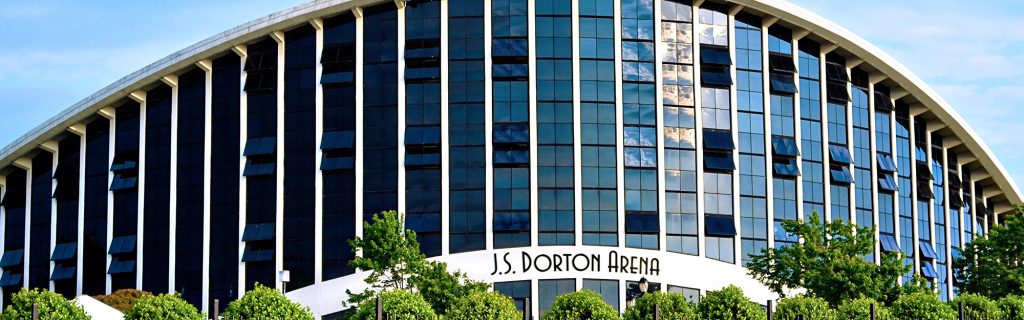
Dorton Arena: With its futuristic silhouette, dramatic parabolic arches and swaths of natural light—originally built in 1952 for the State Fair—the arena remains one of Raleigh’s boldest midcentury design statements: nationally recognized, instantly recognizable.
North Carolina State Legislative Building: Minimalist geometry, cantilevered floors and a sunlit central courtyard made the 1963 building radically forward-thinking for its time.
NC Legislative Building | Photo courtesy of Visit Raleigh
NC State College of Design: Ever-apropos, Raleigh’s mod design movement traces directly back to NC State’s design school—an icon in its own right—which helped shape generations of architects across the region and permanently influenced how the city builds.
Matsumoto House: One of the city’s best-known residential designs, the house was saved from demolition and relocated in 2024—becoming one of Raleigh’s most visible preservation victories.
Preservation Myth
Myth: Historic designation automatically protects a home from demolition. Reality: It doesn’t.
Only two legal tools truly protect a property:
1.Deed Restriction The gist: A contractual agreement attached during a sale that temporarily prevents demolition or certain alterations.
Pros: Less expensive • Easy to implement • Useful for short-term protection
Catch: It’s temporary—usually expiring after a set number of years.
2.Preservation Easement The gist: A permanent legal protection tied directly to the property deed that restricts demolition and significant exterior alterations.
Pros: Strongest preservation tool available • Long-term protection • Transfers with ownership
Catch: More complex—and often costly—to establish.
1,305 acres—that’s how much of the City of Oaks’ namesake canopy we lost in just a decade. Now, a local coalition is trying to throw some serious shade—in the best way.
Enter Leaf Out, a City Council initiative launched in 2024 to protect Raleigh’s trees—and plant more. The headline goal: 24K new trees across state, county and city land—plus along streets and sidewalks—over the next six years, timed to the city’s 240th anniversary in 2032.
Backed by Raleigh Parks, advocacy group Oak Folk and a trio of nonprofits—Audubon North Carolina, Trees for the Triangle and We Plant It Forward—the effort carries a projected $3.8M price tag ($280K needed in year one), funded through a mix of public and private dollars.
Because those oaks don’t just define Raleigh, they make it cooler—literally. Donate to plant hope for the future at treesforraleigh.com
Austin grew fast—now it’s recalibrating. Here’s what Raleigh can take from it.
Austin did everything right—until it didn’t: the boom, the cranes, the companies, the people.
Then came the traffic outpacing infrastructure, housing many can’t afford, and a city so under construction it’s, as one Raleighite who recently visited tells RM, “a chaotic mess—every street torn up, cranes everywhere… for two years now.” So goes the cautionary tale.
Even a recent Austin Monthly cover story questioned the trade-offs of that transformation: “Our funky small town has transformed into a mighty metropolis with high-rises, Michelin-starred cuisine, and international appeal. Is that a good thing?”
While it’s not a perfect “apples-to-apples” comparison, says Raleigh Economic Development Director Kyle Touchstone, the parallels are hard to ignore. As Raleigh sits just a few steps behind on a similar trajectory, the question isn’t how to grow—it’s how to avoid fallout. Sometimes the clearest roadmap forward comes from watching where others went off track. On the heels of his return to Austin this spring—part intel, part SXSW—we tapped Touchstone for his key takeaways.
1
Infrastructure Can’t Lag Austin didn’t stall because people stopped coming—it stalled because the city couldn’t keep up with those who did. As growth accelerated, infrastructure lagged—roads, transit and long-range planning all playing catch-up to a population that had already arrived. The challenge, says Touchstone, is timing. “Building infrastructure to keep up with population growth… is always a tricky balancing act.” But waiting until the need is obvious is already too late. Raleigh, though, still has a window. With the S-Line and broader transit planning, the region is attempting to build ahead of demand—not behind it.
2
Be Intentional In many ways, boldness is what built Austin. A familiar playbook is unfolding in Raleigh, with sound investments being designed to anchor the city’s next phase—think world-class Dix Park, Red Hat Amphitheater, the Raleigh Convention Center expansion and the incoming Omni Hotel. “Austin has been bold,” nods Touchstone—“and Raleigh can be too.” “I don’t think Raleigh is on the path to being Anytown, USA,” he adds. “We’re on a path to being a bigger, bolder and better Raleigh.” The Cap City is no longer planning for who she might become—she’s actively becoming it. And the decisions being made now—density, transit, affordability, design—will determine whether that growth feels cohesive or chaotic. Ultimately, growth is inevitable—keeping it intentional is critical.
3
Affordability Is Everything Fast growth doesn’t just drive demand—it drives prices. And in Austin, that shift happened quickly. As housing costs climbed, affordability became less of a challenge to manage and more of a defining issue for who could stay, who could move in and how the city functioned. “Making sure Raleigh is safe and affordable is always on my mind,” says Touchstone, pointing to the need for a steady pipeline of housing at all levels—supported by faster, more flexible development and permitting. Affordability isn’t something to fix later—it’s the factor that shapes everything.
4
Keep the Cool Factor Austin still has its edge—but it looks different than it used to. It hasn’t lost its identity—“the heart of Texas is still ‘weird,’ and they own it,” Touchstone emphasizes—but in pockets like Rainey Street, an iconic strip of bungalow bars and patios now dotted with high-rises, the shift is visible. That tension is inevitable: “Rapid growth forces cities to be creative about growth, investments and maintaining identities,” he says. Raleigh is already having the same conversation around how to add density without losing the personality that made people want to move here in the first place. “No doubt growth changes a city,” adds Touchstone. “Austin has seen it; we’ve seen it.” The challenge is deciding what’s worth keeping before it’s gone.
5
More Isn’t Better In a boom cycle, more can feel like the answer—units, towers, development—and Austin shows the risk in that angle. As supply surged, the balance got harder to maintain—creating pressure points around vacancy, pricing swings, and how much is too much, too fast. The goal, says Touchstone, is ensuring “ample housing supply… supported by timely permitting” across income levels. But scale without calibration is where things get wobbly. Raleigh is still in her build era—but the lesson is in the pacing: not just how much goes up, but how quickly and for whom.
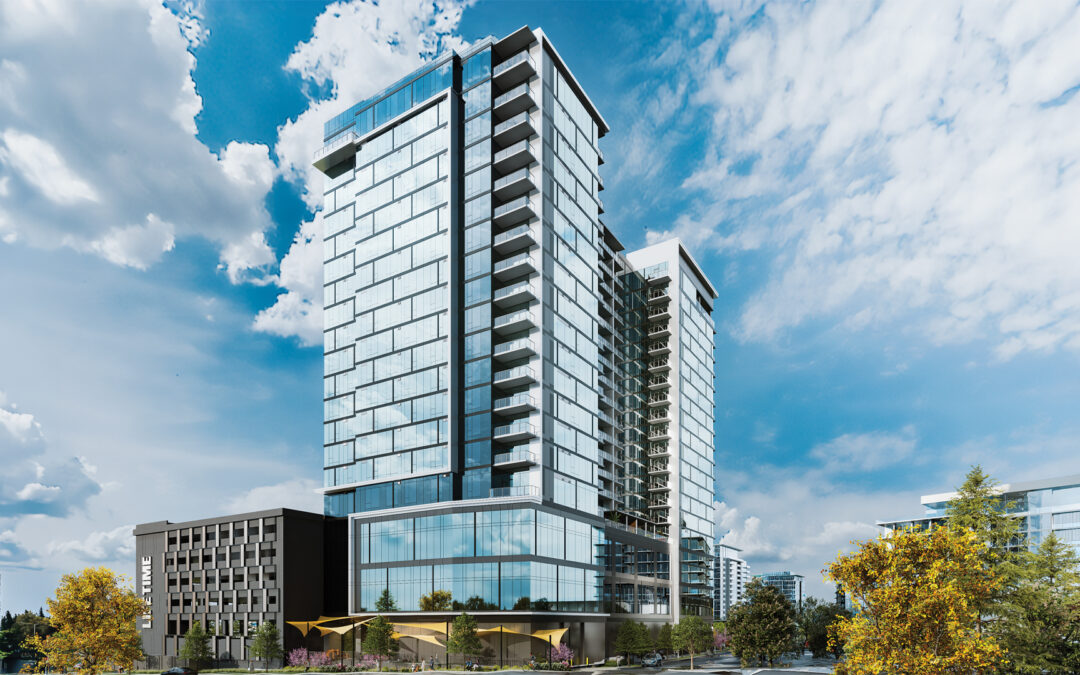
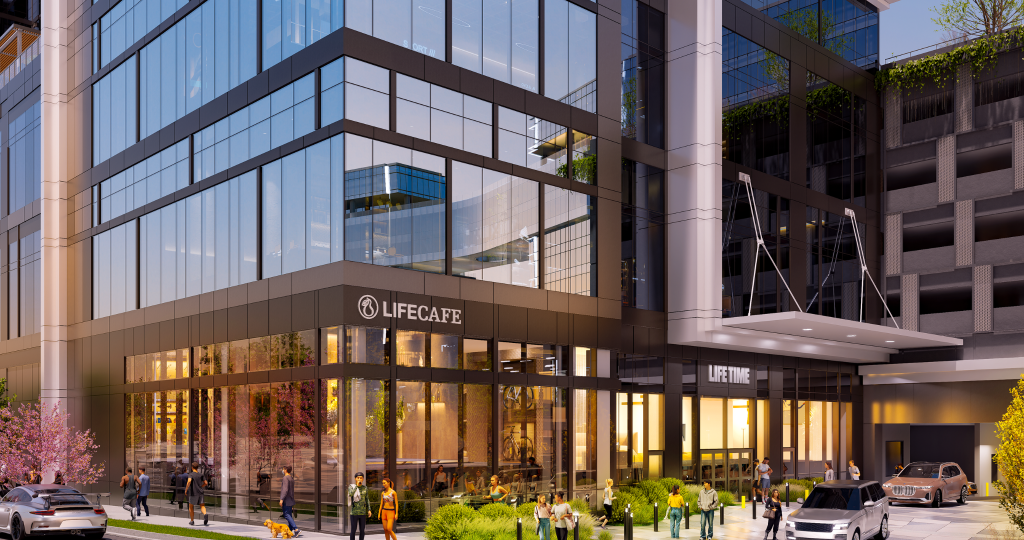
First look at updated renderings of Life Time Living at The Exchange Raleigh
Few projects in Raleigh have generated this level of sustained buzz—and now pushing it closer to fever pitch, Dewitt Carolinas just dropped a fresh look at what’s coming next.
New renderings of the upcoming Life Time Living tower and its adjoining athletic country club at The Exchange Raleigh offer the clearest picture yet of what’s poised to redefine luxury living in the Cap City—and anchor one of Midtown’s most ambitious live-work-play concepts to date.
“We’re confident this development will be a transformative addition to Midtown Raleigh, setting a new standard for living, wellness and community,” says Dewitt Carolinas President Steven Beattie.
Dewitt Carolinas
At a glance, it’s massive—like, redefining-the-category massive. And not just in size, but in ambition. The three level, ~80K-square-foot Life Time athletic country club anchors the base, with 261 luxury residences rising above it. And this isn’t just a gym topped out with apartments—it’s a fully integrated wellness ecosystem where everything from workouts to workdays to wind-downs lives under one roof.
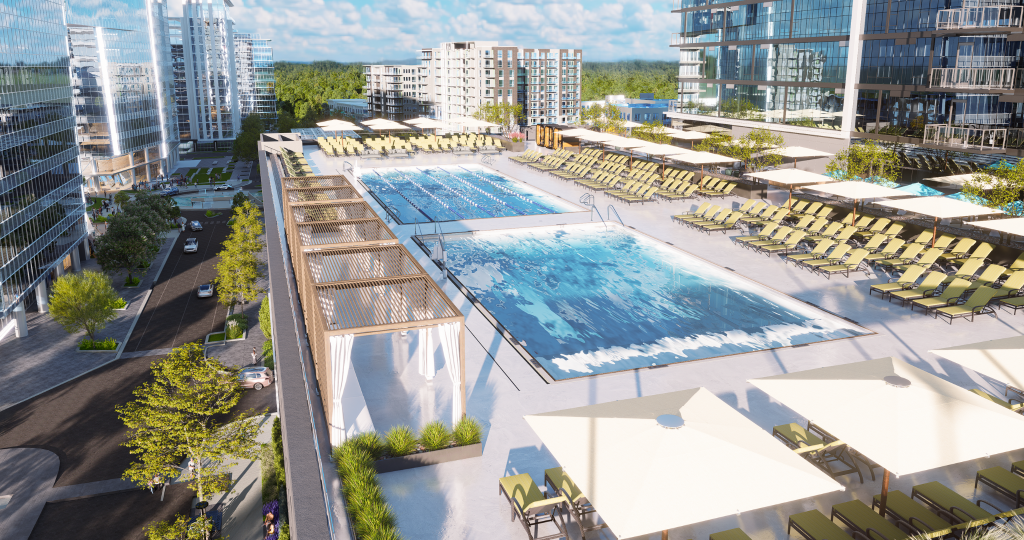
Or, put simply—you never really have to leave. The headline flex? A sprawling Rooftop Beach Resort and Bistro—clocking in at roughly 39K square feet—layered with a resort-style pool deck, lounge seating, food and drink service, and skyline views baked in. Think less lap pool, more long weekend energy.
Elsewhere, the hits keep coming: a Sky Lounge with cocktail bar and fireplace; recovery zones, plus coworking, club room, game and social spaces that push well past your standard amenity list. Even the dog park, childcare and group fitness offerings are dialed up.
It’s the kind of stacking plan that reads more like a hotel—or a private club—than a traditional apartment building. The updated plans confirm just how layered the project is (see sidebar), but what stands out isn’t just the laundry list of upscale amenities—it’s the positioning.
Pitched as a “wellness-first” residential concept, Life Time Living bakes the athletic club membership right in—so your workout, office, social life and downtime all live in one place. And in today’s landscape, where flexibility is currency, that’s not accidental.
It also doesn’t exist in a vacuum. Sitting within The Exchange Raleigh’s broader push to function as its own ecosystem, it comes complete with a 4-acre activated park, greenway access, walkable retail and dining, and the luxe 1000 Social office building already in play.
All told, Raleigh has seen its share of luxury living—and wellness. But this is something altogether different. “The progress we’ve made on the Life Time Living project at The Exchange Raleigh is incredibly exciting,” says Beattie. “With permits approved, we are well-positioned to begin construction and bring this vision to life alongside our outstanding partners at Life Time.”
By merging high-end residential with a full-scale athletic country club—and layering in hospitality-level amenities—Life Time Living is betting on a version of Raleigh that’s more connected, more curated and, frankly, more elevated. And even if you’re not moving in, the message is clear: The city is.
Dewitt Carolinas
The Stack
Floors 1–3: Life Time Club
Club lobby + concierge
Life Time Cafe with all-day dining
Life Spa (hair, body, nails)
Full fitness floor (cardio, weights, training + recovery)
Group fitness studios (Pilates, yoga, cycling, Barre)
Coworking lounge
Kids Academy childcare + activities
Dog park
Floor 4: Resort-Style Amenity Floor
Coworking Lounge
Club Room + Club Kitchenette
Pool deck
Sports/golf simulator + game spaces (billiards, shuffleboard, cornhole)