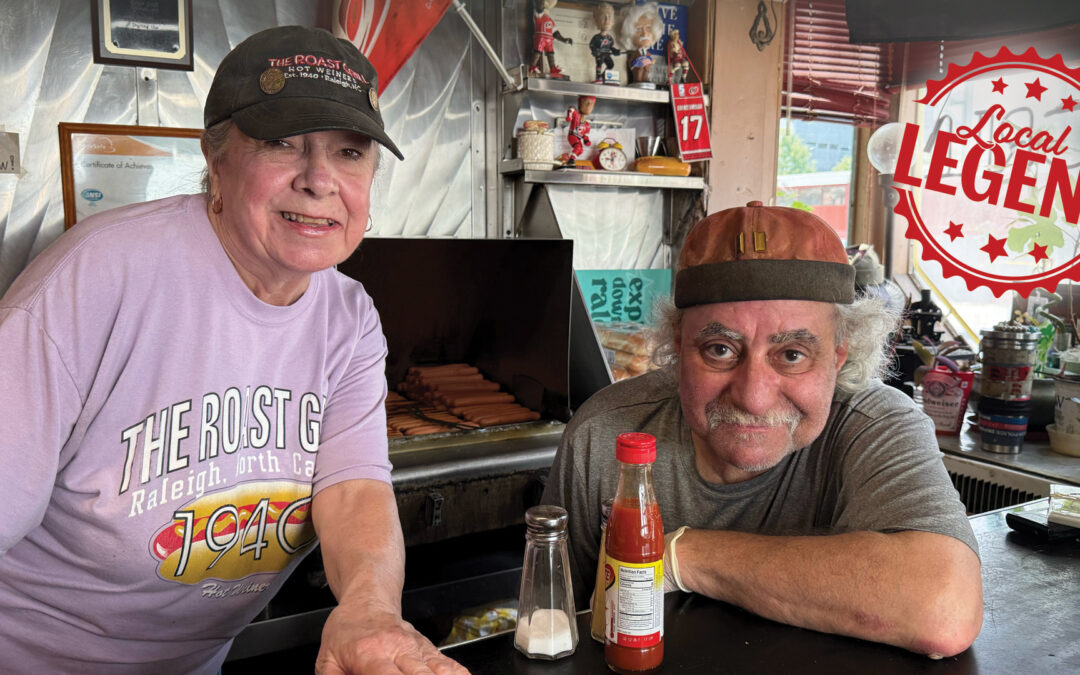
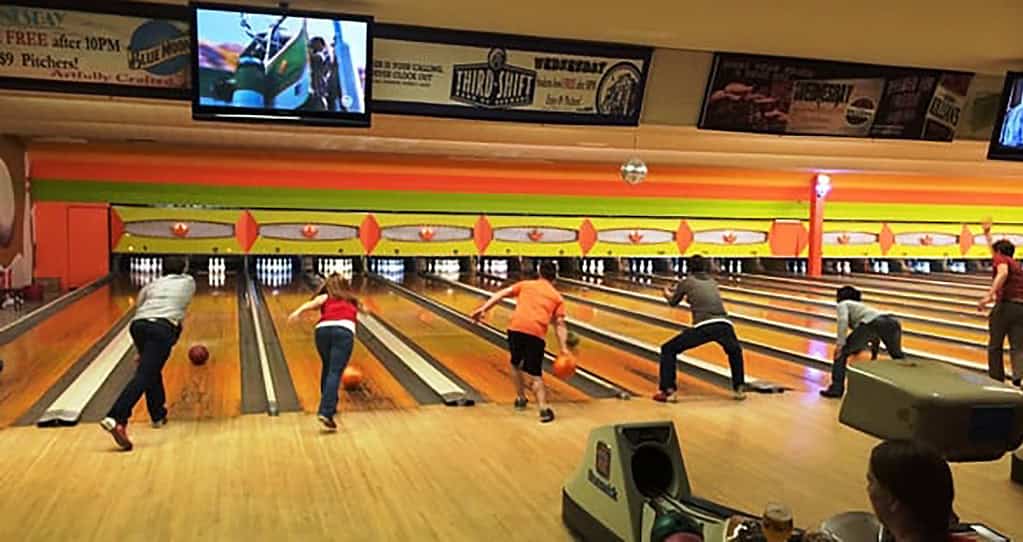
After 86 years, glizzy glory still lives on at The Roast Grill.
If Merle Haggardrose from the grave to eat in Raleigh, you’d likely find him at The Roast Grill.
Nestled in a little white house on West Street, the hot dog joint has been holding its own for nearly a century—and in a city with a constant craving for what’s new and next, that’s no small feat. Raleighites love a hot dog—and this rite of passage holds fast.
Vines tangle up the sides of the aged facade, and a line of grillgoers typically wraps onto the street—thanks in equal measure to lore, novelty (George and his wife Kathy Poniros are known to open the grill sporadically, regardless of the hours listed in the window) and sparse seating.
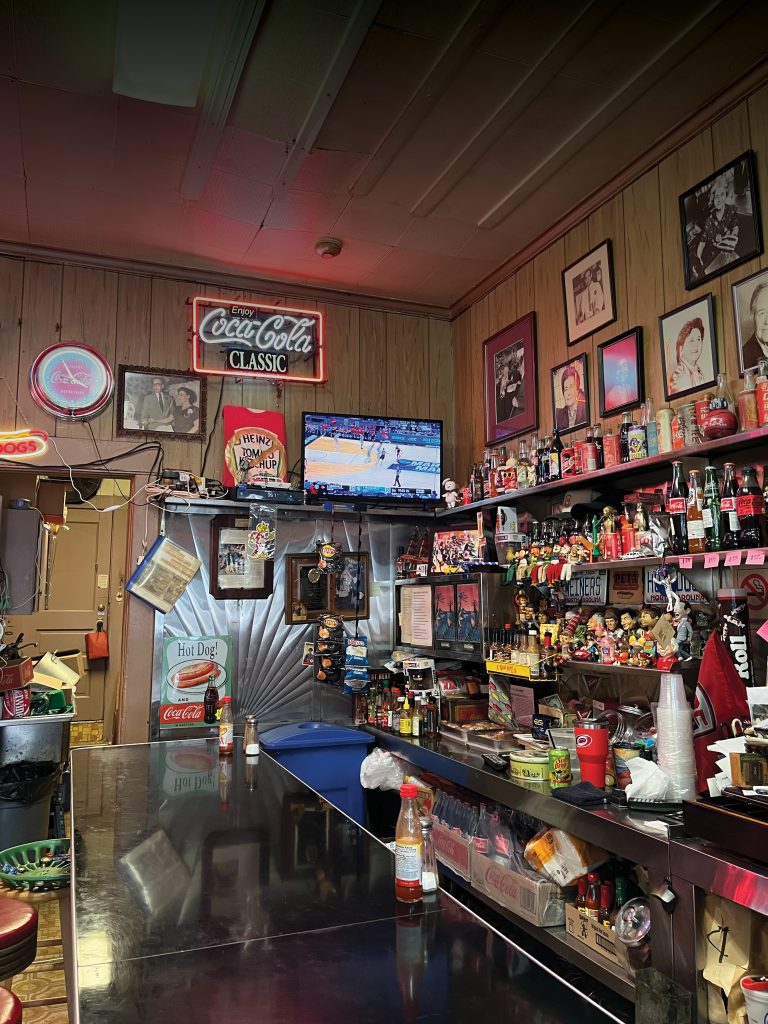
Inside, the narrow space is the opposite of curated—fluorescent lights flicker overhead, old neon signs touting domestic beers cast a red glow on the thin wooden walls, and a tiny TV hums a Canes or NC State game in the corner. From decades worth of sports memorabilia to vintage still-full soda bottles and hot dog-related trinkets cluttering the shelves, The Roast Grill is an endearingly divey memory box where nothing changes—period.
The unwavering menu is as straightforward as it gets: hot dogs with slaw (no mayo), mustard, onions and chili crafted from a 100-year-old recipe. Each dog is $4, no matter how you order it—and there’s only one rule of the Roast: Don’t you dare ask for ketchup.
Behind the barstools, snaps of star hot dog guzzlers gaze down, daring anyone to match their 17-dog feats. While double digits are reserved for the brave, you’ll likely find yourself two or three deep—washed down with a beer or soda. And on your way out? Kathy will make sure you leave with a Tootsie Roll in your pocket.
The joint is as American as they come, so don’t expect to linger. Seating is limited, and Hot Dog George isn’t shy about telling slow eaters to move it. For the glizzy king, it’s another day, another dollar—but thanks to his (and Raleigh’s) unwavering devotion to a hot dog and a cold one, The Roast Grill refuses to fade into the annals of time.
So when you see the neon Roast Grill sign glowing in the window, go get a dog—right then and there. No questions asked.
Raleigh’s restaurant scene burns bright—and often burns out.
Standing in the five-hourlong line for one last meal at 42nd St. Oyster Bar—just hours before the nearly century-old seafood and steak institution shuttered for good—it’s never been more clear how deeply these restaurant relics matter to Raleighites, woven into the very fabric and identity of her DNA. And, yet, in a city fueled by growth, change and a constant craving for what’s next, restaurants here often feel more like moments than legacies—sizzling with what’s new while struggling to sustain what lasts.
Still very much a city on the rise, Raleigh’s dining culture reflects that forward momentum: dynamic, experimental and shaped by waves of newcomers. We celebrate restaurant launches with fanfare, flock to the next big thing and, before long, wonder whatever happened to that place we loved. But what we lack is a true celebration of the kind of deep, generational legacies you travel to the likes of New York, New Orleans or even Charleston just to experience.
In these seasoned cities, the community rallies to protect its culinary keepsakes. They’re more than just spots to sample the latest trending dish, ’Gram the newest spritz iteration or tick off a bucket list—and they do so much more than fill seats: fostering lasting connections, serving as the backdrop for stories passed down through generations, and giving locals a sense of belonging that far outlasts the latest trends and headlines, never mind enticing tourists to travel just for a taste. They’re spaces where community roots run deep and identity takes shape, serving as living archives of a city’s evolving story—especially in the face of urban redevelopment and corporatization.
The truth is, these places don’t endure on sentiment alone. If we want to keep them, we have to show up—for more than just the farewell tour. That means choosing the comfort of the familiar over the novelty of the new every now and then, booking the table before it’s too late.
Much like the revered Depression-era fish market-turned-seafood haven 42nd Street, many beloved institutions have faced the same fate—pushed out by rising rents that trade the past for progress. Layer in shifting demographics, mounting development pressure, soaring food costs and evolving tastes, and it’s no wonder we’ve recently lost a wave of mainstays—David’s Dumplings, Mandolin and Mofu Shoppe, among others. That’s the crux of the issue: It’s hard to establish a landmark when the literal ground beneath you is constantly shifting—especially without the support of the very community you’re built to feed.
Juli Leonard
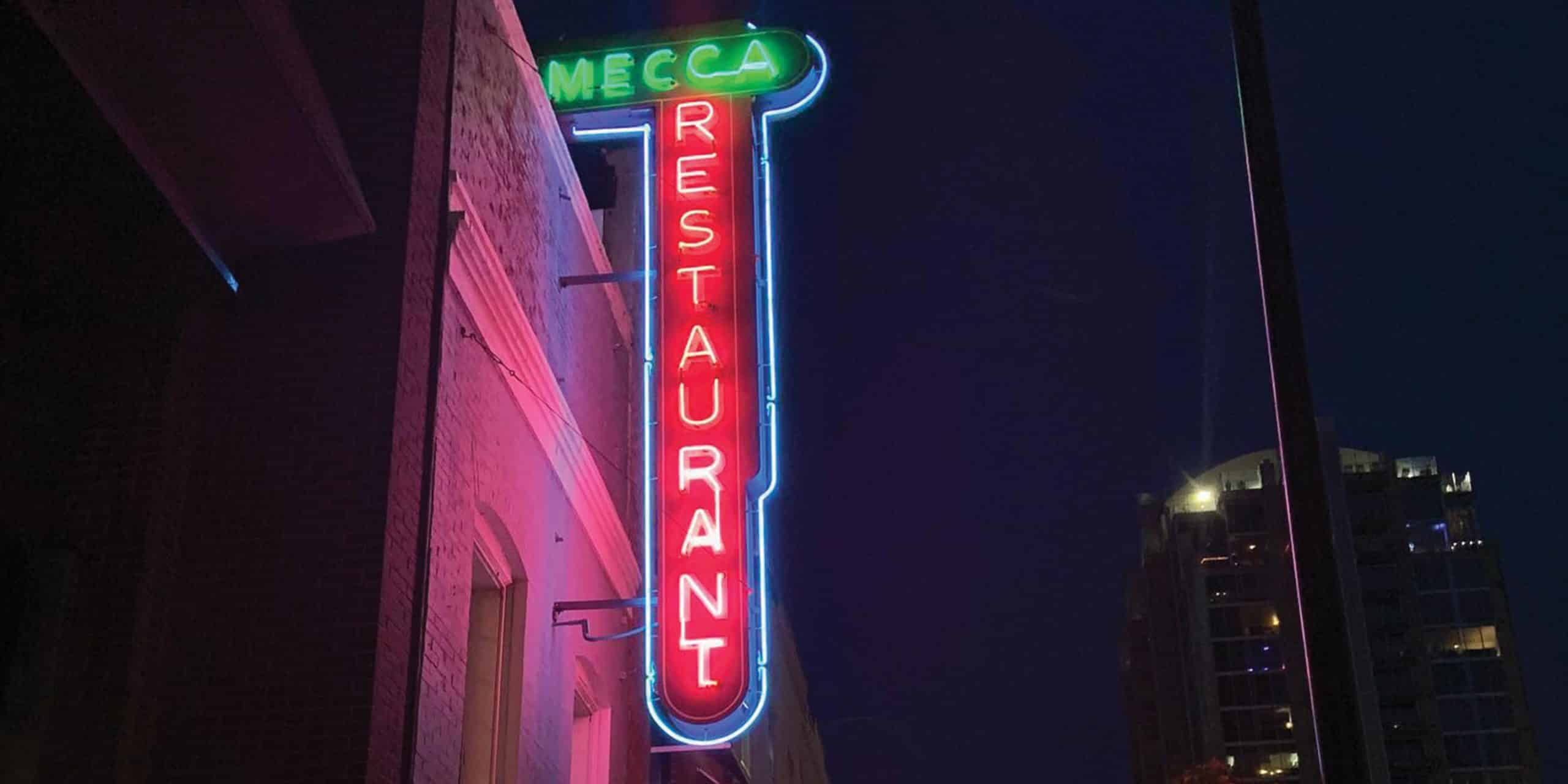
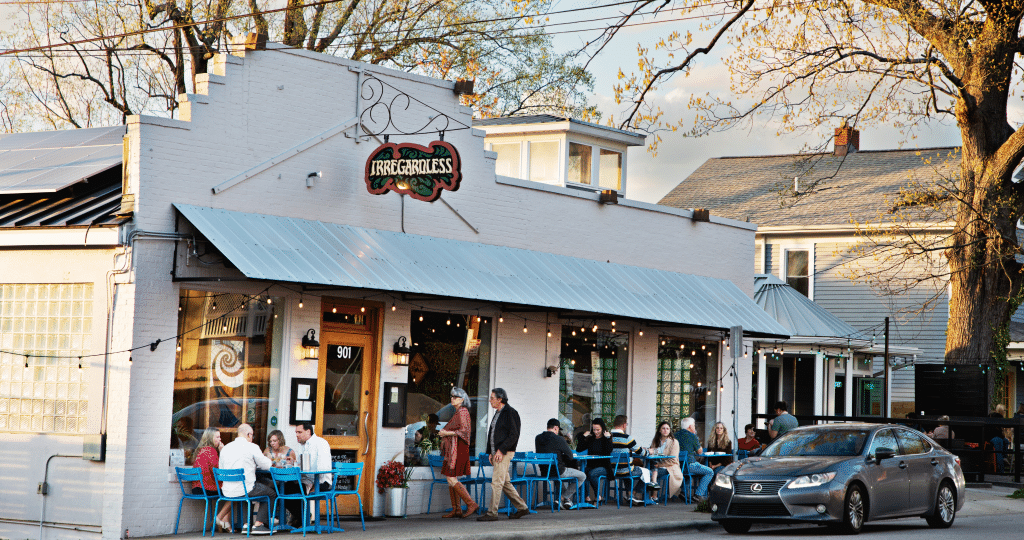
So in a city where the landscape can shift as quickly as the foodie trends, Raleigh restaurants are forced to constantly reinvent themselves to stay alive. But, rarely, a space finds a way to endure without sacrificing its soul. Salvations like Irregardless and Mecca Restaurant prove that preservation rooted in intention can have staying power. In both cases, change of ownership was a deliberate act—a commitment that affirms these aren’t just restaurants, but relics of Raleigh’s soul, sustained by community support and able to serve another set of decades to safeguard the city’s history, recipes and rituals otherwise lost in the churn of development and gentrification.
We’ve witnessed more than our fair share of outward grief and nostalgia for beloved haunts throwing in the towel—yet not enough bookings while they’re open to help them survive. As a result, Raleighites can just about count on one hand the number of eateries that have eclipsed the half-century mark.
Sure, legacy takes time—as do concepts that have legs for decades to come. Multi-Beard-celebrated places like Poole’s (2007) and Crawford and Son (2016) are pillars in their own right that show no signs of slowing—and are the exact kinds of anchors identity can be built on. Perhaps we’re beginning to see the signs of battle-tested fixtures, chefs planting roots, and a community that truly values both trend and tradition.
And, just maybe, Raleigh’s moment-over-legacy mindset isn’t a flaw—but a chapter. A potentially short-sighted one, if we don’t learn to invest in longevity as much as we do in novelty. As our city matures, we may finally be ready to champion not just what’s next, but what lasts. Now, as Raleigh Magazine turns the page on a new decade, we’re more committed than ever to doing our part to extend that narrative—by telling more stories that celebrate staying power and encouraging our community to support it, seat by seat, meal by meal.
Raleigh Anchors
Going strong for 30+ years, these are exceptions in a sea of short-lived concepts or long-loved losses.
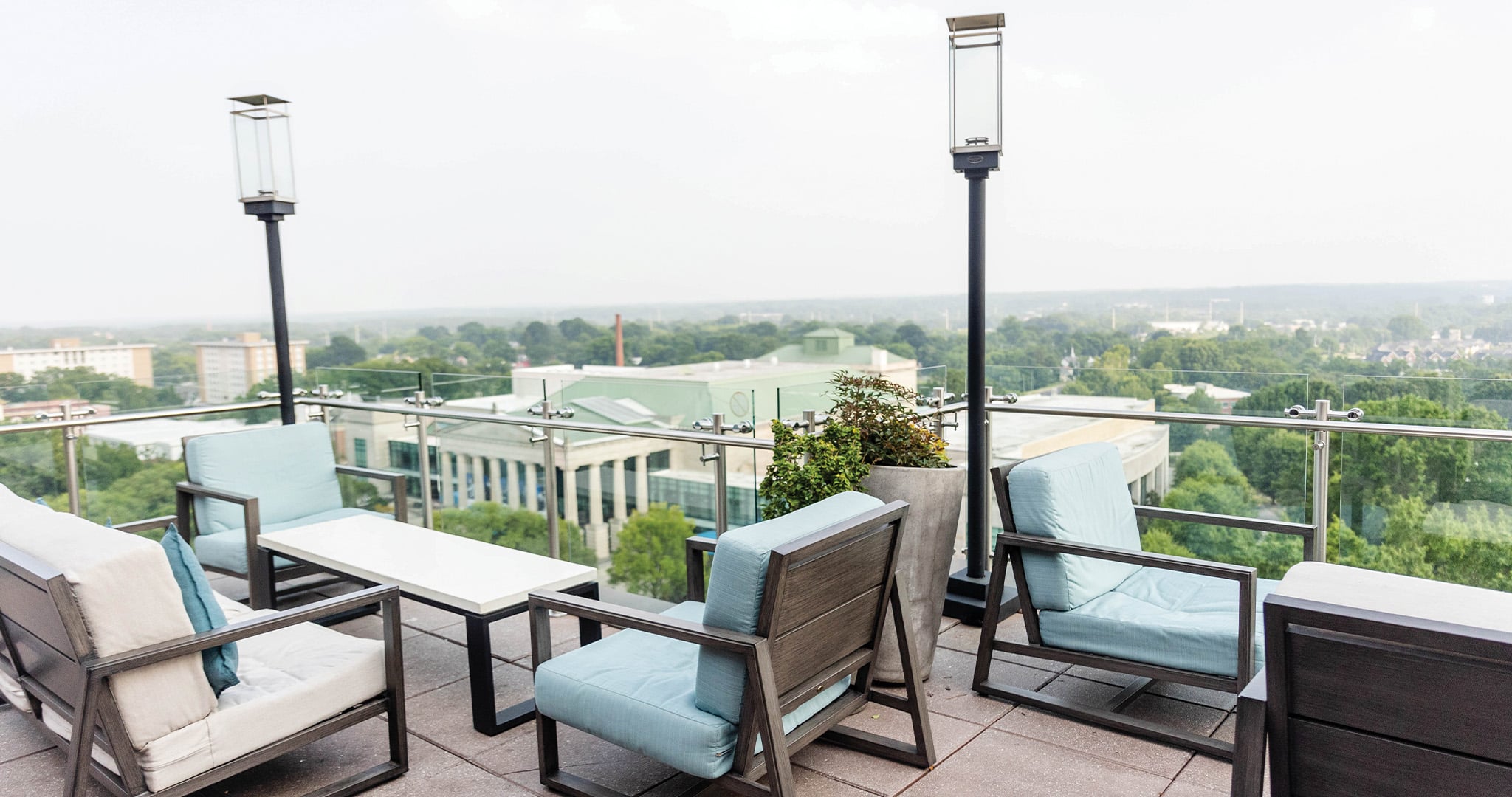
Forget flight fears and panic packing—sometimes the best getaway is a staycay. Ditch the keys, keep the vibes and hit pause without leaving town—Raleigh’s hotel and nightlife game is staycation certified. PTO preserved, DND mode: on.
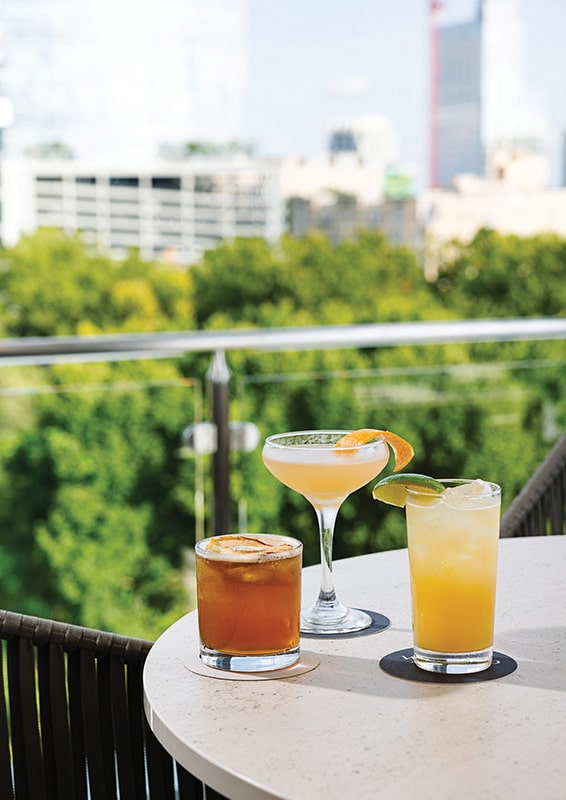
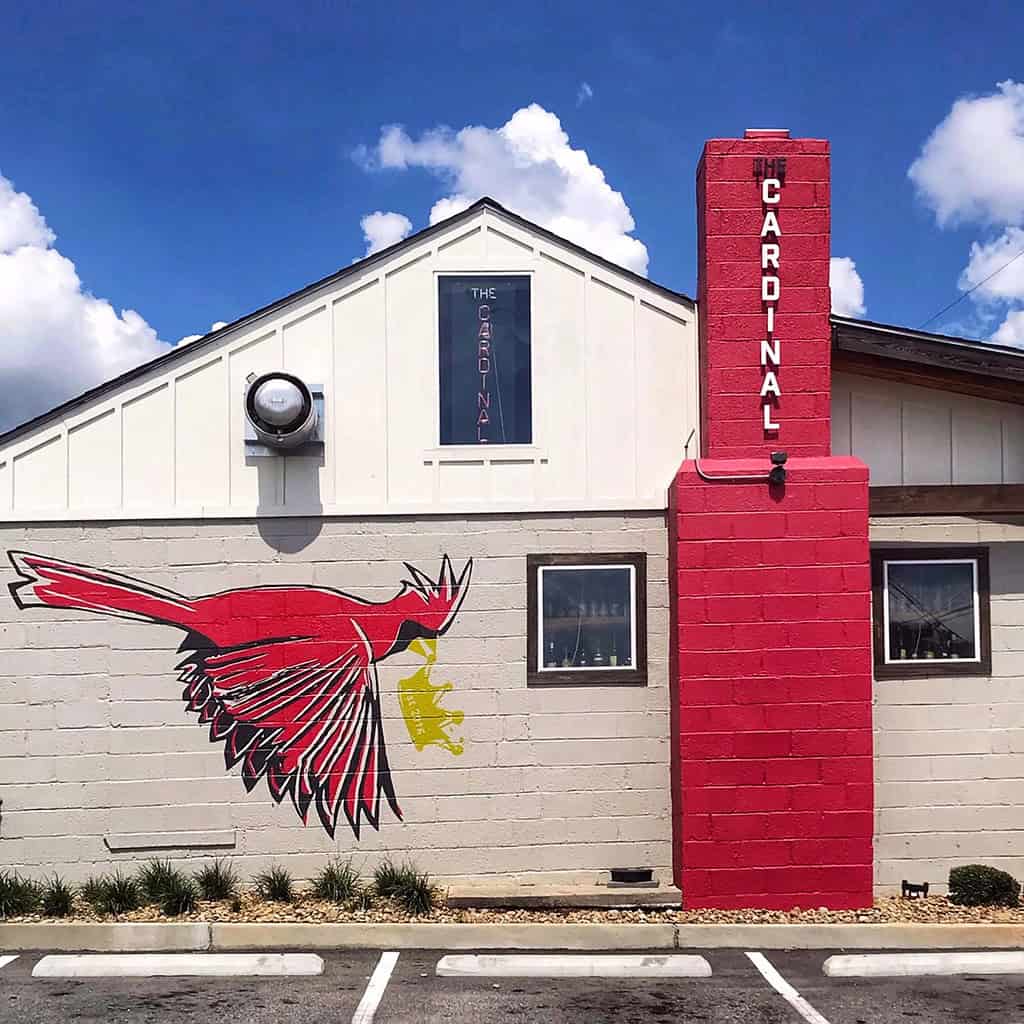
» WHERE WE DRINK NOW Country: Whiskey Rose, Tin Roof NCSU: The Village Brewery: Trophy Dive: The Cardinal Party place: Cornerstone Tavern Irish: Hibernian Neighborhood: The Blind Barbour Local live-music dive: Lincoln Theatre
Finch’s courtesy of the News & Observer, NC Archives
» PLACES WE EAT NOW
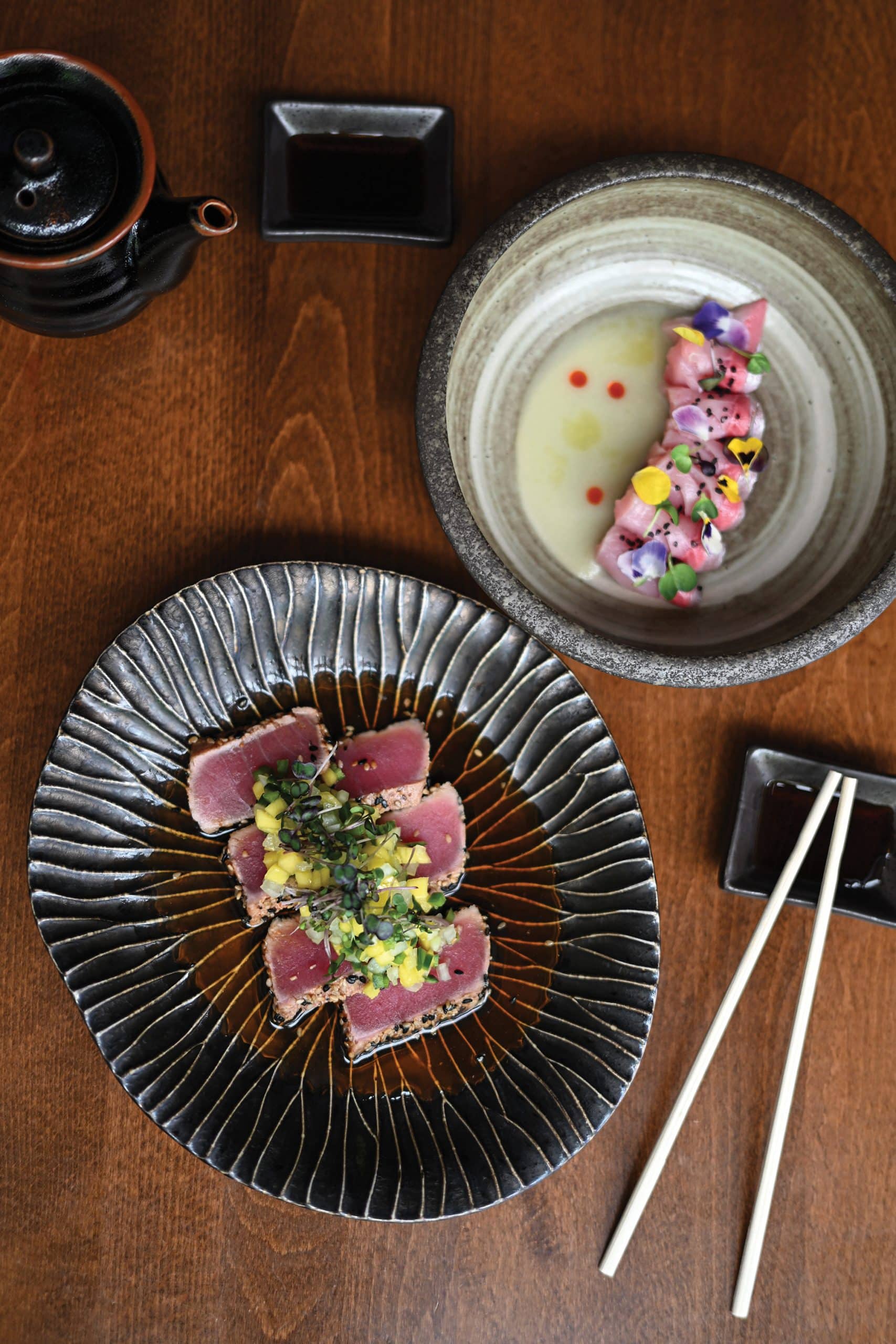
Diner: Mecca Oysters: St. Roch Pizza: Trophy Italian: Vic’s New American: Crawford and Son Burgers: MoJoe’s Nostalgic: Poole’s Breakfast: Big Ed’s Sushi: Sono Chinese: Five Star Not local but loved: Barcelona Wine Bar 24 hours: Waffle House
Image by Jessica Crawford, courtesy of Crawford and Son
Eat (and drink!) your way down memory lane for a taste of Raleigh’s restaurant history.
There’s no question that Raleigh is home to a thriving restaurant scene—and while our city continues to level up its eating and drinking game on the reg, ya just can’t beat the classics. Here, we challenge you to summon your nostalgic knowledge for a roundup of Q’s on Raleigh’s oldest eateries, spots you might’ve forgotten about and more. Ready for a trip down memory lane?
1. Char-Grill has been touting the “best burger and fries in Raleigh” since 1960! A Raleigh institution—from its late-night hours to sliding your order into the iconic window slot—the burger joint now boasts how many locations in NC? a. 7 b. 8 c. 9 d. 10
2. An, ahem, mecca, Mecca Restaurant has been sating stomachs in Downtown Raleigh since 1930 (and she doesn’t look a day over 25!). What was the OG name of the old-school eatery? a. Mecca Luncheonette b. The Mecca Diner c. Raleigh’s Mecca d. Nick’s Place
3. Get piggy with it via Clyde Cooper’s Barbeque, which has been pullin’ the local pork game for 80+ years. On what holiday did the institution first open its doors? a. Christmas Day b. Valentine’s Day c. July 4th d. New Year’s Day
4. Way back when… Thad Eure Jr. and Charles Winston purchased 50 acres of land on Highway 70 that would eventually become what is now the iconic Angus Barn steakhouse. How much did they pay for the prized plot of land? a. $825 b. $6,750 c. $7,750 d. $10,750
5. Hey, playa! Players Retreat—aka “PR”—has positioned itself as the prime hangout spot for Wolfpackers, as it sits on the outskirts of NC State’s campus and touts tons of collegiate memorabilia. Who currently sits at the helm of this fan-fave neighborhood bar? a. Mickey Hanula b. Bernie Hanula c. Pete Jarrell d. Gus Gusler
6. Mosey up a flight of stairs on Hillsborough Street beside Global Village and you’ll find the treasured Mitch’s Tavern, which has been serving Raleighites since 1974. The resto was also a setting of which famous baseball movie? a. A League of Their Own b. Bull Durham c. Field of Dreams d. Moneyball
7. Hot wieners found here! No-frills hot dog hot spot The Roast Grill has long embraced the mantra to do one thing and do it well—and in this case, that would be a delish hot dog (served with a cold glass bottle of Coca-Cola, natch). Which condiment does the joint not serve? a. Ketchup b. Mustard c. Chili d. Texas Pete
8. Ciao, bella! Amedeo’s Italian Restaurant opened its doors in 1963 after NC State alum Richard “Amedeo” DiAngelis turned his desire to fill the city’s need for a local sub/hoagie shop into a reality. What sport did DiAngelis play during his time in college? a. Baseball b. Football c. Wrestling d. Basketball
9. Before diners chowed down on delish Italian fare on the gorgeous Mulino patio, the aesthetic eatery was the home to Babylon, a restaurant offering eats inspired by which country? a. Egypt b. Turkey c. Croatia d. Morocco