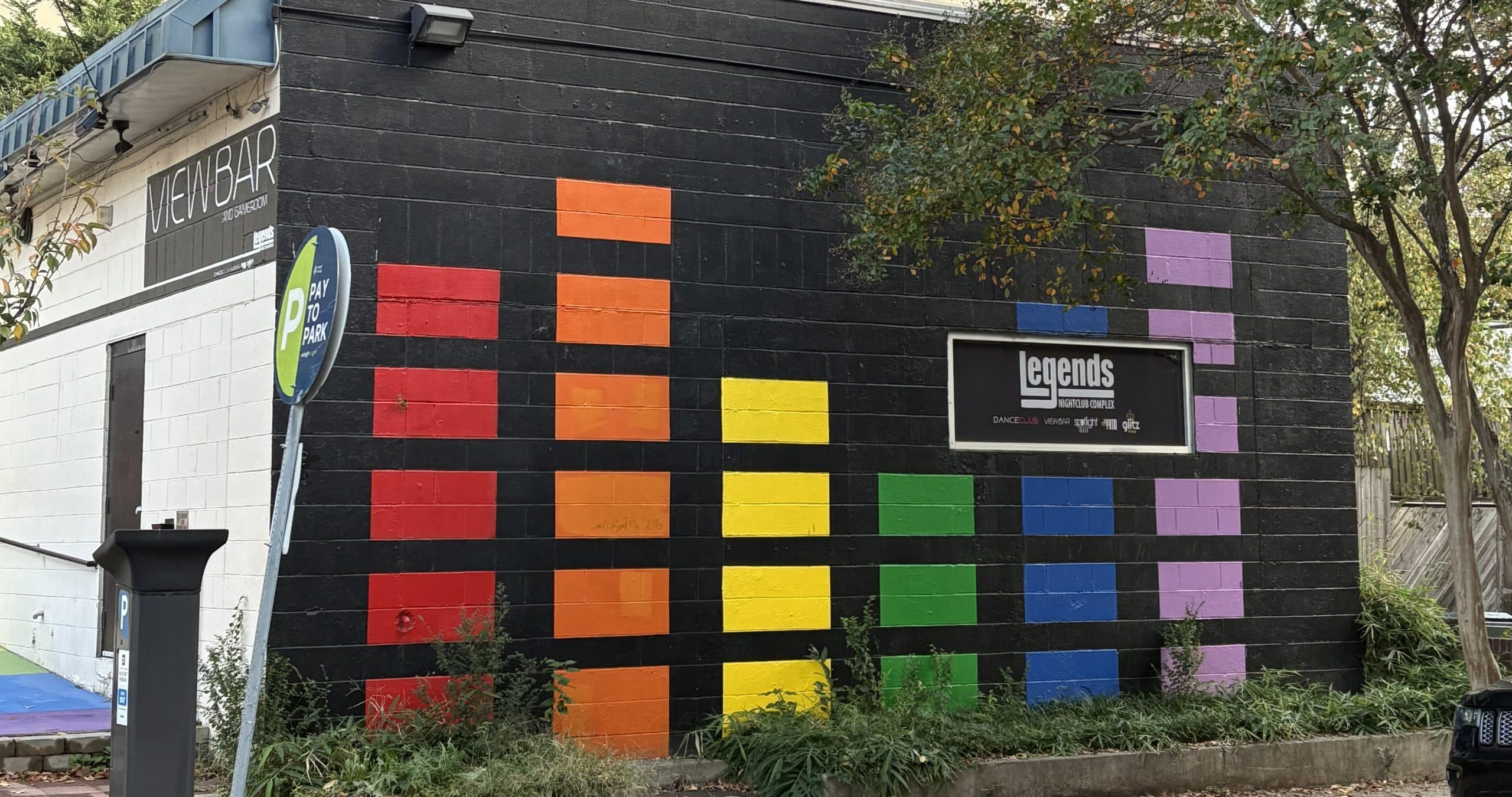
Upon opening, Legends’ future was uncertain. Now, after 30-plus years of business, the iconic nightclub complex readies for its next chapter in a new home.
“Legends is an institution. It’s one of the best—if not the best—establishments in the entire country.” So says Raleigh City Councilor Jonathan Melton of Downtown Raleigh’s legendary Warehouse District LGBTQ+ nightclub complex.
Those are big words about a Raleigh icon that didn’t even feel safe displaying its name when it opened, and has since weathered four decades of tumult, hate, growth—and a lot of love.
Overcoming Adversity
When Legends quietly came on the scene in June 1991, they didn’t think they’d make it six months—much less 35 years. To put it simply, the world was a vastly different place. At the time, the LGBTQ+ community lacked representation just about everywhere, and gay bars became a cultural linchpin for a sense of belonging and a safe haven from social stigmas, as drag culture and rave scenes ran rampant through many gay communities the decade over.
Being gay in the ’90s wasn’t just frowned upon—it was, at best, a demarcation (not unlike Hester Prynne’s scarlet A) and, at worst, a literal death sentence. It wasn’t understood. It wasn’t accepted. Gay relationships were mostly underground—and those that weren’t faced public scrutiny. And gay marriage was about as likely as winning millions on your first-ever Powerball ticket. Prior to a Supreme Court ruling in 2003, even same-sex sexual activity was illegal in 14 states. Think about that—it was illegal for two adults to have consensual sex.
Shame. Fear. Self-loathing. Shunned by their families and communities. Losing jobs, friends, livelihoods—lives. It’s a reality that was lived on the daily. After a rapid rise to top public health threat in the ’80s, AIDs—aka the “gay disease”—had become a ubiquitous term. In late ’91, just months after Legends bowed, mass fear and stereotypes were being perpetuated as legendary gay Queen frontman Freddie Mercury died of a related illness one short day after announcing he had AIDs, and straight—though promiscuous—bball legend Magic Johnson infamously shocked the nation by coming out HIV-positive.
In 1993, “Don’t Ask, Don’t Tell”—allowing gay people to serve in the military, but denying them from being open about their sexuality—infamously became the hot-button topic symbolizing the ongoing tension between acceptance and limitations.
During that same time period, Tom Hanks would star in his jolting Oscar-winning Philadelphia performance as a gay lawyer who hides his homosexuality and HIV status for fear of losing it all. Ellen wouldn’t even come out on TV until 1997. Will & Grace wouldn’t premiere until 1998. And the first primetime gay kiss wouldn’t air until 2000 on Dawson’s Creek—after Legends was already almost a decade old.
It’s chilling to think about Legends as it is today against the very real hate-spewed early years that formed it. A brave beacon of hope in an unaccepting world, it took root, transforming the grungy Warehouse District into a sort of underground safe haven. Now, the loud-and-proud splashy rainbow-colored all-are-welcome love hub is laying new roots in the very district that raised it, with a brand-new location slated to open this summer just a couple blocks away from its current digs.
History in the Making
Relatively radical, when Legends quietly opened in 1991, Raleigh hardly had a gay bar scene, save a few spots: Mousetrap (the city’s first LGBTQ+ bar) and Warehouse District duo The Capital Corral (aka CC, the district’s first gay club) and White Rabbit Books & Things.
The only local establishment in Raleigh welcoming males, females and trans patrons seven days a week, Legends purposely opened across the street from—and as a complement to—CC, to lean more bright lights, high-energy dance vibes and flashy drag queens, says co-owner MC, who joined operations around 2002. “It was a shot in the dark,” he says. “And it worked.”
Together, the subculture spots took over the Warehouse District, giving the gay community an area to romp around and bar-hop—and the “gayborhood” was born. “[The area] was trash,” reflects MC, “which is why we were able to get into a run-down crap building nobody cared about.”
Photo courtesy of Legends
All in the Gayborhood
While the Warehouse District is all but unrecognizable from the ’90s, “the changes with the gayborhood really came into existence primarily because we were all here,” maintains MC.
Since then, the area has managed to grow its inclusive roots via vibrant signage, rainbow murals and pride flags now flaunted loud and proud. As such, Legends has been a catalyst for other gay bars and clubs to open throughout the city. And though the longstanding spot remains the big kid on the block, fellow LGBTQ+ spaces like Flex and Ruby Deluxe offer variety—further cultivating a safe, open environment no longer in need of hiding.
“I think the success of all of us relied on each other in some sort of synergy,” proclaims MC. With that said, he notes larger gay clubs are a dying breed, making Legends’ sprawling—and expanding—entertainment complex somewhat of an anomaly. Sure, big cities like NYC and Chicago have their hot spots, but in the last few years, several longstanding DC gay bars have shuttered, and Charlotte has nothing of the same caliber as Legends.
“Raleigh is changing very rapidly,” adds Melton. “We’ve seen in other cities a lot of those gay bars and establishments get pushed out because the areas where they used to exist become ripe for redevelopment and they have nowhere to go. We’re certainly seeing a lot of changes in the Warehouse District where Legends has been located for decades, but I’m thankful they’re part of those changes.”
Few LGBTQ+ bars or clubs have materialized in the past few years in Raleigh, and those already on the scene have experienced trying times (see Ruby’s Save Our Queer Bar Party thrown in an effort to help pay its rent after facing financial troubles). At the same time, the city—and the world—has made great strides in serving up “y’all means all” inclusive spaces that don’t specifically label themselves as “gay bars.”
Photo courtesy of Legends
Standing the Test of Time
Through it all, Legends has remained a trailblazer—and it’s still “kicking and screaming,” reflects MC. Though, certainly, the roles of gay bars has evolved, acknowledges Melton. “For Legends to stick around so long through so many changes nationwide and in the city and state—having a place where you can still be your most authentic self, where you know you’re welcome as you are—I just think it’s really important,” adds the city councilor.
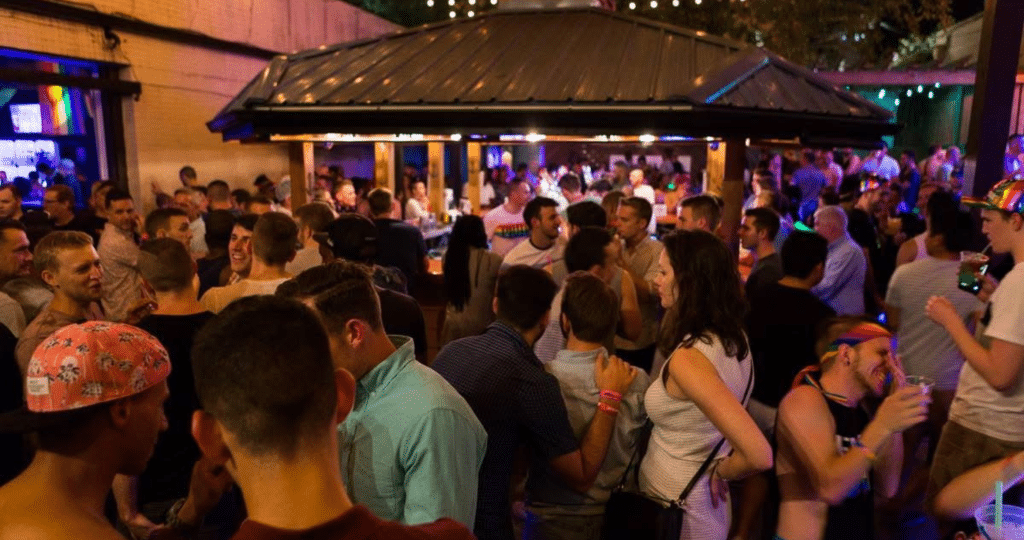
The how, at its root, is pretty simple. Legends is not just here for the party—though they throw one hell of one. There’s a deeper significance: “Legends has always been known as a safe place where you could come and be you,” says MC. “That was what it was day one. And it didn’t matter what you wanted to do or how you wanted to do it. If society didn’t accept who you are, it’s OK. We do.”
Beyond inclusivity, Legends’ entertainment has also always been a huge draw, contends Manager/Booking Director Trevor Keller. “We’re a drag-heavy bar,” he says of the weekly premier performances where famous drag queens make regular appearances, helping launch Legends into the go-to drag destination it is today.
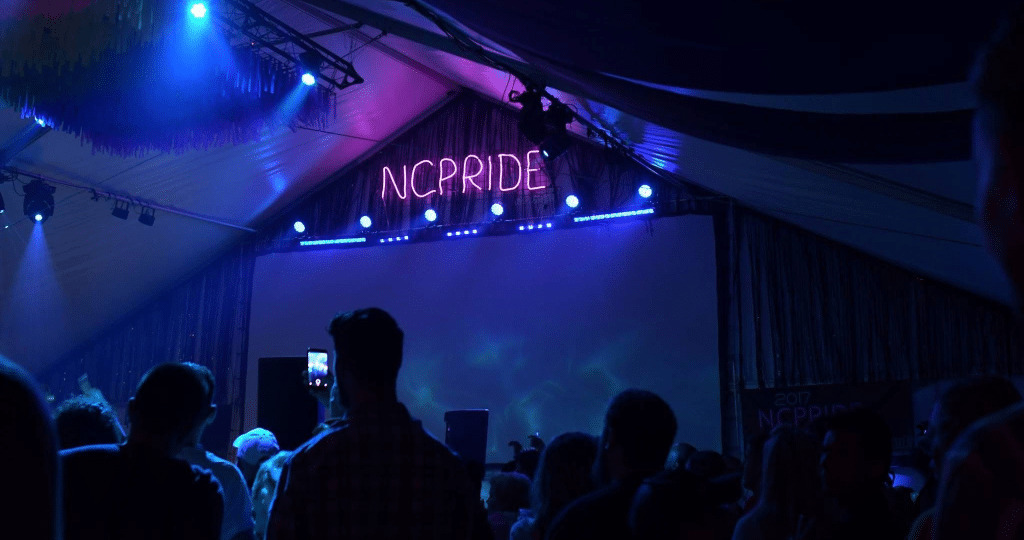
That live entertainment is especially prevalent during Raleigh Pride Month, in which Legends has been heavily involved since its inception, leading the charge on the celebration until the LGBT Center of Raleigh stepped in and took it over. Growing exponentially every year, Legends’ Pride parties are the place to be throughout the month of June, showcasing huge star power along the likes of RuPaul’s Drag Race judge Todrick Hall, Season 8 vet Derrick Barry and Season 12 winner Jaida Essence Hall.
As far as this year’s Pride, while it’s uncertain whether or not Legends will be settled in its new space, rest assured the epic party will go on. MC still intends to close down the street in front of the club for a street party—with other “big things” in the works, naturally.
Photo courtesy of Legends
What a Drag
As legends often go, it was that very claim to fame that sat at the middle of major controversy in the ’90s, when Raleigh City Council pushed to outlaw drag as then-Mayor Tom Fetzer believed it constituted “lewd behavior.”
“They wanted us to call [drag] ‘adult entertainment’—just like a strip club,” recalls MC. “It would’ve alienated the gays outside of city limits.”
In response, Legends took the City of Raleigh all the way to the state supreme court before the city finally caved last-minute. Now, it’s something MC thinks about whenever he sees another bar or restaurant throw a drag show or brunch. Quite frankly, if it weren’t for Legends going toe-to-toe with the city, regular drag events held at the likes of Libations 317 or Raleigh Beer Garden wouldn’t be—period.
But the drag dilemma wasn’t totally done, resurfacing some 28 years later when NC Republican lawmakers filed House Bill 673 in an effort to criminalize drag shows in the presence of minors—though it was stalled by legislature and never became law.
Photo courtesy of LoopNet
The Next Chapter
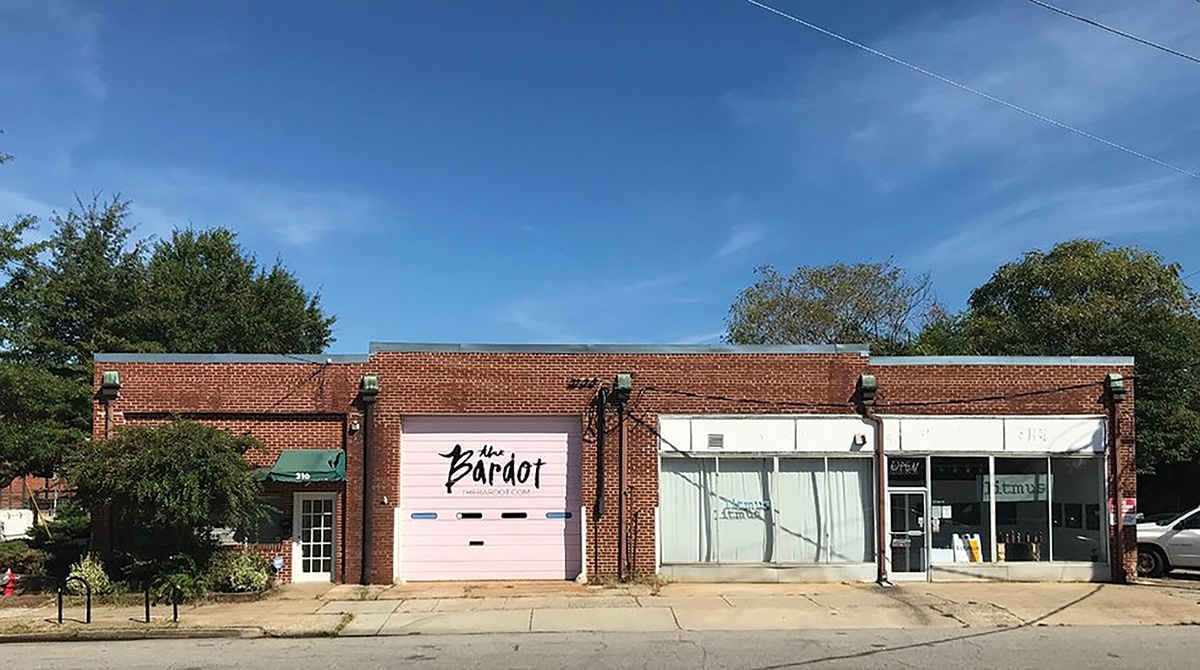
Legends has no doubt lived a hell of a life in its current digs, but “the building has served its purpose,” says MC. “And this move allows us to ensure our legacy continues. We’re still going to be doing exactly what we’ve done for the past 30+ years, we’ll just be doing it a few blocks away.” Since acquiring the new DTR building ~three years ago on an old dusty block of Cabarrus—between the railroad tracks and Eye Heart Tattoo, and spitting distance from the back side of the train depot—MC has completely gutted it to make way for Legends’ ~10,000-square-foot new digs.
Keeping with its MO of having something for everyone, its new home will tout the same themed areas as its native space—think an improved theater, massive outdoor bar, and, of course, the energy-heavy game room and music-thumping dance floor Raleigh has come to love—plus some “Easter eggs” for patrons to spot (keep your eyes peeled for the OG sign currently hanging outside of the building). “We’re going to lose some of the little characteristics of Frankenstein, what I call [the current] building,” says MC. “It’s got a lot of quirkiness, but we’re gonna build some of that.”
As far as why it’s taken so long to find a new landing spot that will carry the legend through its next era, MC cites his own strict criteria—primarily staying in the Warehouse District.
“It was more than just ‘I need to move my business and be successful,’” maintains MC. “I’m not in it just for that—obviously I have to make money and survive, but there’s a lot more riding on that than me opening a beer and giving it to you to get drunk.”
Naturally, the grand opening of Legends’ new location calls for a blowout—and MC promises a “pretty aggressive party month or quarter” compared to the relatively lackluster opening of the current location. But, of course, there’ll be a closing party for that one too.
“Thinking all the way back [to the beginning]—especially getting ready to leave the building—and then what I’m leaving is like, ‘Holy cow,’” ponders MC… “just seeing how far it’s come.”
No doubt memories of the OG Legends will live on in the hearts and minds of everyone who has stepped through its doors or spent any significant time in Raleigh. “Legends has been here forever, so I want to see a stone in the ground that Legends was here,” he adds. “It’s hard not to know somebody that didn’t say at some point, ‘I remember going to Legends.’” And, now, thanks to another dusty abandoned warehouse, the legend will live on.
1981
First Triangle Pride march in Durham, sloganed Our Day Out
1991
Legends is incorporated, leases 330 W. Hargett St.
1995
Complaint filed; female impersonation ban; Council fines Legends
1996
City reaches deal with Legends, ceases ban enforcement
1998
Legends purchases 330 W. Hargett St.
2009
RuPaul’s Drag Race debuts
2011
LGBT Center of Raleigh hosts first Out! Raleigh Festival
2011
Legends celebrates 20 years
2012
Out! Raleigh is born
2014
LGBT Center of Raleigh opens
2017
Triangle Pride moves to Raleigh
2019
Raleigh Pride founded
2020
Legends sells current location with a long lease-back period
DTR’s legendary nightclub complex has found a new home in the Warehouse District.
The party ain’t over yet. Almost five years after selling its current location to make way for a new development, longtime pink- and purple-hued LGBTQ+ bar Legends has found a new home at 316 W. Cabarrus St. (in between The Depot and Eye Heart Tattoo).
Staying true to its nee-1991 Warehouse District roots, Legends 2.0—expected to open early this summer—will continue to be a go-to entertainment destination for drag, dance and other live shows, what with the inclusive dedicated spaces Raleigh has grown to love. Think a greatly improved theater, huge outdoor bar, energy-heavy game room and music-thumping dance floor—plus some “Easter eggs” for patrons to spot (keep your eyes peeled for the OG sign currently hanging outside of the building).
“This move allows us to ensure our legacy continues,” says Legends co-owner MC. “We’re still going to be doing exactly what we’ve done for the past 30+ years, we’ll just be doing it a few blocks away.”
It was that Warehouse District location criteria—an absolute must, according to MC—that made the process of securing a new location take as long as it did. “It was more than just ‘I need to move my business and be successful,’” MC explains. “I’m not in it just for that—obviously I have to make money and survive, but there’s a lot more riding on that than me opening a beer and giving it to you to get drunk.”
In essence, while Legends throws one hell of a party, the popular nightclub is about so much more. Since opening during a less-than-accepting time in history, it’s been a welcoming refuge for those in the LGBTQ+ community and their allies.
“Legends was always known as a safe place where you could come and be you,” emphasizes MC. “That was what it was day one. And it didn’t matter what you wanted to do or how you wanted to do it. If society didn’t accept who you were, it’s OK, we do.”
In celebration of its next chapter, Legends is planning a blowout “party month or quarter” for the new digs, in addition to a final farewell of the existing location, which promises to live on in the hearts and minds of everyone who has stepped through its doors or spent any significant time in Raleigh.
“Legends has been here forever, so I want to see a stone in the ground that Legends was here,” MC adds. “It’s hard not to know somebody that didn’t say at some point, ‘I remember going to legends.’” And, now, thanks to another warehouse, the legend will live on.
For more on Legends history and what to expect of the new location, be sure to pick up a February issue—or subscribe online.
Like a virtual corn maze, maneuvering Raleigh’s ever-growing amount of DTR lots and apps can be overwhelming—but how did we get here? And how do we navigate it?
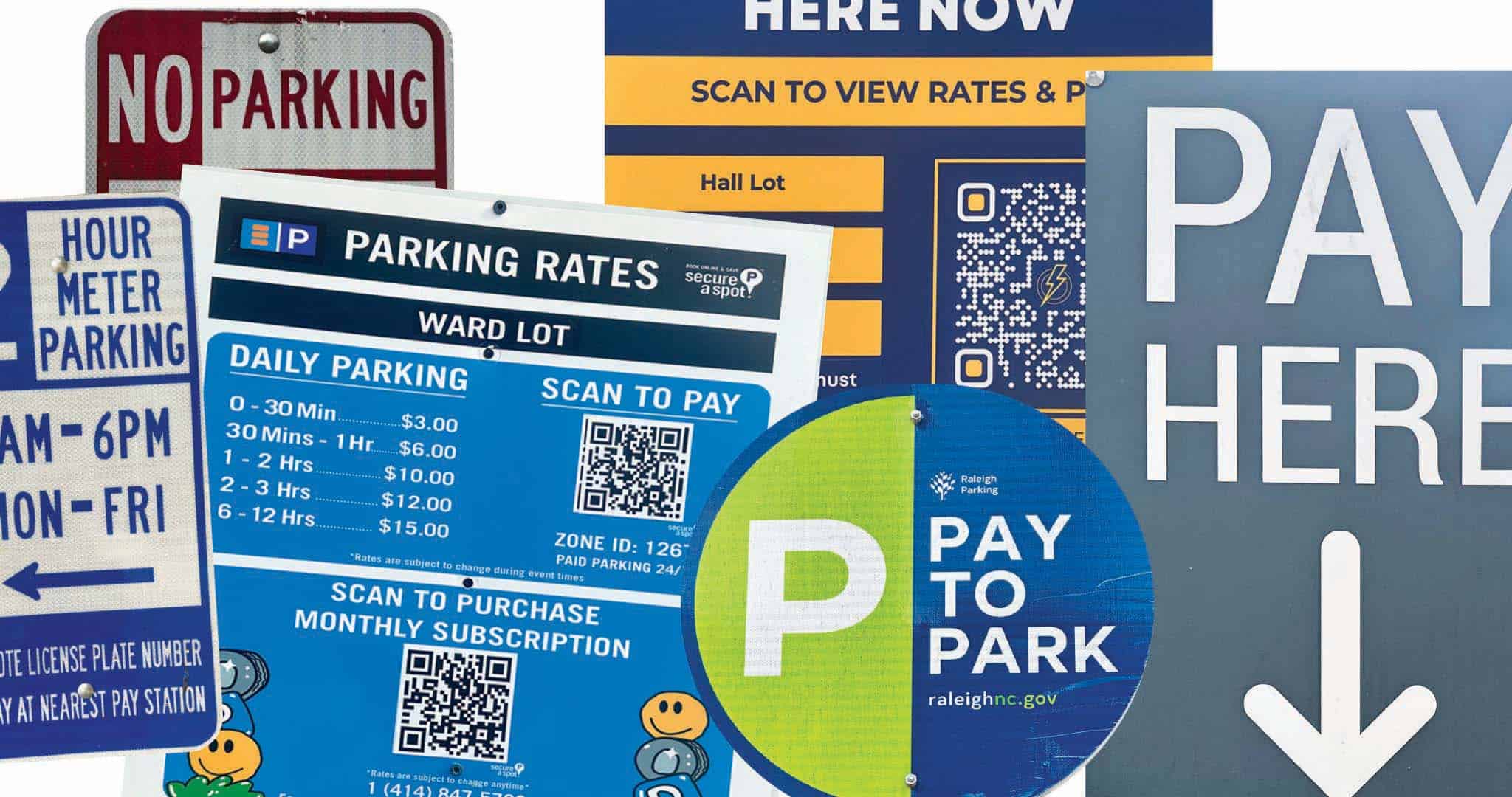
Ask any Raleigh resident their feelings on going Downtown and you’ll hear the same narrative: Figuring out where and how to park and pay is the worst. Read: an overwhelming maze of public and private parking options people would sooner skip than solve—especially given the costly consequences.
You know the drill. You’re endlessly circling for a street spot before giving up and pulling into a private lot, where you’re forced to find or download yet another parking app to then get gouged for $20—only to return some five minutes late to a ticket upward of ~$125. Such scenarios are playing out across DTR on the daily, prompting residents and visitors to weigh venturing Downtown—where every lot is a puzzle of rates and rules—against alternative live-work-play districts dishing plenty of free parking (think North Hills, Village District, Fenton—though those areas can come with their own lot battles and endless hunts).
So, how did we get here? A quick refresh: Longtime Raleighites may remember the infamous McLaurin Parking monopoly. Rolling out their empire in 1948 on South Salisbury Street behind the Sir Walter Hotel, the McLaurin family was the name in NC parking for 70 years—managing both public and private parking locally, including a city contract of 8,000+ parking spots.
Fast-forward to 2017 when the McLaurins sold their parking conglomerate off to The Car Park of Boise, Idaho. From there, enter the swath of parking management czars we love to loathe today—including Secure Parking, ParkMobile and more. And, with them, the exorbitant rates and fines—aka the measly ~$18 private parking violation from 2015 has septupled to up to $125, with hourly rates currently clocking in at $6+.
Despite the melee, DTR’s popularity peaked this summer, seeing its highest post-pandemic monthly foot traffic. Still, parking accessibility remains a hot-button topic to keep Downtown thriving—and the exorbitant fees, fines and frustration have yielded new efforts to curb the parking fluster.
One idea currently being kicked around includes making the first two hours of public parking free in city-owned garages. “The matter is still under consideration,” explains Parking Superintendent John M. Wynn.
And contrary to public perception, Downtown is actually overflowing with available parking options. “Current supply of parking, particularly off-street, is plentiful and more than meets current demand,” says Rob Murray, communications analyst for the City of Raleigh Transportation Department. And as “private developers are including parking to support their projects, the City of Raleigh does not anticipate building new parking.”
And they shouldn’t. Almost one-third of DTR is off-street parking, easily overshadowing the national average of 16%. So, ultimately, it’s a matter of education and accessibility—from knowing where to park for cheap to navigating the sea of parking apps.
Private vs. Public Lots
The cardinal rule for Downtown parking: Always opt for street and city deck parking. For starters, there’s the convenience. Street parking can be paid on-the-go via the Passport Parking app, and these spots, as well as city-owned parking garages and lots, are cheaper by the hour—not to mention city citation fines start at just $15 if paid immediately. It’s in your best interest to handle city-issued tickets promptly to ward off escalating fines and the boot—which the City can enforce once any vehicle racks up three 90-plus-day-old unpaid citations.
Private lots, alternatively, are infamous for pricey parking, camera-tracking cars and sky-high fines. Beware of multimanaged lots boasting confusing signage with a riddle of QR codes. While they arelegally required to specify which spots are which, it’s your job to figure it out based on your colored wheel stop (aka that concrete block at your front tires).
The lack of legislation involved with private lots has its pros and cons. While it means repercussions for unpaid citations are harder to enforce, it also means lots can charge any amount they wish for hourly parking and violations—and there are few laws defending you when a problem arises. In fact, certain law firms won’t even touch private parking tickets.
And because the number of citations issued is so high, parking ticket scams are more common in private parking lots—especially ones using QR codes to collect payment. Pro tip: If a ticket requires payment via reloadable debit card or wire transfer like Cash App, Zelle or Venmo, it’s a fraud. Always visit the website listed before paying to confirm it’s legit.
Beyond scam alerts, navigating the private lot violations is often overwhelming, including receiving aggressive letters in the mail threatening to impound or immobilize your car a mere 60 days post-ticket. (Don’t forget: Your plate is tied to your home address—and they will find you.) While the parking company cannot hunt down your car and tow it from just anywhere, they can legally tow or boot your vehicle the next time you park in that lot or another lot they manage. While these arguable scare tactics prove obnoxious and stress-inducing, private lots are private property—and if you break the contract (aka the terms and conditions you opted to skip over) the companies are legally permitted to defend themselves—even if it feels predatory.
According to The Car Park VP of Marketing Cory Collins, who manages several private and public lots in Raleigh, violations are not given a flat rate—but based on the offense. “We believe strongly in the importance of keeping an ADA parking space available for those who need it,” explains Collins, “so the violation for parking in an ADA space will be more than for expired time.”
Although The Car Park doesn’t use a collections agency, they, like all other private lots, reserve the right to. “The majority of our revenue comes from folks paying for parking, not parking violations,” adds Collins. “Enforcement is about keeping parking accessible and fair. … Most people choose to do the right thing and pay the violation if they owe it. We’re often lenient and work with folks when there’s a reasonable mistake that’s led to the violation.”
Pro Tips:
Ensure the parking spot color correlates with the color on the sign you scanned.
Verify how long you paid to park in the lot
Camera recordings mean mailed tickets if you try to play the system.
Don’t pull into a private lot at all if you don’t plan to park there
How Raleigh Stacks Up
Fun fact: Relative to other comparably sized cities, the City of Raleigh’s fine is extremely low, starting at just $15—and only charges for Downtown street parking from 8am to 6pm. Meanwhile, cities like Nashville and Kansas City charge to park on the street around the clock, and Sacramento charges $62.50 for parking violations. Ultimately, pricing, fees and location are parking problems that any healthy, thriving metropolis must tackle. So how have other cities handled these growing pains?
What Not to Do:
Pricing based on location. Like Raleigh, New York City uses an app so drivers can pay for parking “in a New York minute”—but, unlike the City of Oaks, metered parking can cost up to $13/hour. Hence, most New Yorkers opt for public transit.
Privatizing more parking. After the infamous $1 billion deal in the midst of the 2008 financial crisis giving private firm control of all metered spots and pricing, Chicago must now buy or rent street spots back if they want to build a bike lane or host a street fair.
Require parking minimums.Atlanta aimed to tackle parking problems via minimums to ensure enough spots for all. Instead, many lots sit vacant on the busiest nights, thus driving up the cost of living, creating heat islands and resulting in lost city revenue.
Best Practices:
Progressive pricing. To increase parking turnover, Austin’s on-street parking is adjusted by the hour—first two hours, $2 each; third hour, $1; each subsequent hour, +$0.50 more than the last—with an hourly maximum of $5.
Collaborative parking.Houston’s Community parking plan expands curb parking, allowing permitted residents and employees to park in metered spots, plus nonpermitted visitors for up to three hours.
Extensive research. In response to the higher demand for parking in its two main districts, Charlotte is slated to implement infrastructure changes based on the research from its 139-page strategic parking plan including studies of 15+ other cities.
Mitchell Silver announces his candidacy for District A in the 2024 municipal election.
If you think you don’t know Mitchell Silver, think again. During his tenure as Raleigh city planner, he oversaw such significant projects such as the Warehouse District, Raleigh Union Station and Downtown South—and is also credited for dubbing Midtown District. Now, he’s back in the mix and ready to run for a seat in local government as a candidate for City Council’s District A.
“[Running has] been on my mind since I returned [in 2021 from a stint in NYC],” former Raleigh planning director and chief planning and development officer Silver told Raleigh Magazine in an exclusive interview in front of his announcement. “I was very active in Raleigh as the planning officer and director for 10 years. I want to offer leadership to make sure the city goes in the right direction.”
Silver, who is largely credited with developing Raleigh into the vibrant, modern city it is today, is also attributed with efforts to develop the city’s comprehensive 2030 plan and Unified Development Code, with the intent of creating “great streets, places and spaces,” connected by 12 transit corridors. “We’re seeing that vision become reality with 60% of our growth in these centers,” says Silver. “Raleigh is a great city, and I want to ensure we have quality growth and we are urbanized in the right places.”
In addition to quality growth, Silver told RM he will be focusing on attainable housing choices and public safety—and ensuring we are making thoughtful and visionary comprehensive plans. He also travels as a speaker and currently serves as principal at McAdams, emphasizing equity and inclusion through urban planning, land use, parks and public space planning.
District A Overview
District A, currently led by city councilmember Mary Black, includes Six Forks, Falls of Neuse and Midtown. Encompassing a variety of green spaces, neighborhoods and development, it also comes with all the obstacles of maintaining the burgeoning district.
For starters, Midtown has seen rapid growth over the last decade-plus—with four high-rises of 10-plus stories since 2017 alone, and two more in progress. With such density—and more development on the way—safety infrastructure has become a hot-button issue for the area.
As population booms, traffic also becomes a mounting concern for those often logjammed in rush hour (and beyond). Much of that traffic, of course, is on Six Forks, which was recently approved by City Council to widen to six lanes in late 2025 (also meaning congestion will likely get worse before it gets better). Beyond that project, district representation will have to fight for the space and funding to build updated safety infrastructure, and develop a low-budget short-term solution to the traffic problems accompanying the rapid development of the area.
Filing dates for the 2024 municipal elections run from July 5 to July 19, and Election Day is Nov. 5. Stay tuned to our May issue for a comprehensive district-by-district breakdown of each candidate and the issues they are bringing to the table.
A district-by-district reveal of projects coming out of the ground.
Raleigh’s skyline is not only changing—but expanding. A number of highly anticipated developments are either coming out of the ground or inching close to completion, positioned to reshape the City of Oaks as we know it. Adding to the city’s allure with myriad new-to-the-market offerings, these projects cover all pockets of Raleigh, including emerging districts like Park District, named for its proximity to Dorothea Dix Park; West End, to the west of Downtown; and Blue Ridge Corridor, redefining West Raleigh. Here, we break down the developments that have begun construction in each area of the city, with updates on noteworthy features and projected deliveries. Change is coming, Raleigh.
WEST END DISTRICT
Image by Steelblue
319 W. Lenoir St.
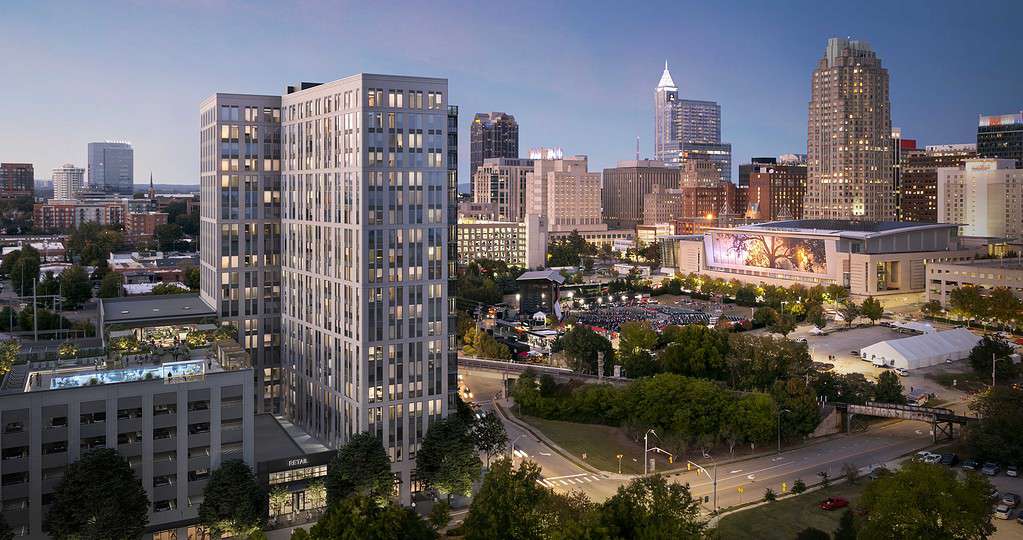
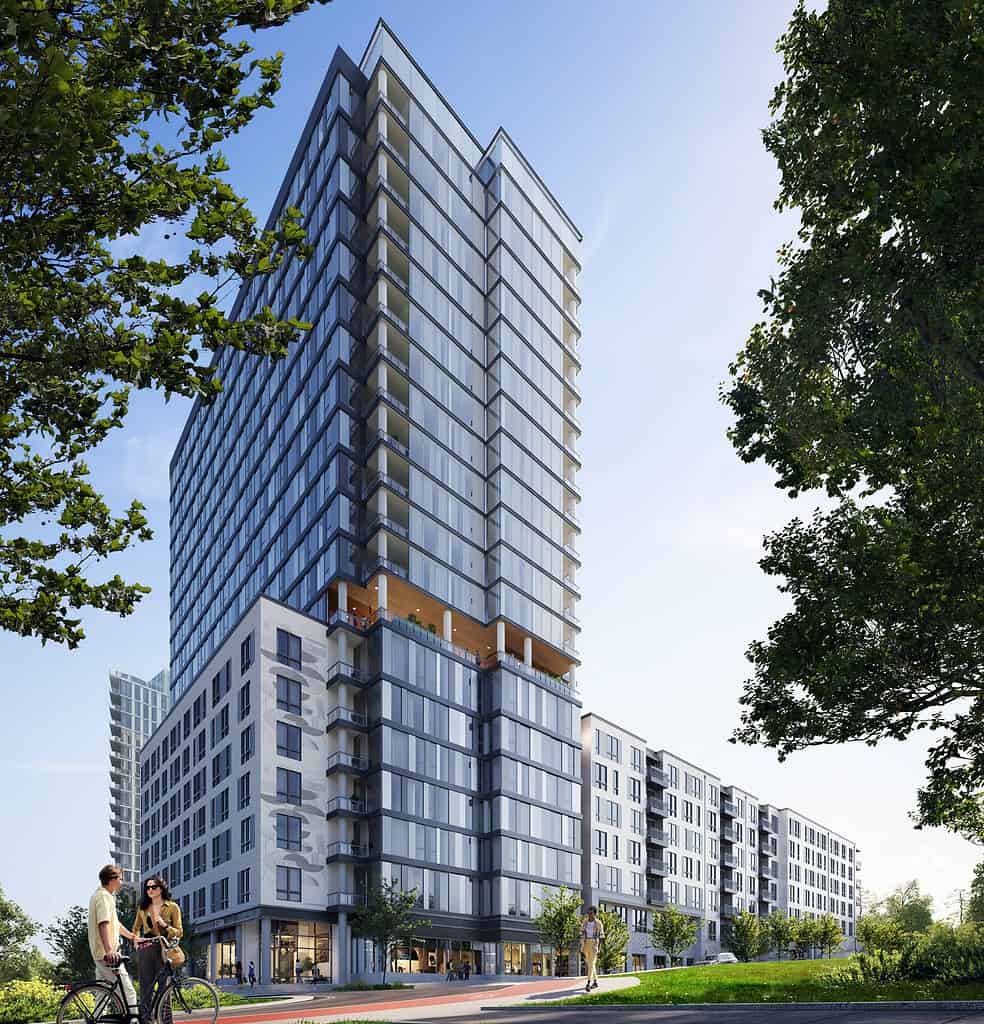
Building on the expansion efforts for the Raleigh Convention Center, which also includes the shifting of Red Hat Amphitheater, is a new currently unnamed residential/retail project at 319 W. Lenoir St. Topping out in December, the mixed-use tower just a block away from the Convention Center will change the DTR skyline and add yet another exciting component to the already-changing area.
The project by developer Capital Square and JDAVIS Architects will provide 30,000 square feet of amenity space for residents of its studio and one-, two- and three-bedroom units who “will enjoy the vibrant social lifestyle provided by the nearby galleries, art studios, restaurants and the city’s largest park,” says Capital Square Co-CEO Whit Huffman.
Perhaps standing out the most of those luxe amenities is the resort-style pool deck with cabanas, an indoor/outdoor lounge and entertainment spaces; and a sky lounge with a private dining room and outdoor patio serving impeccable views of Downtown. Meanwhile, the public will be able to enjoy a pocket park and ground-floor retail.
“We couldn’t be more excited to develop this luxury mixed-use apartment property that will transform the surrounding neighborhood,” adds Huffman—ultimately “bringing vitality and elegance to Downtown Raleigh.” capitalsq.com
Phased opening: Spring 2025
Specs: ~10.5K sq. ft. retail, 297 residential units
Noteworthy features:
Spacious double-height resident lobby
~3,500-sq.-ft. fitness club with spa locker rooms
Coworking lounge with study cubicles and conference facilities
Kane Realty Corporation helped establish West End as an emerging district with the announcement of its mixed-use development Platform in 2021—now, they’re cashing in on their investment in the up-and-coming neighborhood, with residents beginning to move in this month.
Platform isn’t just designed with residents in mind—but the surrounding community as well. “The intentional part of the design was to really think differently about retail,” says Kane Director of Design Josie Reeves—which was made to complement the neighborhood with inviting and active retail spaces well-suited for hyperlocal food and beverage purveyors, upstart concepts, creative offices, service providers, and makers.
The building’s distinctive layout features a shared interior courtyard for residents and retail/flex office partners. Retail tenants will also have access to a large front patio, side patios and a shared outdoor space in the back. An additional docklike structure off the shops at Dupont Circle will also boast a raised area for seating.
“It should feel really active and like an invitation to the neighborhood to enjoy the semipublic spaces we created,” adds Reeves. Think of it as similar to Smoky Hollow, where both residents and visitors can move freely throughout the open hollow’s retail tenants. Platform will also feature a fully integrated parking deck.
Further banking on the area, Kane is set to break ground on Phase 2 of the project, Oldham & Worth, by the end of the year. The five-story residential building with ground-floor retail offers a mix of studios and one-, two- and three-bedroom units—in addition to an indoor/outdoor fitness center, coworking spaces and a conference room.
Both projects join a bevy of thriving existing local businesses in the area, from Boulted Bread to Sam Jones BBQ to Vault Craft Beer. “There’s a long history of makers and artists who have called the West End home for a long time,” says Reeves. And now, a new era ushers in. platformraleigh.com
Phased opening: Residential move-ins beginning Oct. 1; full completion 2024
Specs: ~29,500 sq. ft. retail, 694 residential units
Noteworthy features: • Shared central courtyard, expansive pool deck with grilling stations and fire pits, wellness center with group fitness area, creative workroom space, resident clubroom with cafe bar-style dining area • Fitness lawn with resort-style sundeck at Oldham & Worth
PARK DISTRICT
The Weld
Helping define the new district is The Weld, SLI Capital and Mack Real Estate’s most recently announced property. Named for its proximity to Dorothea Dix Park, the emerging district connects the past and the future—with the $700 million mixed-use project serving as the front door… and a direct connection from the park to Downtown.
The first phase of the groundbreaking development will consist of two 20-story apartment buildings across 3.5 acres at the intersection of Lake Wheeler Road and Hammell Drive, set to be completed by summer 2025. Thanks to the sleek, glass-fronted spaces, residents will have impeccable park views, not to mention central greenspace and ground-level restaurant and retail space for gathering.
“The Weld is a truly pivotal site for Dix Park and will be transformative for the city,” says SLI Capital CEO and managing partner Bryan Kane. “In addition, we are collaborating with the Dix Park Conservancy to identify other meaningful ways to support the park’s development.”
The project team’s goal is ultimately to create a vibrant new neighborhood in a burgeoning green urban environment, according to Mack Real Estate Group CEO Richard Mack. Historically industrial in nature, the district has already begun a transformation to a mix of local businesses, with The Weld only adding to its appeal as the next “it” DTR destination for Raleigh residents and visitors—further building on the excitement of Dix Park’s transformation into a true attraction for the city. slicap.com
Phased opening: First move-ins June 2025
Current status: Pre-leasing beginning this fall
Specs: 9,632 sq. ft. food- and beverage-focused retail space, 675 residential units
Rockway Raleigh
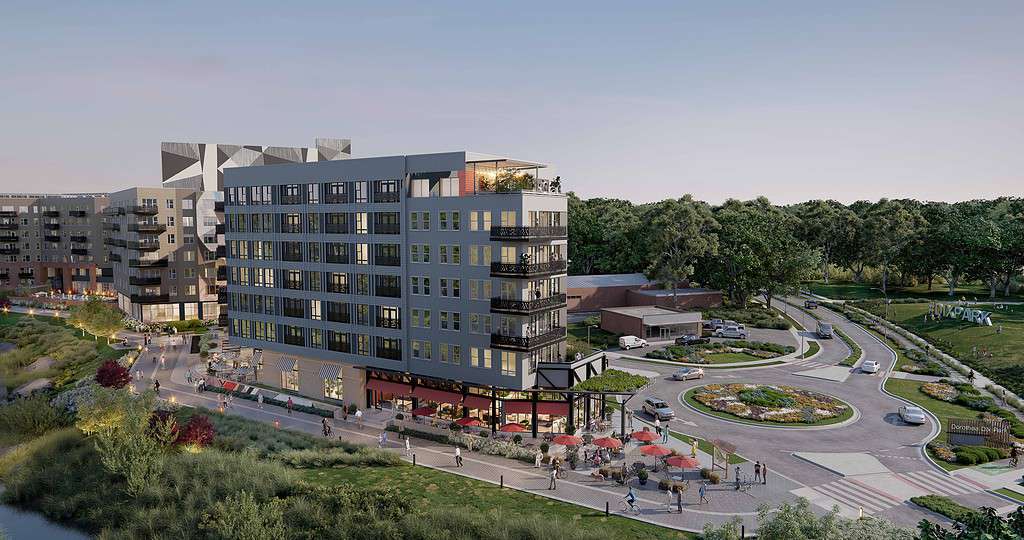
Formerly dubbed Park City South, Kane Realty Corp.’s new vision for Rockway Raleigh will add to the city’s emerging Park District by connecting our booming Downtown to an outdoor social destination along the greenway. The best of both worlds, the project is set to merge the convenience of urban living with the calm and connectedness of nature via its innovative design encouraging walkability and featuring myriad outdoor activations.
Naturally, outdoor dining will have a large presence in the trail-oriented development’s food- and beverage-centered retail space—in addition to creative- and service-based businesses mixed in. The alfresco opportunities will be positioned along South Saunders Street and directly on the Rocky Branch Greenway trail.
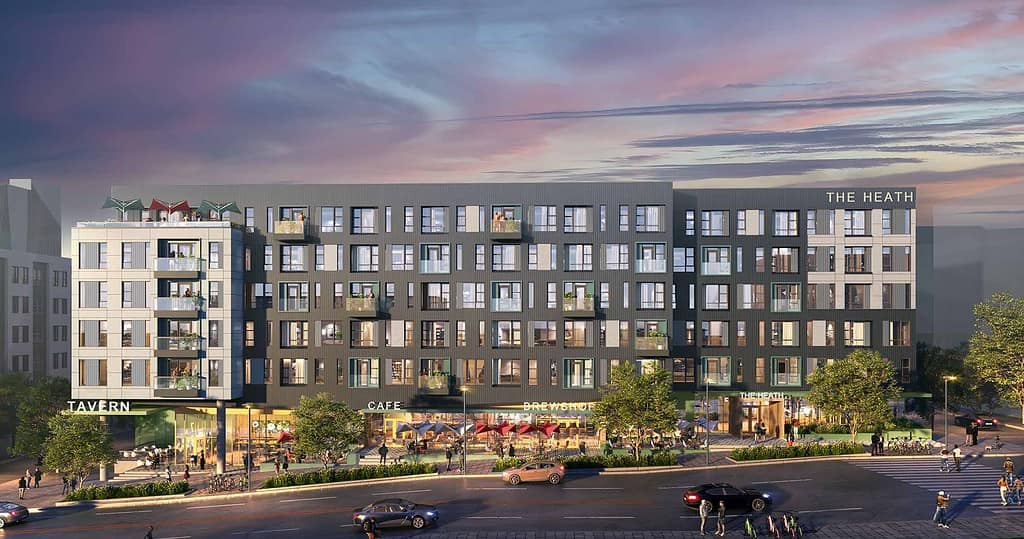
In terms of the “live” aspect, the first phase of apartments, dubbed Rockway Residences, will feature six residential levels over ground-floor retail. The second phase will deliver The Heath, an apartment building with sprawling street-level retail space. And as with any Kane development, the amenities are stacked—from a rooftop lounge, pool and fitness center to bicycle storage to a tranquil internal courtyard. Plans for a second additional residential building in Phase 2 are currently underway.
With this true urban infill project, Kane hopes to seamlessly blend peak live, work and play spaces in a natural environment neighboring one of the most exciting park projects in the country. kanerealtycorp.com
Phased opening: Mid-2024 Specs: Phase I: 18K sq. ft. retail/flex office space, 335 residential units Phase II: 7K sq. ft. retail, 350 residential units
Noteworthy features: • Enhanced sidewalks and landscape design to promote neighborhood walkability • Raised patios allowing outdoor dining on the Rocky Branch Creek Greenway
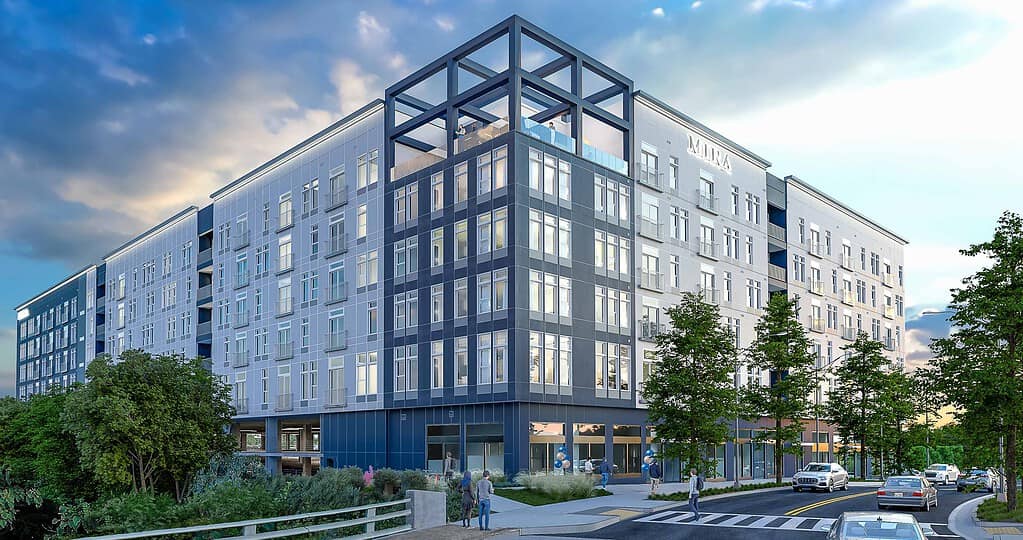
Standing out from the majority of high-rise projects slated for Downtown, Mira Raleigh is one of few competitive midrise developments advancing in the market, offering more economical rental rates.
“We continue to be very pleased with the progress in developing Mira Raleigh and in seeing our vision for this new community taking shape,” says Spandrel Development Principal and co-founder Emanuel Neuman. “Despite being several months away from launching our pre-leasing campaign, we’re already generating tremendous interest from prospective tenants.”
While not as tall as other new and planned developments in DTR, its seven-stories don’t fall flat on a desirable mix of studio and one- and two-bedroom living spaces and resort-style amenities. Not to mention unmatched skyline views, up to 12-foot ceilings, floor-to-ceiling windows and expansive terraces.
Mira Raleigh is just one of the planned projects for the otherwise underdeveloped area near Fayetteville Street, the Warehouse District and fellow emerging district West End. But the apartment complex could be the linchpin for future projects. miraraleigh.com
Phased opening: Beginning Q1 2024 Current status: Pre-leasing beginning January 2024 Specs: 2,600 sq. ft. shared office space, 288 residential units
Noteworthy features: • Hospitality-inspired lobby/lounge + sky lounge with skyline views • Commercial-grade coworking facility • Club room with chef’s kitchen and bar area
WAREHOUSE DISTRICT
Tempo by Hilton Raleigh Downtown
It’s Tempo time. Elevating Raleigh’s luxe lodgings, Tempo by Hilton Raleigh Downtown is the brand’s first foray in North Carolina—and only the second U.S. outpost. Primely positioned at South McDowell and West Davie streets, Hilton’s newest and most innovative lifestyle brand’s upcoming locale “places our guests in the heart of the action with walkability to numerous offices, restaurants, shops and more,” says Seraj Patel, VP of Greensboro-based CN Hotels, which owns the property.
Appealing to myriad travelers, the sweet sojourn serves a duo of choice digs to relax and recharge via the dual-brand concept across hotel rooms equipped with all you need to power up, prep for your day, power down and recharge—think oversize bath suite featuring Apotheke amenities and mirrors with built-in Bluetooth speakers. Or for the suite life, extended-stayers can partake in livable amenities like full in-room kitchens.
A shared grand lobby grounds the 13-story building featuring flexible event space and state-of-the-art fitness center. And an intentional lean into healthy living, the high-end hotel will also offer wellness-focused guest rooms, allowing patrons to get their fitness fix while on the go.
The hotel’s palatable food and beverage offerings will include ground-floor signature lobby cafe Fuel Bar and 14th-floor Urban Oak, serving up a sophisticated experience with sweeping views, gourmet tapas, distinctively crafted beverages, modern decor and live music.
“As excited as we are to provide a hospitable and unique hotel experience to guests traveling to Raleigh, we are just as excited to introduce Urban Oak, the tallest rooftop lounge and bar experience, to guests and locals alike,” says Patel. “We’re passionate about embracing and infusing the culture of Raleigh in all aspects of the property. Raleigh has a thriving downtown art scene we are excited to support and highlight by bringing in local artists to curate various pieces that will be displayed throughout the hotel.”
Slated completion: Q1 2024 Current status: Broke ground fall 2021 Specs: 126 rooms, 134 suites with full kitchens
Noteworthy features:
Peloton-equipped wellness-focused guestrooms with Theragun Elite and Therabody Wave Rollers
Signature Fuel cafe and bar
Urban Oak: Triangle’s tallest rooftop bar and restaurant
IRON DISTRICT
Raleigh Iron Works
While Raleigh Iron Works has already welcomed both residents and visitors, its 19 acres of mixed-use development is just getting started. Beyond the draw of such buzzy tenants as Eastcut Sandwich Bar, Andia’s Ice Cream and FX Fitness, Raleigh Magazine recently revealed RIW’s latest F&B occupant, Little Rey, a Tex-Mex-inspired concept by celeb chef Ford Fry, bowing in 2024.
Beyond top-notch tenants and on-site apartment building Forge (slated to be fully complete by October), RIW recently launched a public arts program dubbed The Collision Project, which connects creatives to art opportunities at the joint Jamestown and Grubb Ventures property in an effort to add vibrancy to the industrial-esque development. Initial art installations include three murals from multidisciplinary artist Gabriel Eng-Goetz; graffiti artist Morgan “MCK” Cook; and, most recently, highly regarded painter and muralist Taylor White—the former mural spanning seven stories and serving as a beacon to the development.
Rounding out the development’s creative offerings are “whitebox” spaces, aka empty units available to makers, creators and doers “with the intention to make art and creative works more accessible to the public,” says Grubb Ventures Creative and Marketing Coordinator Macey Bryant. The spaces will also play host to pop-ups, with the first featuring Girl Tribe Co. the first weekend in October.
“We want Raleigh Iron Works to be a backdrop and platform for creativity,” says Jamestown President Michael Phillips. Clearly, the developers are forging the way for all types of creatives—from artists to chefs to fitness junkies and all those in between—to get in on the action. raleighironworks.com
Announced tenants: • Little Rey • Brodeto • Jaguar Bolera • Ponysaurus Brewing Co. • Beatniks • YoBa Studio
Current status: Currently leasing office and residential
Specs: 19 acres: 170K sq. ft. office space, ~71K sq. ft. retail, 219 residential units
As Raleigh’s premiere sportstainment hub, Salvage Yard, an adaptive reuse project comprising three reimagined warehouses and totaling 100,000 square feet, is on track to be a major destination for sports lovers and active Raleighites. Over the summer, anchor tenant Triangle Rock Club released a flythrough rendering of its 40,000-square-foot location at Grubb Ventures’ mixed-use development, offering a more in-depth glimpse of the highly anticipated space.
Slated to bow in 2024, TRC Salvage Yard will boast a world-class climbing and fitness experience complete with 100+ climbing lanes, a dedicated yoga studio, a bouldering area with top-out boulders, and ample fitness space—not to mention an expansive 8,000-square-foot-tall wall area featuring a 47-foot clearance.
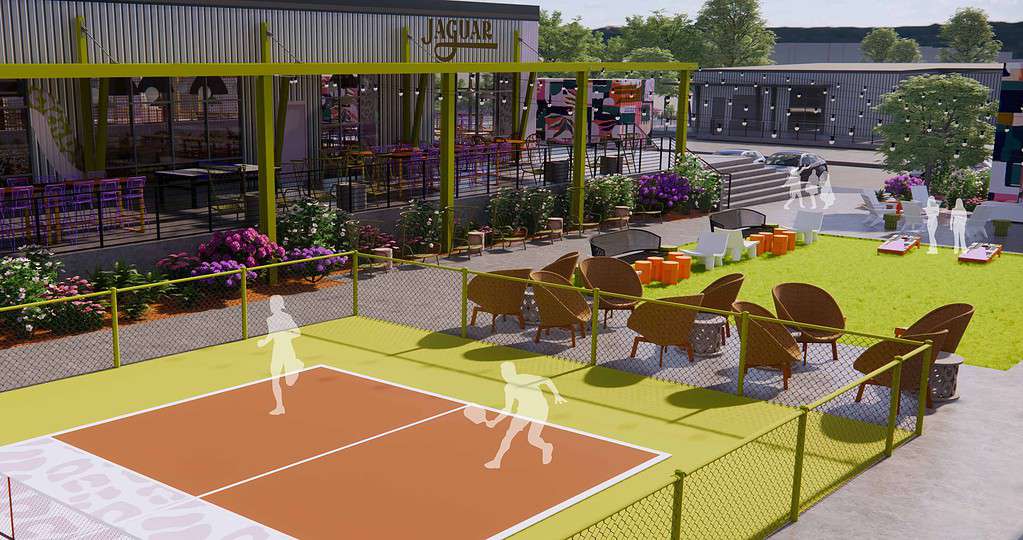
And leaning into the sportstainment trend sure to be a smash hit comes the latest announcement of Raleigh Iron Works’ first F&B tenant Jaguar Bolera expanding its footprint to include four indoor pickleball courts and one outdoor court at Salvage Yard as well—joining NOCO Beverage, a spacious joint brewery, taproom and coffee bar.
With no shortage of ways to sate every appetite, from bites and bevs to recreation and relaxation—all mere steps from Grubb’s sister development Raleigh Iron Works and Dock 1053—Salvage Yard serves up the next vibrant social destination. Emphasizing active play—as opposed to, say, retail and shopping—makes it a natural addition to the offerings already available in Raleigh’s growing Iron District. grubbventures.com
Phased opening: Starting Q1 2024 Current status: 82.5% leased Specs: 100,000 sq. ft. retail, restaurant and entertainment space
Noteworthy features: • Five pickleball courts • Open-air entries and exposed trusses
Announced tenants: • Jaguar Bolera • NOCO Beverage by Bond Brothers • TRC Salvage Yard
MIDTOWN DISTRICT
North Hills Main District Expansion
The Main District expansion project isn’t just expanding offerings in Midtown, it’s changing the way individuals maneuver the portion of North Hills. The updated infrastructure will give way to new and extended roads, plus additional parking, traffic patterns and general wayfinding that will rewrite navigating North Hills as we know it—and make getting around the Main District more manageable.
A Main Street extension to Lassiter Mill Road will partially open to the public as early as this fall, while a new Center at North Hills Street is underway—connecting Lassiter Street to the Main Street extension—and will open early spring 2024. And already-open Circle Drive will allow access to an expanded subterranean parking deck complete with 1,000 added spaces and new elevators and escalators (there will also be an on-grade ramp going up and down to access the deck). All roads are expected to be fully open and functional by spring 2024.
A new North Hills Concierge Office located off the lobby of 4114 Creative Offices will further assist visitors by offering directions, gift cards/umbrellas and districtwide valet parking.
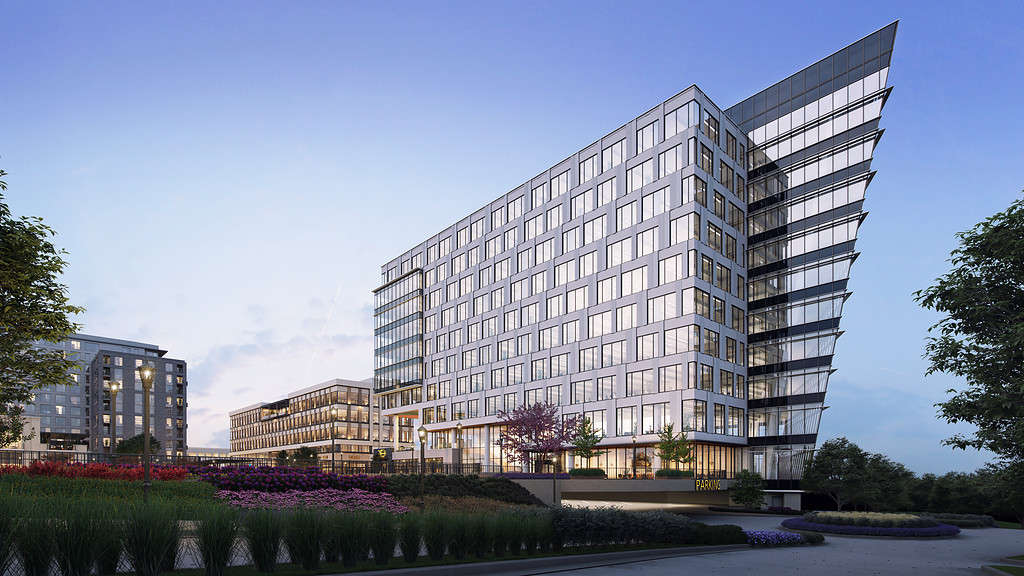
An additional office tower, One North Hills, will integrate original large-scale art by local artist Corey Mason and finishes featuring reclaimed wood from trees at North Hills—not to mention two outdoor terraces and a noteworthy angled-glass design that hangs over I-440 and “makes you feel like you’re flying in the sky,” says Kane Realty Corp. Director of Design Josie Reeves. “[The office towers] have already really changed the skyline and added some height and a real urban experience to the Main District,” she adds.
And finally delivering the “live” aspect of the Main District is the first residential building in the expansion, Highland North Hills. The 12-story high-rise will tout one-, two-, and three-bedroom apartments; ground-floor retail; an eighth-floor amenity deck with fire pits and primo views; a second-floor pool deck overlooking a new active public plaza; and more.
Perhaps the cherry on top of the whole development, though, is the highly anticipated three-level RH Gallery—the first in the Raleigh market—complete with a rooftop deck/restaurant that’s “sure to be a hit with beautiful sunset views looking over the west side tree line,” Reeves emphasizes.
Kane’s attempts to elevate and refresh the Main District will provide refreshing live, work and play opportunities—not to mention the refined roads and traffic patterns that are bound to take the area to the next level. kanerealtycorp.com
Phased opening: Fall 2023
Current status: 97% leased
Specs: ~347K sq. ft. office space, 100K sq. ft. retail, 287 residential units
Noteworthy features: • 6K-sq.-ft. outdoor terrace at One North Hills • Large central green space with outdoor work environment
Kane Realty Corp.’s North Hills Innovation District is just that—innovative. And the latest announced building for the district is no different. Dubbed Tributary as a nod to its position adjacent to Big Branch Creek, the six-story mixed-use apartment building with ground-floor retail will offer a handful of unique live-work units for businesses and creative professionals who reside above. Residents will also have access to a new greenway extension—plus amenities such as two courtyards, a digital content recording room and an elevated wellness center overlooking the district.
The latest residential building to break ground is St. Albans Loft, which will round out NHID’s five residential offerings (including already-open Vine and Channel House, Tributary, and another yet-to-be-named residential high-rise in the planning stages). Beyond retail spaces, the luxe lodging will tout extensive resident club and entertaining spaces, a Zen courtyard, a resort-style pool courtyard overlooking Big Branch Creek, a club-quality fitness center, remote-work spaces and a private rooftop lounge.
NHID’s unique offerings differentiate this development from the rest of Kane’s portfolio. The freestanding 6,000-square-foot F&B building is designed for a single local purveyor, serving up a spacious open beer garden and ample seating. As for who will tap the space, Kane is “talking to a tenant very seriously” that will be announced soon, according to Kane Director of Design Josie Reeves.
Meanwhile, creatives will delight in Makers Alley, located below Channel House and designed with local retailers, artisans and makers in mind. To date, Dose Yoga is the only announced tenant. Rounding out the one-of-a-kind development, the retail jewel box Pumphouse will house a single tenant adjacent to Tower 5, NHID’s 17-story-high office tower.
“We’ve had luck all around North Hills having a handful of buildings smaller in scale to complement the larger urban buildings we have,” says Reeves. Dog parks, public art, plug-and-play opportunities for outdoor music, and other ways to gather will further complement the urban oasis.
And like its Midtown Main District neighbor, a new road network connecting directly to Wake Forest Road, Hardimont Road and North Hills will link each of the buildings and spaces at NHID, including a network of pedestrian bridges and landings within the district.
When visualizing the development as a whole, Reeves says, “We’ve made a conservative effort to ask ourselves: ‘What is innovative? How do we pull together this collection of big thinkers and people who are creating new ways for us to eat and have drinks and gather and create content?’ … We’re having a lot of fun thinking through an interesting and diverse collection of makers, artisans, chefs and thought leaders, and bringing them together in this collaborative environment.” kanerealtycorp.com
Phased Opening: Next Phase II projects delivering 2024 Specs: 33 acres: 700K sq. ft. office space, 60K sq. ft. retail, 1,500 residential units
Noteworthy features:
Microretail spaces [350–900 sq. ft] for small local purveyors
100-foot-high “Three-Pointer at the Buzzer by the Creek” mural by Jeremiah Britton and Joe Geis of Also Dept. at Channel House
New Capital Area Greenway system connections
The Exchange Raleigh
The Exchange Raleigh is poised to elevate not just Midtown, but all of Raleigh when its highly anticipated 1000 Social begins to deliver in the second quarter of 2024—making up one half of the project’s state-of-the-art WELL-certified twin office towers.
Already 50% pre-leased, the mixed-use development’s first deliverable will be anchored by two dining concepts that will only serve to bolster the City of Oaks’ food and beverage offerings: a marquis restaurant and coffee shop/cafe space.
The restaurant is designed to accommodate a large open bar and abundant outdoor seating overlooking the 4-acre park, according to Dewitt Carolinas Communications Director Jenni Soccorso. The developers are in talks with several chefs and operators to bring a high-end, chef-driven eatery to the space. (Stay tuned for updates.)
Meanwhile, the cafe will serve as an all-day amenity for office tenants, residents and the larger community that will be accessible from the lobby of 1000 Social and open onto a spacious patio, playing into the development’s emphasis on outdoor spaces.
Like with most developments cropping up in the City of Oaks recently, restaurants, coffee shops, bars and the like are a significant anchor (notably, we saw it play out at Fenton)—and those who live, work and play at the highly anticipated development by Dewitt Carolinas can be rest assured the dining and drinking scene will deliver.
While we wait, one thing is certain: The Exchange is a game-changer for Raleigh, poised to attract not just Raleighites, but people from all over the state—and country. And it’s only the beginning for what the future of our city could look like. theexchangeraleigh.com
Phased opening: Starting Q2 2024 Current status: 1000 Social 50% pre-leased Specs: 990K sq. ft. office space, ~1,275 residential units, 125K sq. ft. retail + dining, 300 hotel rooms
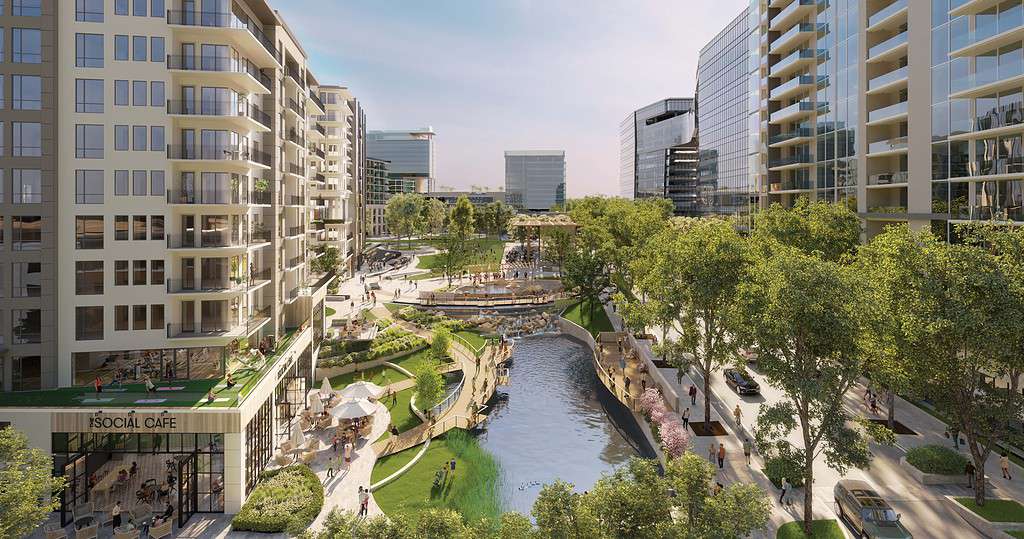
Noteworthy features: • 4-acre park with water feature • 20K sq. ft. amenity deck for Birchwood, one of the residential units • Plan for trails to connect to Greenway
CRABTREE CORRIDOR
Glenlake
Inspiration meets innovation at the intersection where Creedmoor becomes Edwards Mill Road. Ideally located, West Raleigh’s newest office tower, GlenLake Three, alongside brand-new food and beverage-focused Retail Row, are primely positioned as the final pièces de résistance to the longstanding GlenLake development.
Designed with people’s well-being in mind, the additions promise to bolster the seven-building office community’s vast walkable outdoor spaces and plazas, serving as an antidote to the typical hustle-and-bustle office park vibe. “It’s like a work retreat,” says Highwoods Properties senior VP Skip Hill of the campus’ mod Zen approach. “It’s just a nice place to be able to enjoy working and get away from the helter-skelter of the world and focus on what you need to do.”
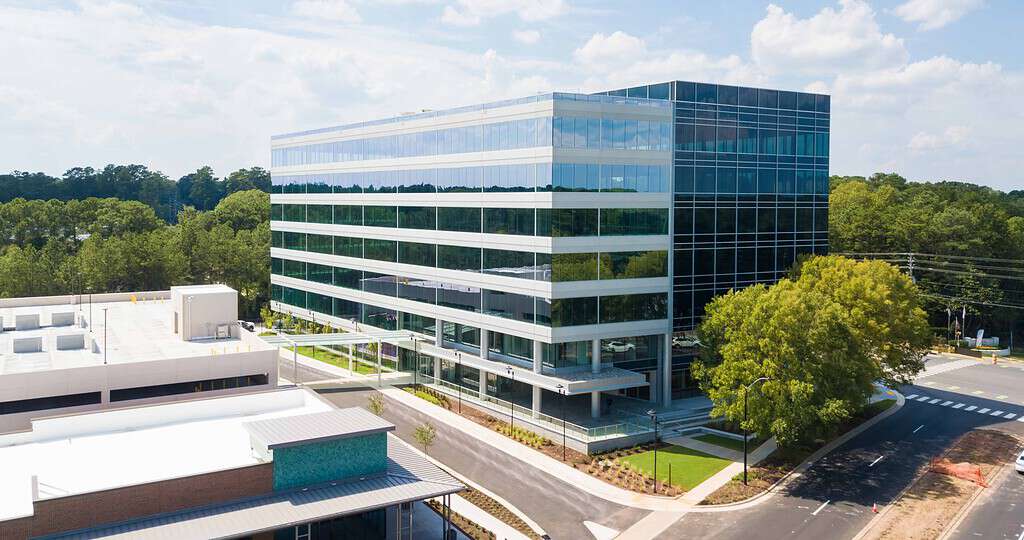
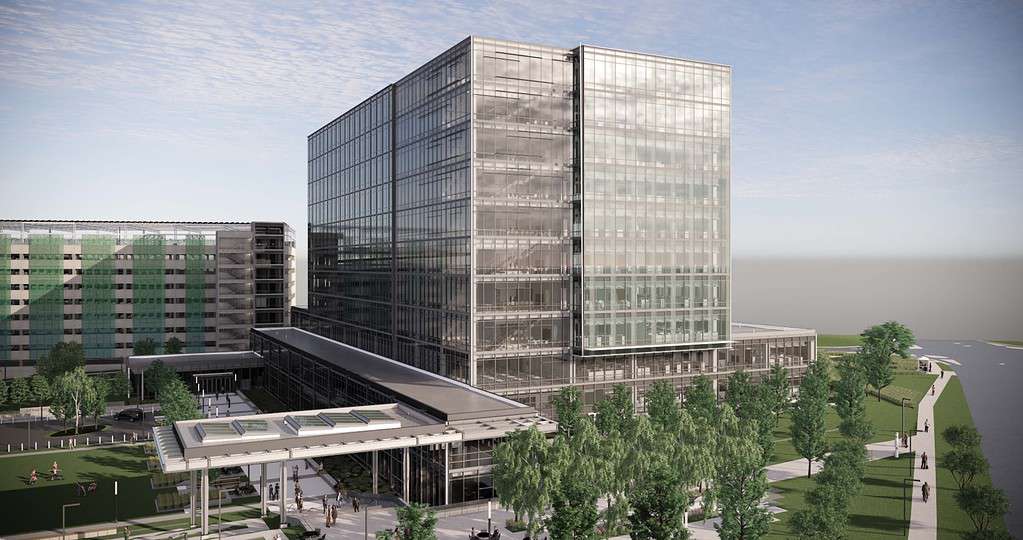
Serving up 205,000 square feet of Class A office space, the seven-story streetfront glass and steel-edifice tower leans into the serene, alfresco feel of the campus via 360-degrees of wall-to-wall floor-to-ceiling windows, flex work space, fitness and food selects, and more.
Fueling the hustle while intentionally playing into the parklike setting, Retail Row—situated adjacent to the new tower—will dish as many as five “festive” concepts, says Hill, including abundant outdoor seating. Expect at least one of the concepts to be a cafe with a local coffee partner—and for two of the restaurant spaces, Highwoods is in talks with both a regional group and a local group looking to expand.
“We’ve now incorporated retail into the property that we feel is important for the live-work-play aspect of the park,” says Hill. Extending the play portion beyond Retail Row, plans are in motion to activate the triangular grassy area mid-development with another restaurant-brewery—with site plans and ideas on the table with a duo of diverse prospects, one local and one “local elsewhere but new to Raleigh,” says Hill.
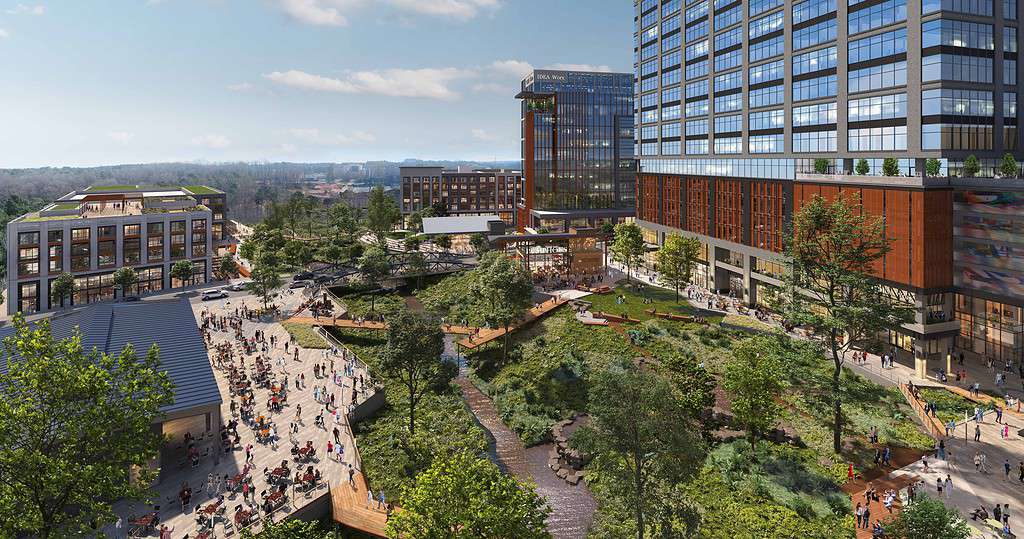
The half-dozen or so concepts serve to activate the Crabtree corridor at large while also further establishing West Raleigh as the next “it” destination—and GlenLake as the gateway to the burgeoning PNC entertainment district emerging just down Edwards Mill Road. highwoods.com
Opening: This fall Current status: 25% pre-leased Specs: 205K Class A office space, 13K-sq.-ft. Retail Row
Noteworthy features: • Indoor/outdoor workplace, event/flex work space, shaded outdoor function space, fitness center • Four-story free parking deck • Outdoor Wi-Fi
Announced tenants: • McKim & Creed HQ • TEKsystems
BLUE RIDGE CORRIDOR
DHHS Phase 1
The future of Raleigh’s next destination district is well underway. Comprising the triangular area from Blue Ridge to Western to Edwards Mill, the Blue Ridge Corridor is an urban hotbed of development with 32 projects completed since 2016, a half-dozen major projects currently under construction and over a dozen in the planning stages.
Already housing an embarrassment of riches that attract people from across the state and beyond (think stadium, fairgrounds, museum), the district is primed to level up its live-work-play persona via a $2.7 billion development pipeline billed as “the next North Hills.”
For starters, the massive NC Department of Health & Human Services is relocating its HQ from Dix Park to Blue Ridge Road, slated for a 2025 completion. The transformational building is part of a three-phase project serving up enormous impact to the area, with Highwoods Properties at the helm of Phase II and III in a public/private partnership with the city—the former slated for DHHS overflow and additional office space, with talks now underway on how the latter will shape up (think mixed-use office, residential and highly amenable retail—but, really, the sky’s the limit, one source close the project tells us.)
These projects come together to craft a complete community across as many as four branded districts—including the PNC sports and entertainment district—where “within a 15-minute bubble, you can work, shop, live, exercise, have fun—with everything you need at your fingertips,” says Jeff Murison, executive director of the Blue Ridge Corridor Alliance (BRCA).
“This is a very robust, healthy pipeline of development projects that add to the energy of the corridor,” adds Murison. “There’s a lot of opportunity for this to be a high-achieving area.”
BRC Noteworthy features: • $1 billion+ in transit investments, plus Triangle Bikeway connecting NCMA to Chapel Hill • Ramada by Wyndham will be demolished and replaced with 370-unit apartment complex Aura Blue Ridge by Dallas-based Trinsic Residential Group
PNC Sports & Entertainment District
Adding to the buzzy Blue Ridge Corridor is of course the score of upgrades coming to PNC, a game-changer for fans, spectators and locals alike. In August, Carolina Hurricanes owner Tom Dundon was given the go-ahead to build a sports and entertainment district around the arena, including a sportsbook, activated outdoor areas, lounge areas, loge boxes and more—not to mention additional office and residential as part of the mixed-use development. In essence, the kind of attractions that will bring you to the arena even if you don’t have tickets, or there’s no event at all.
“Our development is going to create great synergy,” says the Centennial Authority Executive Director Jeff Merritt—“a great ‘Welcome to Raleigh’ moment,” nodding to the thoroughfare that is Wade Avenue. “The sportsbook will happen fast—maybe a year,” he adds, noting summer 2025 and ’26 will be big for the district. pncarena.com