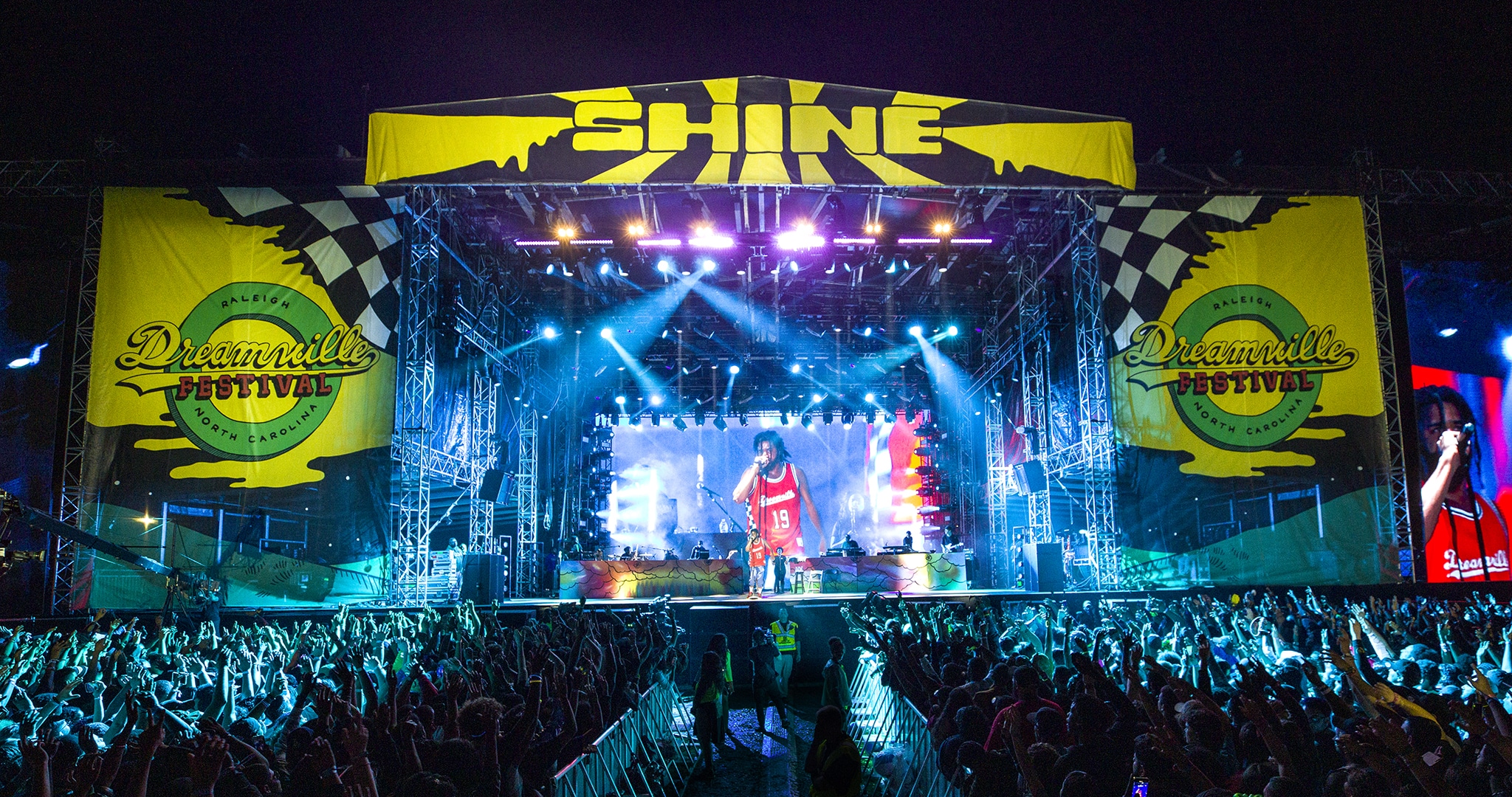
Just one month out from what would have been the sixth session of Dreamville Festival, the chatter is reaching a fever pitch: Did the Dreamville dream die?
After announcing the OG April fest—which helped reignite Dix Park and put Raleigh on the global rap map—had hit snooze for good, Live Nation and Dreamville promised a new four-year fest under the label would rise in 2026, J. Cole included, headlining or not.
Now, just a month shy of D-day with no announcement in sight (as of press time), the mic has gone cold—and we’re all waiting for the “climb back.”
Remote work blurred the line between “flexible” and “feral.” Somewhere between WFH and WTF, professionalism slipped—sometimes literally—into the pool.
Remote meeting culture is in chaos (see: the memes, hot mics and floating heads). In bed one minute, on Zoom the next. Posed at a desk with no pants. The accidental on-air slip or cat hijacking the camera. The aggressively casual background—or worse, your chaotic garage.
But the reality is, it’s just simply not working (pun intended). Read: Work meetings, but make them feral—less Zoom, more Wild West. And it begs the question—why should we compose ourselves any differently in our home office than on-site?
And before you write this off as generational gibberish, the offenders are primarily not Gen Z. As it happens, some of the most egregious perpetrators—the ones that leave us wishing they’d just turned their cameras off—are senior-level leaders.
Whether this is a no-rules pandemic hangover, the collapse of workplace boundaries or a broader erosion of professional norms, one thing is crystal clear: Virtual meetings have gotten sloppy. It’s no small coincidence that companies are starting to ban treadmill meetings, mandating cameras on and tightening virtual conduct rules in an effort to rein in a culture that’s drifted further from “flexible” into free-for-all. And after cataloging a steady stream of truly unhinged behavior, it’s safe to say we’re overdue for an intervention.
illustration by Malchev/shutterstock.com
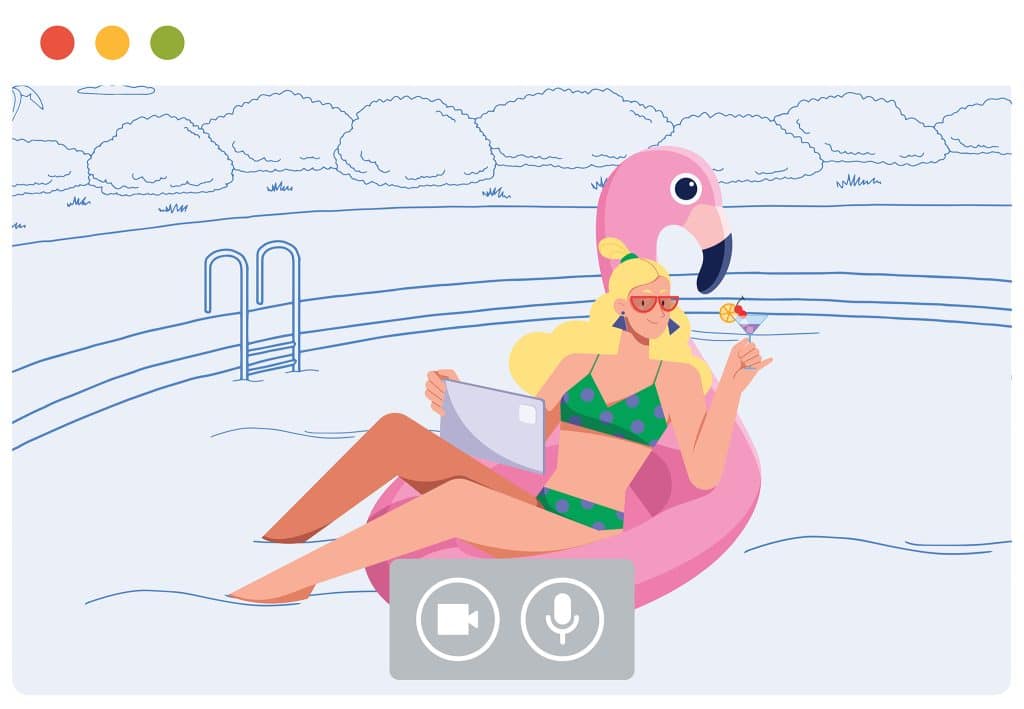
Pool Float Executive “An executive joined a companywide Zoom—over 100 employees, management present—from a pool raft, Champagne glass in hand, phone carefully angled to show only her face. Twenty minutes in, she lost her balance. The phone fell into the water. When she resurfaced on screen, she was very clearly in a bikini, very clearly in the pool, and very clearly no longer muted. HR followed up.”
Memoji Workaround “We have a coworker who hates being on camera so deeply that she created a memoji in Teams to blink, nod and mouth responses for her instead. The uncanny valley has entered the chat.”
Illustration by rina Strelnikova/shutterstock.com
Hit-and-Run Hang-Up “During a routine call, a coworker was running errands and we heard a loud crash. Without missing a beat, she said, ‘Gotta run—just got into a car accident,’ and hung up.”
Vibration Plate Reveal “The director of sales is famously off-camera, always muted and perpetually calling in from… somewhere else: the beach, a Starbucks drive-thru, daily walks. During one meeting, she was asked a direct question and responded in a shaky voice. When someone asked if she was OK, she replied she was on her vibration plate.”
Illustration by The img/shutterstock.com
Walking Pad Evangelist “We have this one girl who insists she can’t reach her daily step goal without pacing her walking pad during work hours—so we just see her bobbing up and down during meetings.”
WFH Gone Wild “We once watched—live—a bear walk into someone’s kitchen.”
Illustration by A7880S/shutterstock.com
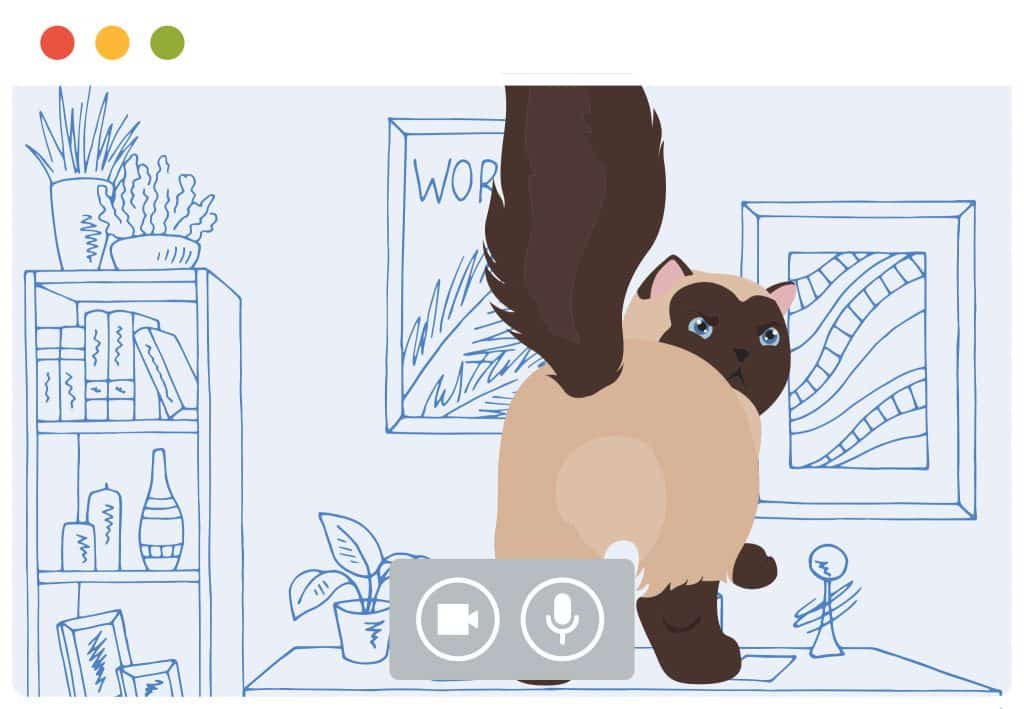
Feline Full Moon “Our colleagues with cats usually greet us with a full-moon view of cat ass. If the hindquarters aren’t directly on camera, the little exhibitionists are pacing the desk, tail flicking around their humans’ heads like a rear-first hostile takeover.”
It’s the end of the buzz (as we knew it)—and the bar business is adapting.
In sobering news, the alcohol industry has lost more than $830 billion in market value over the past four years. Not to tariffs or interest rates. Not to regulation or prohibition. But to a generation that simply stopped drinking the way its elders did.
A Bloomberg index tracking 50 major beer, wine and spirits producers is down 46% from its 2021 peak. Meanwhile, according to a 2025 Gallup study, U.S. consumption has fallen to its lowest level since 1939—lower than postwar America and the Great Depression era. On paper, it reads like an obituary. Cue the panic.
But the numbers don’t tell the full story. Roughly half of adults under age 35 still say they drink—50% of Gen Z, compared with 56% in each of their older generations. So what gives?
The catch is how those polls measure behavior. You either drink—or you don’t. Someone who has one glass of wine a month—or even a year—shows up the same as someone closing out a bar tab every Friday and another who takes down three cocktails a night. They look identical in a survey. They do not, however, show up the same on a balance sheet.
Follow the money, and the narrative flips: Millennials, Gen X and Boomers still clock nearly dead-even on annual alcohol spending—about $25B each. At the other end of the bar, Gen Z is pulling way back (though, to be fair the youngest Zer is just 17). But fewer young drinkers doesn’t mean fewer drinkers, full stop. It means the center of gravity is shifting upward in age, income and very different definitions of a night out—forcing the bar business to adapt in real time.
While they have earned their reputation as the “drunkest generation” in terms of consumption behavior—never mind normalizing the craft cocktail craze, brewery culture, natural wine obsessions and destination drinking long before sober curiosity became de rigueur—they weren’t drinking alone. Gen X and Boomers are still sidled up to the bar right beside them—and increasingly, they’re the ones keeping the lights on. In dollars spent, those 46+ are now just as central to the industry’s bottom line.
That matters because older drinkers don’t just drink differently—they spend differently. With higher disposable incomes and deeply ingrained habits, they’re more likely to linger, trade up and prioritize experience over price point. Fewer late-night shots. More reservation-worthy cocktails, curated wine lists and destination dens.
You can see that shift playing out locally. At DTR cocktail bar Killjoy, owner/operator Josh Gagne says the crowd reliably skews 30–50—but it doesn’t stop there. As Raleigh’s population ages up and incomes rise, bargoers craving the same quality, creativity and atmosphere—just on their own terms—now extend well past 50, quietly phasing out the image of beer-soaked bars dotted with 20-somethings (save stretches of Glenwood South).
Together, those forces have quietly recalibrated the bar business around an older, more intentional consumer—one less driven by volume and more by value.
What’s in the Glass
Beyond the where, there’s the what. Bars aren’t just pouring alcohol anymore. Catering to a clientele looking to skip the hangover—and increasingly accommodating Gen Z’s lower-alcohol leanings—menus now stretch from craft mocktails to alternative-buzz THC and CBD bevs.
That shift has accelerated with a cultural gut check: A recent Surgeon General warning linking even light to moderate drinking to elevated cancer risk—a modern echo of the 1964 smoking report. The message landed—and curiosity followed.
“THC drinks are being refined and are an option a lot more people are choosing,” says Hibernian Hospitality Group mastermind Niall Hanley, whose spots sling local delta-8 and delta-9 THC Groovewagon cans. “Easier on the body, no hangover, fewer side effects—it’s a growing sector.”
Locally, operators have been leaning in fast—from breweries like Trophy and Incendiary releasing their own canned concoctions to bars like Whiskey Kitchen, Bowstring and Irregardless mixing up THC ’tails.
“Some people aren’t drinking—or they’re changing the way they’re drinking,” says Trophy co-owner Chris Powers. “We want to be accommodating to that. We’re beverage people. We’re connoisseurs. We like to try new things. It just makes a lot of sense for us to do our own.”
Where the Night Moved
The days of throwing up a shingle and slinging Bud Lights across the bar are largely over. Today’s drinkers are craving activity, connection and spectacle—the rise of eatertainment, sportstainment and palatable playgrounds serving as proof positive.
“As people look for more than just dinner and drinks, we’re embracing the eatertainment phenomenon [by] creating spaces as dynamic and connected as the guests who fill them,” says Amber Moshakos, president of LM Restaurants (think Vidrio, Birdie’s, Carolina Ale House).
Raleigh’s first foray into the category, Jaguar Bolera pairs duckpin bowling, karaoke and darts with cocktails and comfort food inside Raleigh Iron Works. Leveling up the Glenwood game scene, Hop Shots splashed on the scene with a day-to-night minigolf playground. And LM Restaurants’ new Smash Social Club rallies the party district, hitting with nearly 10K square feet of table tennis, shuffleboard and electric darts, all fueled by craft cocktails and brews.
“Guests want to engage, compete and connect—not just scroll or sit still,” maintains Moshakos. The payoff: longer stays, bigger groups and higher tabs baked directly into the experience.
Beyond activity, there’s also the pull of the aesthetic: dives like Stella’s dripping in ’90s-core nostalgia, cinematic spaces such as Capulet that feel closer to a film set than a barstool. In a digital world, the psychology matters. People want to feel like they’re going out—not just going drinking. And with elevation comes cost—a reality the older audience understands, sustains and can afford.
The New Last Call
So when new data shows drinking hitting a 90-year low, the narrative rushes toward an easy conclusion: America is sobering up. The party is over. The bar tab is closing.
The reality is much more complicated—and more interesting. Drinking isn’t disappearing—it’s redistributing: across generations, across formats, across spaces. The shift is less about abstinence and much more about who’s still keeping tabs open, what’s filling the glass—and where.
In other words, the math only doesn’t math when you’re counting heads instead of dollars. Call it the myth of the dry generation. Trace the dollars, the age curve and the experience economy, and an entirely different story emerges: Drinking is maturing, stratifying and relocating.
All told, the bar has been raised—literally. And despite the headlines, drinking isn’t dead—it just came of age.
Inside the cultural pivot making singlehood a point of pride
In the age of boyfriend gate—when having a boyfriend has officially jumped the shark—it’s never been cooler, calmer or more socially acceptable to be single. To be clear: The “boyfriend cringe” moment is about heterosexual norms—not all partnerships. Other kinds of relationships don’t carry the same cultural baggage the meme is poking at.
As British Vogueput it: “Being partnered is no longer considered an achievement, and, if anything, it becomes more of a flex to pronounce yourself single.” It’s the perfect cocktail of dating (and marriage) fatigue plus “I’m actually good alone.” Call it the relationship recession—The Economistliterally did.
Women—and the world—are realizing their relationship status is the least interesting thing about them. Boyfriends aren’t just out of style—they’ve been recast as “embarrassing” and benched until they’re worth the emotional bandwidth.
Brass tacks: Relationships have always been transactional. For generations, women needed men for financial stability while they were relegated to the home. But the last five decades blew that model wide open, as women secured their own credit cards, mortgages and careers, climbing the corporate ladder to “boss” status. Now, the cultural currency is finally catching up.
The baked-in imbalance in the OG script is impossible to ignore. “Beyoncé could work at Burger King and still marry Jay-Z; the opposite is not true,” says Scott Galloway, entrepreneur, professor and host of The Prof G Pod. Women don’t want to—nor should have to—dumb down to date up. Especially now that women outpace men in earnings and degrees in major metros—and are launching businesses at record rates.
Cue the collective “aha” moment. If the financial transaction is no longer necessary, women are finally asking: How does a relationship actually serve me? And that epiphany went viral—spreading from the think-piece trenches to social feeds—where memes, magazines and macroinfluencers all hammered home two truths. One, women are so much more than their relationship, and, two, a connection is only worth pursuing if it provides added emotional value. So, not all the single ladies are looking to put a ring on it.
The data mirrors the vibes. Surveys of single women consistently point to the imbalance of emotional labor as exhausting. A new Hinge study sharpens the picture: 81% of single women 35+ say they’d rather stay single for life than be with the wrong person (compared to just 39% of men). And a major study of midlife “silver splitters” (45–65) found nearly one-third of women are happier than ever post-divorce. Meanwhile, marriage rates continue to nosedive, falling to just ~6 per 1,000 people—the lowest in American history.
Looking ahead, analysts project that by 2030 roughly half of women ages 25–45 will be single by choice. With women out-earning, out-degreeing and out-autonomizing men in nearly every measurable way, the old “why aren’t you partnered?” is starting to feel like the wrong question—yet perhaps easier to answer than ever.
To wit, the decorum around singlehood—how it’s framed, judged and interrogated—is rapidly evolving. What was once treated as a personal failing is now a point of pride. Maybe Carrie Bradshaw was ahead of her time. “Maybe our girlfriends are our soulmates, and guys are just people to have fun with.” In other words, we’re Barbie, and they’re just Ken.
BTN: The Stat Story 28.6 Median age for first-married women (2025 Census) 30.4 Median age for first-married men (2025 Census) 49% New businesses started by women in 2024—a 69% jump from 2019 ~79% → ~47% U.S. married households historic peak 1949 vs. today’s low 81% Single women 35+ who prefer singlehood over the wrong partner (Hinge) 50%+ Single women who say they aren’t even looking (Pew/Match)
If you’re in need of a little sun-drunk excursion in the dead of winter sans the passport scramble, cue St. Pete on repeat. A direct sub-two-hour flight from RDU, Florida’s sunniest secret is a straight mood.
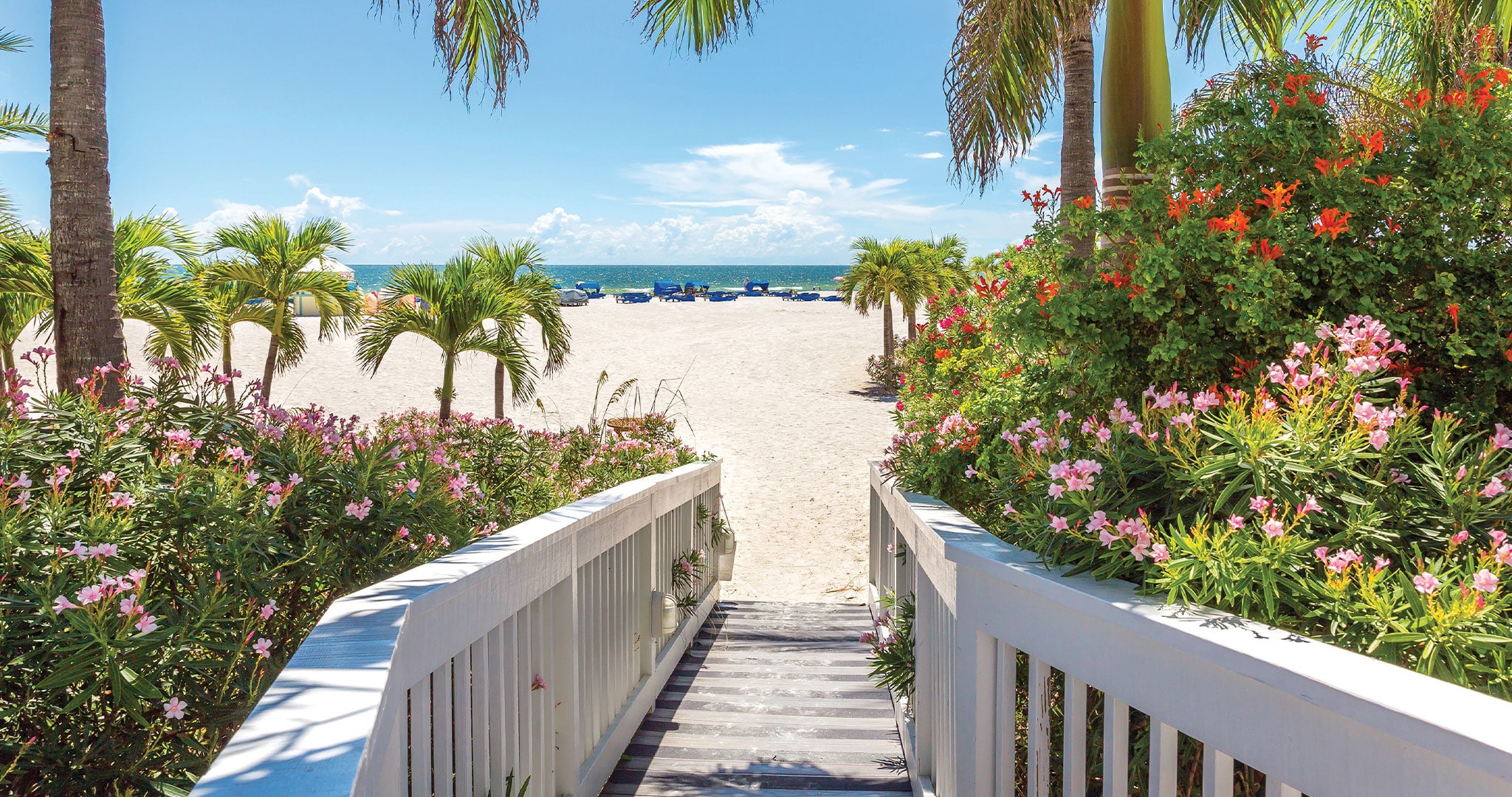
With powdery Gulf beaches, thriving arts and retail, plus a nightlife lineup that punches well above its flip-flop rep, the coastal cool kid proves the Sunshine State has depth.
By day, it’s waterfront strolls, museum-hopping, shopping and pierside people-watching—no schedule, all sunshine. By night, it’s dance floors, live jazz and rooftop ’tails under star-soaked seaside skies. From longtime icons to buzzy new hangouts, St. Pete delivers the kind of effortless energy that doesn’t try too hard—just simply hits. Consider this your cheat sheet to bring on the barefoot energy.
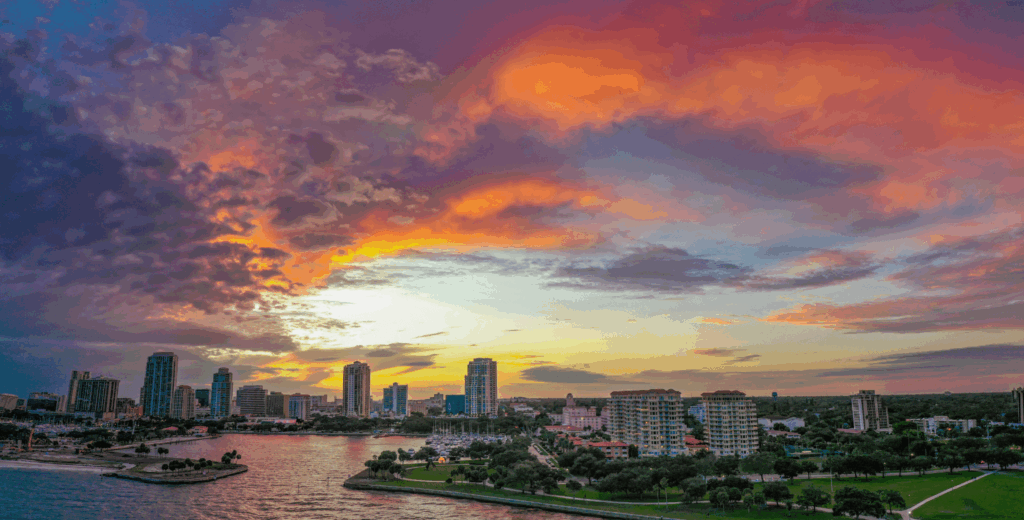
Downtown St. Pete, courtesy of Visit St. Pete-Clearwater
DO
Good Night John Boy Miami Vice meets disco fever at this high-octane dance den where mirror balls spin, music pulses and cocktails swig strong. Go early for prime real estate and a mixed-age crowd—by 10pm, the scene skews youthful. Either way, be prepared to get down with your bad self. goodnightjb.com
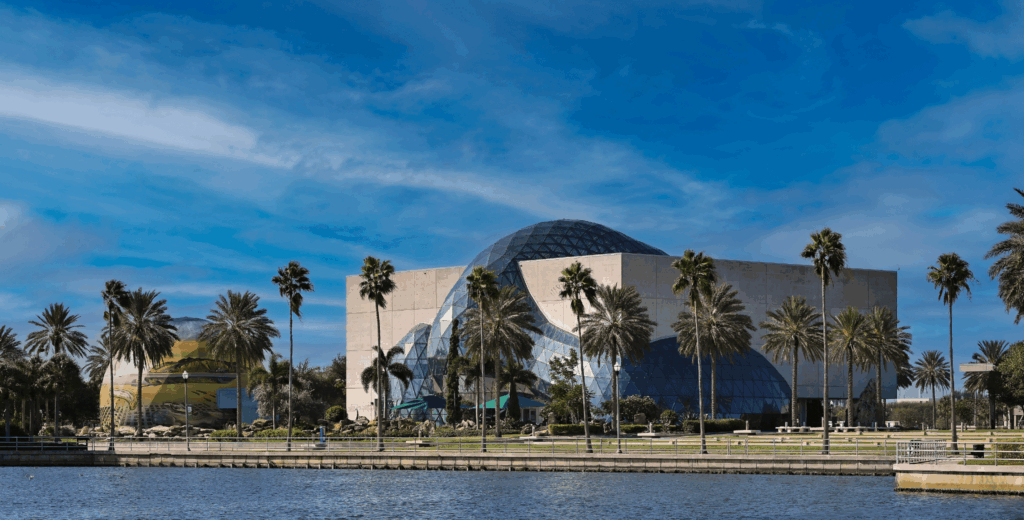
The Dalí Museum
The Dalí Museum St. Pete is more than a beach—and The Dalí is a cultural icon. A surrealist waterfront sanctuary, the cultural landmark pairs one of the world’s largest Dalí collections with jaw-dropping architecture—think glass geodesic domes, spiraling staircases and sunlit galleries that feel as dreamlike as the art inside. Wander in the immersive exhibits, linger in the sculpture garden and let your imagination melt a little. thedali.org
Sunken Gardens A century-old tropical fever dream hiding in plain sight, the lush paradise drops into a botanical underworld abloom with 50K+ plants, neon-bright flamingos and winding walkways beneath a billowing canopy of legit prehistoric vibes. Think peaceful pockets for strolling, snapping and soaking in the Floridian flora (and sun) away from the downtown buzz. Basically a serene, sun-drenched reminder that St. Pete’s cool factor runs deeper than its rooftops. sunkengardens.org
EAT
Novu Bistro Bar Central Avenue energy minus the chaos, the effortlessly cool landing spot is where bistro and beach energy merge. Known just as much for its small plates, pastas and signature sips as for its live music and lively local crowd, Novu nails the “good food and great vibes” brief. Snag an outdoor table to tap into the full scene. novubistro.com
Ceviche, courtesy of Nutmeg Imageworks
Ceviche Tapas Bar & Restaurant Basically travel catnip, Ceviche’s Spanish coastal cuisine beckons with broad appeal via tapas galore, seafood and sangria in a lively yet refined downtown mainstay built for golden hour. In the thick of it all and atmospheric, it’s not just a destination meal—it’s a full-on vibe. ceviche.com
Perry’s Porch Breezy, scenic and unmistakably St. Pete, Perry’s deals primo wraparound porch panoramas perched at the St. Pete Pier with front-row bay views that sell you before you even sit down. Coastal comforts run from Gulf shrimp and fish sandos to crisp salads and handhelds. For max effect: Come for brunch, linger for cocktails, stay for the sunset. perrysporch.com
DRINK
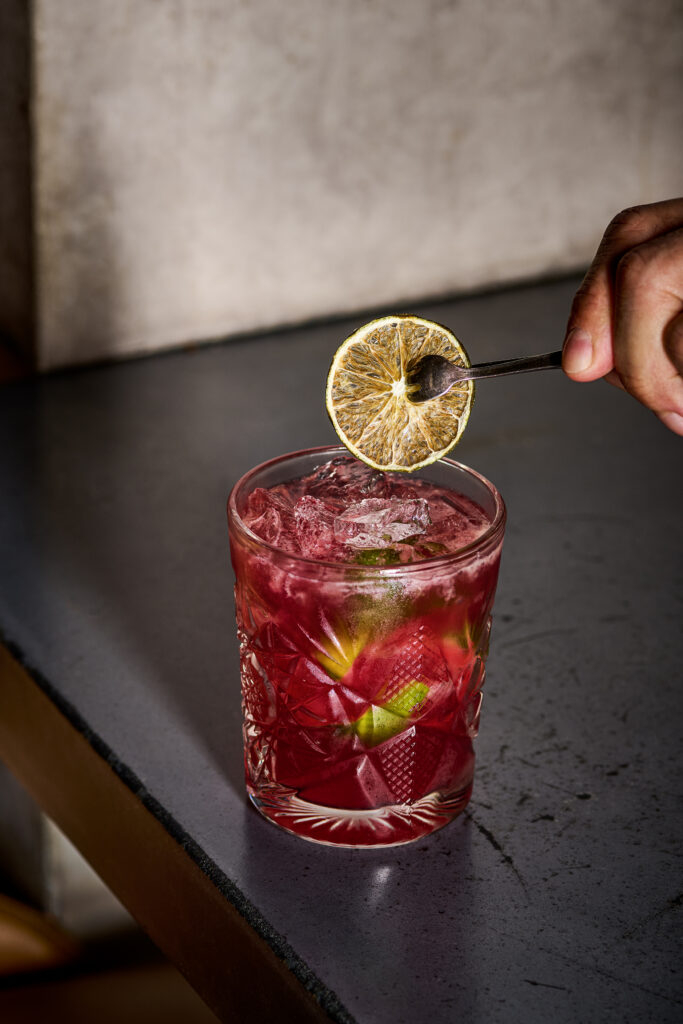
Flûte & Dram Elegant without being pretentious, it’s the kind of place where bubbles meet blues and everyone suddenly knows your name. St. Pete’s first family-owned Champagne, caviar and whiskey bar doubles down on the vibe via luxe sips with live music and a crowd that skews invitingly grown. Come for the sparkle—literally and figuratively—and stay for the smooth sets and pitch-perfect pours. flutendram.com
Sparrow Rooftop Elevating the bar scene with plenty of ~moxy~, Sparrow soars as the Sunshine City’s newest rooftop flex—umbrella-dotted, cozy-chic and built for skyline sipping. With a cocktail program mixed for toasting (or taking flight), the buzzy perch above the Moxy hotel pours panoramic views, easygoing glam and peak golden-hour energy. Consider it your elevated escape before or after a night on the town. @sparrowrooftop.stpete
Ruby’s Elixir Part speakeasy, part full-throttle music sanctuary, this downtown institution serves up nightly doses of world-class blues and jazz with a side of spirits in an unpretentious candlelit setting. The magic potion? Grab a whiskey, sink into the groove and let Ruby lure you to stay longer than you planned. rubyselixir.com
STAY
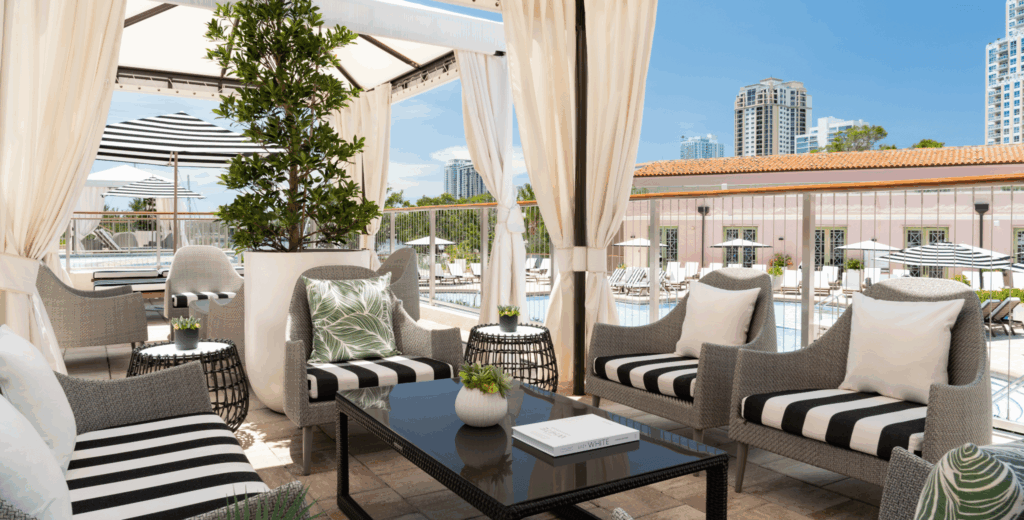
The Vinoy Resort & Golf Club
The Vinoy Resort & Golf Club Fresh off a sweeping reno, the pink grande dame of St. Pete still reigns supreme. A century-deep fixture on the downtown waterfront, the iconic resort blends timeless elegance, manicured grounds and postcard-perfect marina views with a fresh modern polish—plus the addition of refined new on-site resto Elliott Aster, dishing dining cred that’s worth the booking alone. thevinoy.com
The Cordova Inn Charming boutique, vintage soul and homey vibes collide with bona fide budget-banger energy just steps from the buzz of downtown. Refreshed rooms, curated accents and cozy lobby cafe-turned-bar The Scott add modern polish to this cool, quietly stylish historic hideaway—one that lets you slip straight into the rhythm of St. Pete, first-timer or not. cordovainnstpete.com
The Birchwood Just steps from the Beach Drive buzz, The Birchwood delivers historic charm and mod sparkle in spades. Housed in 1924 Spanish Mission-style digs, its intimate 18 apartments-turned-guest rooms—and the signature 12-by-24 birch forest mural wrapping the south wall—set the tone for a chic, cozy stay. But the headline act is upstairs at the Canopy, the rooftop lounge slinging sips with sweeping skyline and waterfront views. thebirchwood.com